
There are faster ways to travel from London to Zürich.
You could fly there in less than two hours.
But then you would miss almost everything.
You would miss crossing the Channel and changing trains in Lille. You would miss arriving in Strasbourg in time for dinner beneath the cathedral. You would miss the railway climbing through the forests and valleys of Germany's Black Forest. You would miss waking beside Lake Constance, crossing the water by ferry and wandering through a medieval German town before finally watching the landscape change once again as the train carries you into Switzerland.
This is a journey where getting to Zürich is only part of the point.
Over five days, you travel through four countries — Britain, France, Germany and Switzerland — entirely by rail, with Strasbourg and Lake Constance turning what could have been a simple journey into a proper European adventure.
And when it's time to go home?
Don't fly.
Continue from Zürich to Paris by train, spend one final night in the French capital and take Eurostar back to London the following morning.
Suddenly the journey becomes a complete flight-free circuit of western Europe.
Why Do This Journey?
The best European rail journeys aren't necessarily the ones with the most spectacular panoramic trains.
Sometimes it's the gradual changes that make a journey memorable.
London feels very distant by the time you're eating tarte flambée in Strasbourg.
Strasbourg itself feels neither completely French nor German, shaped by centuries in which the border — and the city's nationality — repeatedly shifted.
The following day, you cross that border almost without noticing and enter the Black Forest.
Dense woodland replaces the plains of Alsace. Villages appear between the trees. The railway climbs through valleys and tunnels before eventually emerging towards Lake Constance.
Then comes another change.
The following day is spent beside one of Europe's great lakes, surrounded by Germany, Switzerland and Austria, with the Alps appearing beyond the water on clear days.
And finally you cross into Switzerland and arrive in Zürich.
Flying reduces all of that to two airports.
The train allows you to experience everything in between.
The Five-Day Journey
- Day 1: London → Lille → Strasbourg
- Day 2: Strasbourg → Black Forest → Konstanz
- Day 3: Lake Constance and Meersburg
- Day 4: Konstanz → Zürich
- Day 5: Zürich
If you have longer, add Zürich → Paris → London and turn the journey into a completely flight-free circuit.
Day 1: London to Strasbourg Without Crossing Paris
The first surprise comes almost immediately.
You don't necessarily need to travel through Paris at all.
Take an early Eurostar from London St Pancras to Lille Europe, a journey of around 1 hour 22 minutes. Eurostar specifically promotes Lille as a connecting station for onward journeys in France.
From Lille, direct TGV INOUI services operate to Strasbourg on some days and departures, avoiding the usual transfer between Gare du Nord and Gare de l'Est in Paris.
Current timetables show the fastest direct Lille–Strasbourg journeys taking around 3 hours 5 minutes, although the precise timetable varies according to the day and season.
That makes this a particularly elegant way to begin the journey.
London.
Lille.
Strasbourg.
No airport and, when the timetable aligns, no cross-Paris transfer.
An Important Booking Tip
Don't assume there will always be a convenient direct Lille–Strasbourg train connecting with your chosen Eurostar.
There are only selected direct services, while other departures involve connections elsewhere or route through Paris. Check the complete timetable before buying either ticket and work backwards from the Lille–Strasbourg train that suits you.
And allow a sensible connection in Lille.
Eurostar and an SNCF connecting train remain separate contracts of carriage even when purchased in the same transaction, so this isn't the place to gamble on an extremely tight connection.
The good news is that changing at Lille Europe itself is extremely straightforward: you come up from the Eurostar platform, check the departure board and return to platform level for the onward train.
Arriving in Strasbourg
Strasbourg is exactly the sort of city that makes this journey work.
It's compact enough to experience in a relatively short stay, yet culturally distinctive enough to make you feel that the journey has properly begun.
Drop your bags and head straight for the historic centre.
The Grande Île and adjoining Neustadt form a UNESCO World Heritage site, reflecting the extraordinary mixture of French and German influences that has shaped Strasbourg.
At its heart stands Notre-Dame Cathedral, constructed from pink Vosges sandstone and crowned by its extraordinary 142-metre Gothic spire.
Then walk towards Petite France.
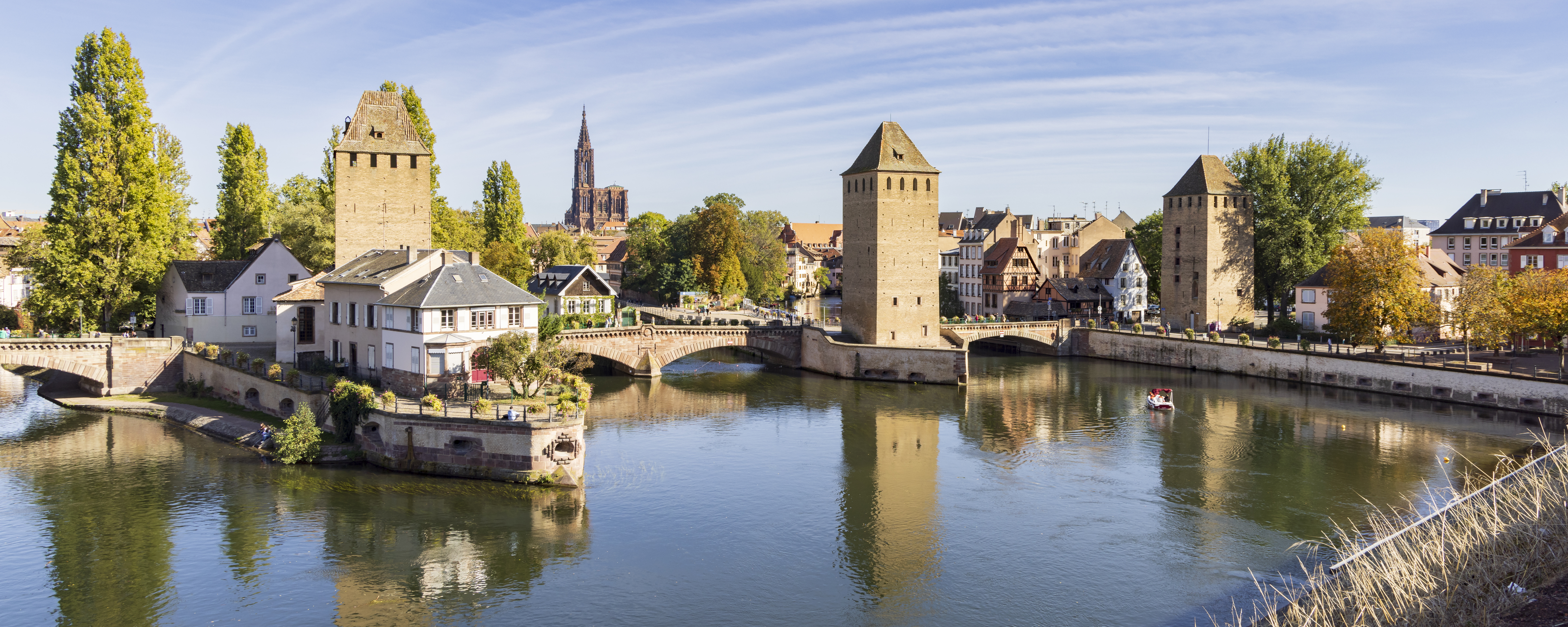
Today it is Strasbourg at its most picturesque: canals, bridges and half-timbered houses reflected in the River Ill.
Historically, however, this was a working neighbourhood occupied by millers, fishermen and tanners. Many of the 16th- and 17th-century houses retain the steep roofs and open lofts once used for drying animal hides.
Continue towards the Ponts Couverts and climb onto the terrace of the Vauban Dam for one of the best views across the old city.
By now, London feels a very long way away.
Where to Stay in Strasbourg
For somewhere with real atmosphere, Cour du Corbeau – MGallery @courducorbeaumgallery is an excellent choice.
Hidden behind an entrance close to the cathedral, this historic inn has the timber galleries and internal courtyard you hope to find in Alsace, but without sacrificing comfort. Its central location also means you can arrive, leave your luggage and explore almost everything on foot.
Another good option is Hôtel Les Haras, @lesharashotel created within Strasbourg's former national stud farm. The combination of historic architecture and contemporary design makes it particularly appealing if you prefer something more modern than the traditional half-timbered aesthetic.
Where to Eat in Strasbourg
Your first dinner should be Alsatian.
Try a traditional winstub — the local version of a wine tavern — for dishes such as choucroute, baeckeoffe, spaetzle and tarte flambée.
Au Pont Corbeau @aupontcorbeau, close to the river, is a wonderfully traditional choice and feels far removed from a generic tourist restaurant.
For somewhere with a remarkable setting, Maison Kammerzell @maison_kammerzell_restaurant stands directly beside the cathedral in one of Strasbourg's most famous Renaissance buildings.
Then walk back through the old city after dark.
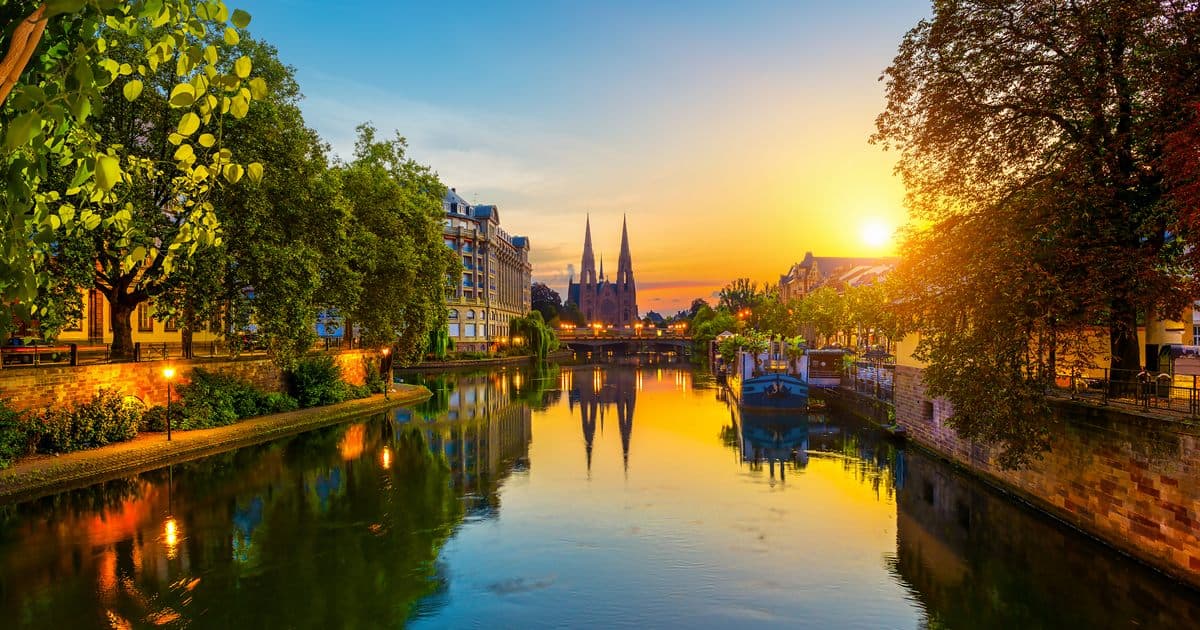
Strasbourg Cathedral illuminated above the surrounding streets is a memorable end to the first day.
Day 2: Strasbourg to Lake Constance Through the Black Forest
Don't leave Strasbourg too early.
This is one of the advantages of making the journey five days rather than trying to squeeze the entire European circuit into a long weekend.
Spend the morning seeing whatever you missed the previous afternoon.
Go inside the cathedral.
Walk through the Neustadt, the monumental German imperial district created following the annexation of Alsace after 1871.
Or simply have coffee beside one of the canals before returning to the station.
Then, around late morning, head for Germany.
Strasbourg to Offenburg
The first train is a regional service crossing the Rhine from Strasbourg into Germany via Kehl.
It's a remarkably understated international border crossing.
Within around half an hour you're at Offenburg, where the character of the journey changes completely.
Because the next train isn't simply transport to Lake Constance.
It's one of Germany's classic railway journeys.
The Black Forest Railway
From Offenburg, board the regional train towards Konstanz.
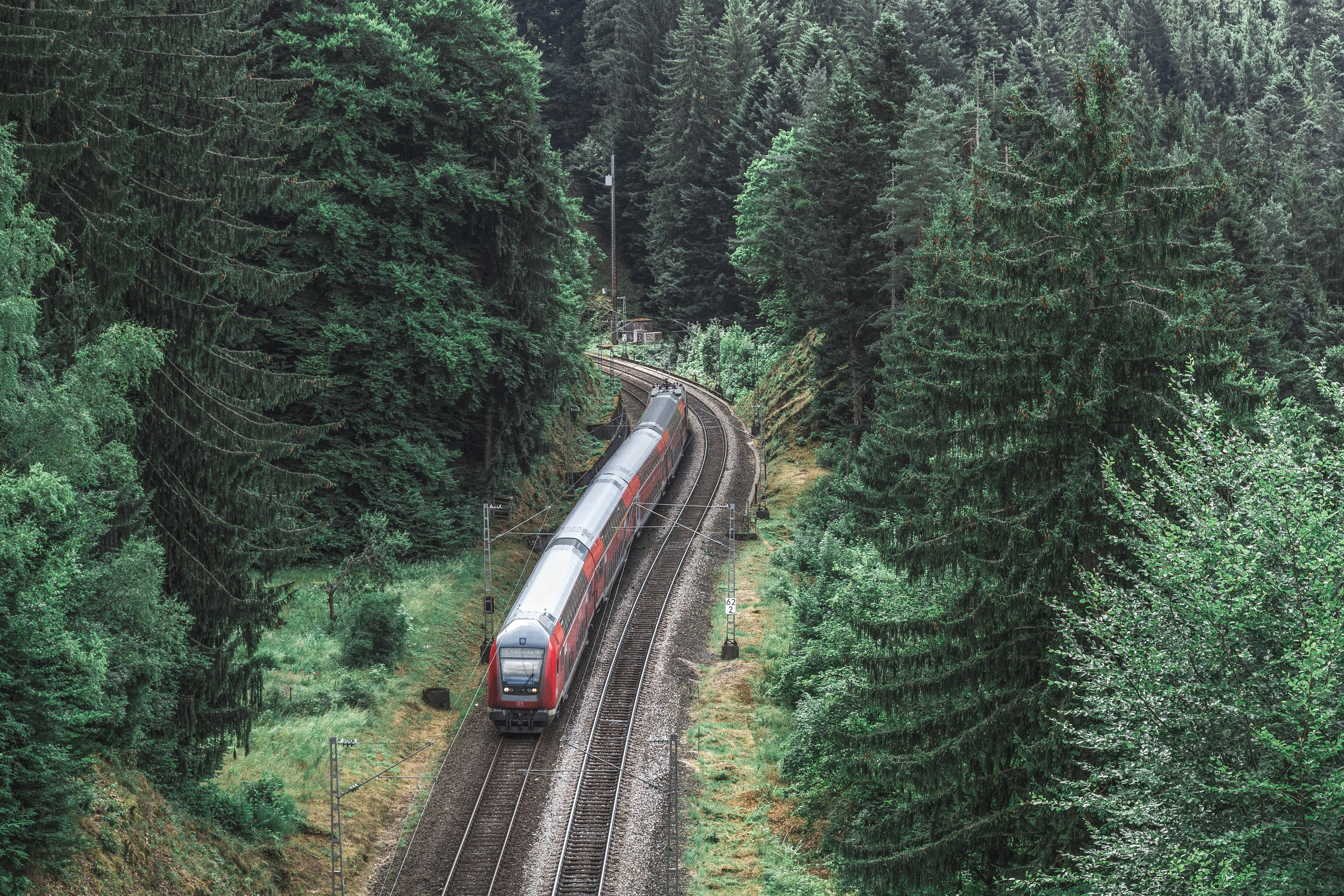
The Schwarzwaldbahn — Black Forest Railway — between Offenburg and Konstanz is listed by Deutsche Bahn among Germany's most beautiful railway routes.
And this is the section where you want to stop reading, put away the laptop and look out of the window.
The railway enters the Kinzig Valley and passes towns such as Gengenbach and Hausach before climbing deeper into the Black Forest.
Forested hills close around the tracks.
Villages sit in narrow valleys.
The railway curves and climbs through a succession of tunnels around Triberg before continuing towards St Georgen and Villingen.
Beyond Donaueschingen, the landscape gradually opens again.
Eventually you pass Singen and Radolfzell and catch your first glimpses of Lake Constance.
Current connections can take as little as 2 hours 50 minutes from Strasbourg to Konstanz, usually with just one change at Offenburg.
It is difficult to imagine a more enjoyable three-hour journey between two European cities.
Arrival in Konstanz
Konstanz sits where the Rhine leaves the western end of the upper Lake Constance.
And immediately, the journey slows down again.
Leave your luggage and walk towards the harbour.
The city's famous Imperia statue rotates slowly above the entrance to the harbour while ferries and excursion boats move across the lake.
Behind it lies a remarkably well-preserved old town.
Konstanz escaped the destruction experienced by many German cities during the Second World War, leaving a centre of narrow streets, painted façades and medieval buildings.
Climb the tower of the Münster if it is open, wander through Niederburg — the oldest part of the city — and then return to the waterfront as evening approaches.
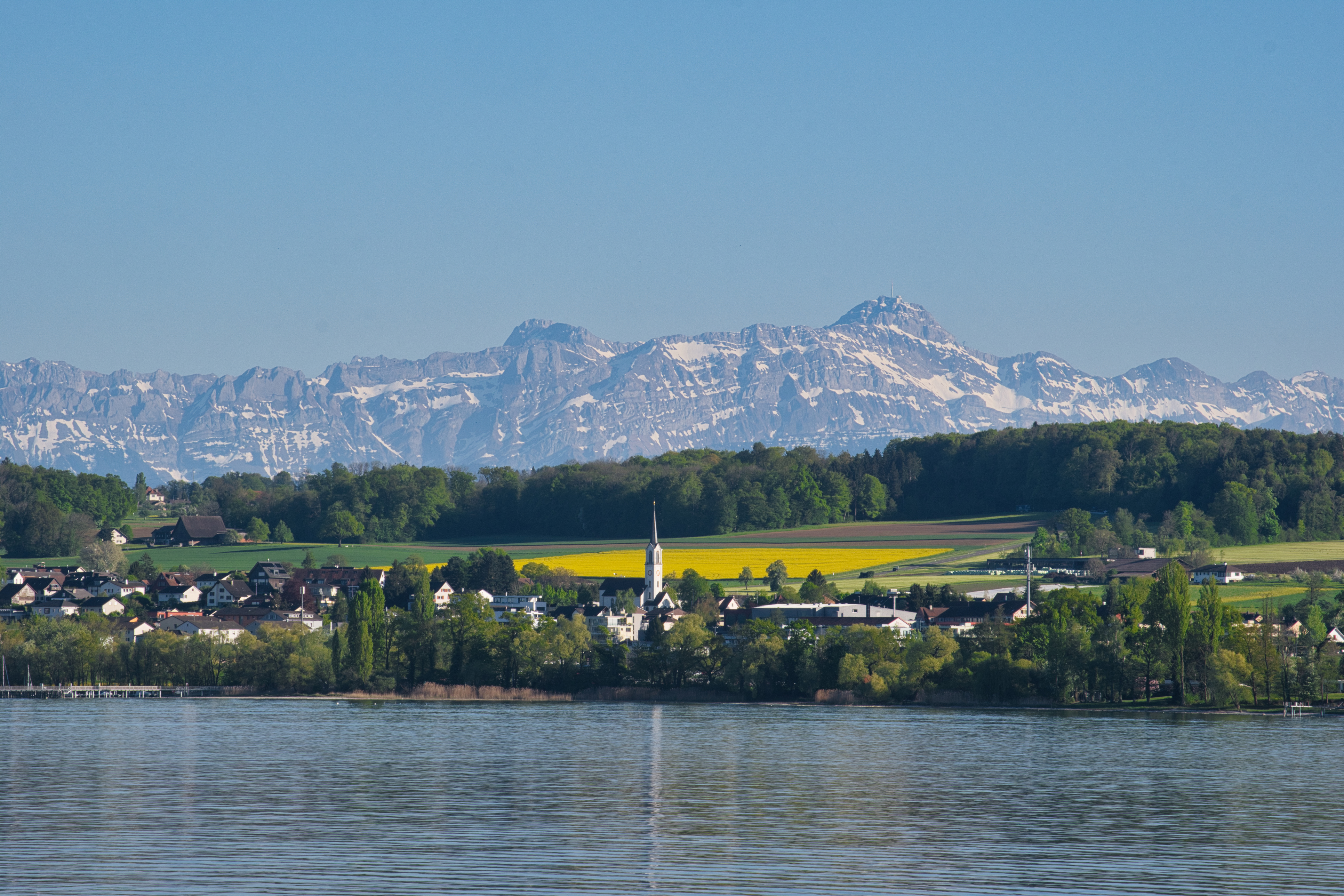
Lake Constance, or the Bodensee, is enormous.
Germany, Switzerland and Austria all meet around its shores, and on clear days the Alps rise beyond the eastern end of the lake.
This is why we've given it more time than a simple overnight stop.
Where to Stay in Konstanz
For a splurge, RIVA @riva__hotel sits directly beside the lake, with elegant rooms, gardens and a rooftop pool.
Another atmospheric option is the Steigenberger Inselhotel, @inselhotelkonstanz occupying a former Dominican monastery on a small island immediately beside the old town. Its lakeside terrace makes an especially appealing place for breakfast or an evening drink.
The hotel also has an intriguing historical connection: Count Ferdinand von Zeppelin was born in the building, and the hotel's Zeppelin Bar occupies the former vestry.
Where to Eat in Konstanz
For something special, try Brasserie Colette Tim Raue @brasseriecolette, which brings Tim Raue's interpretation of French brasserie cooking to the centre of Konstanz.
Alternatively, stay beside the lake at RIVA or eat on the terrace of the Inselhotel when the weather allows.
And try something from the lake.
Perch, whitefish and other freshwater fish remain part of the culinary identity of the Bodensee region.
Day 3: A Full Day on Lake Constance
This is the day that justifies taking the long way to Zürich.
Don't spend it rushing around the entire lake.
Lake Constance is too large for that.
Instead, use the local transport network exactly as we've used trains throughout the journey: choose one or two places and give yourself time to enjoy them.
Our choice would be Konstanz and Meersburg, combining bus, ferry and walking.
Cross Lake Constance by Ferry
From central Konstanz, take the local bus to Konstanz-Staad.
From here, ferries cross the lake continuously to Meersburg.
This isn't merely a summer sightseeing boat. The Konstanz–Meersburg ferry operates 365 days a year and around the clock, with frequent crossings throughout the day.
Walk aboard and head straight for the outside deck.
Konstanz gradually disappears behind you.
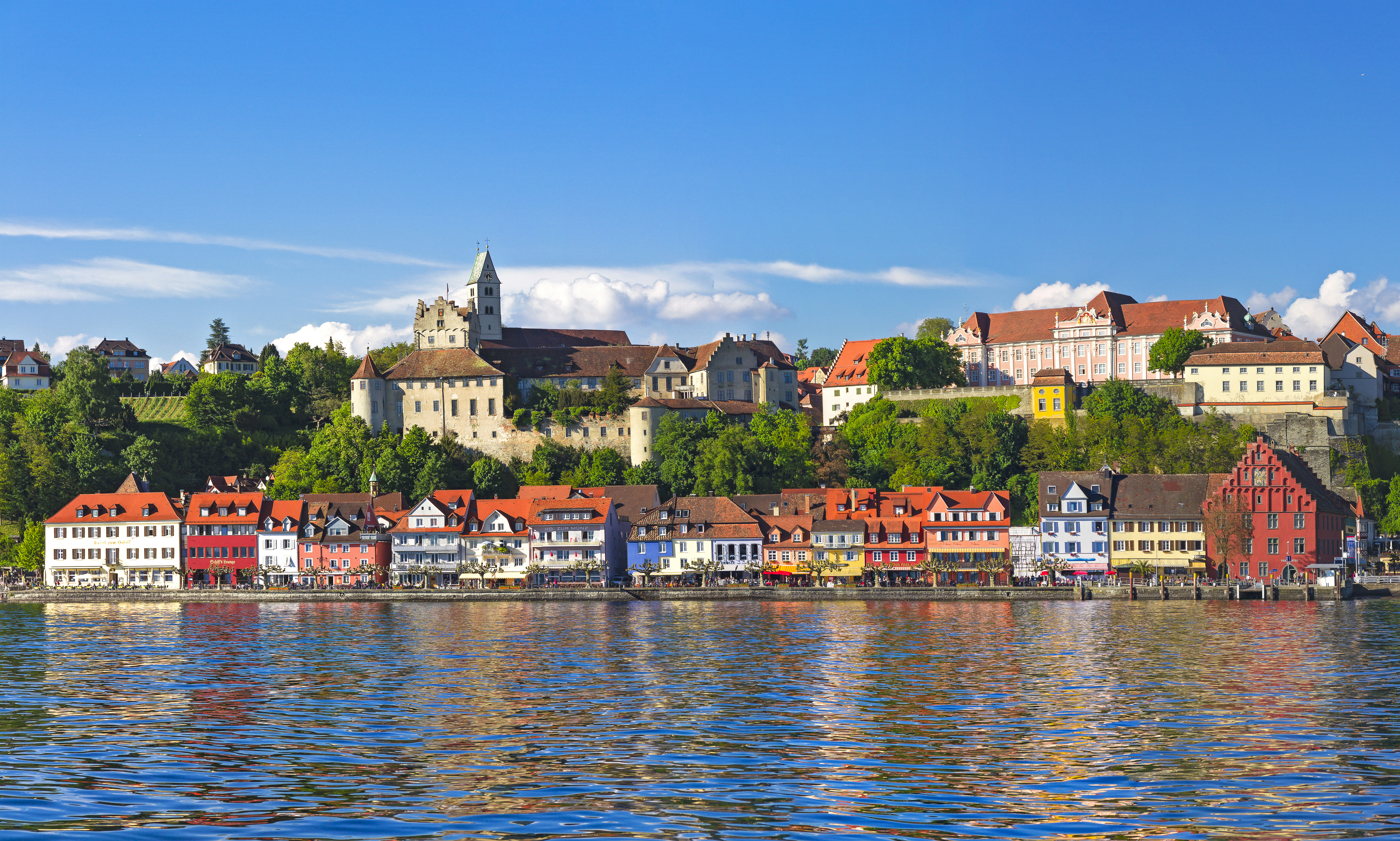
Meersburg and its vineyards appear ahead.
And if the weather is clear, the mountains provide the backdrop.
Meersburg
Meersburg is precisely the kind of place that makes travelling slowly worthwhile.
From the ferry terminal, walk uphill into a town of steep cobbled lanes, half-timbered houses, cafés, vineyards and lake views.
Above everything stands Burg Meersburg.
The castle describes itself as the oldest inhabited castle in Germany and remains privately owned. It is open throughout the year, making Meersburg a useful Lake Constance stop even outside the main summer season.
Allow around 90 minutes to two hours if you go inside.
But don't make the castle the whole purpose of the visit.
Walk through the upper town.
Find one of the viewpoints above the lake.
Stop for lunch.
Try local Bodensee wine.
And then walk back down towards the water.
This part of Lake Constance is wine country, with vineyards benefiting from the lake's moderating influence and the sunny slopes above the northern shore.
Another Option: Mainau Island
If gardens interest you more than medieval castles, substitute Mainau for Meersburg.
Known as the Flower Island, Mainau occupies an island just north of Konstanz and combines extensive gardens, parkland, a Baroque palace and views across the lake.
It is open throughout the year, although the experience changes dramatically with the seasons. In 2026, longer daytime opening operates through the main growing season before hours shorten during autumn.
Spring brings tulips and other bulbs.
Summer brings roses and subtropical planting.
Autumn brings dahlias and changing foliage.
You could theoretically attempt Mainau and Meersburg.
We wouldn't.
One of the principles behind this journey is resisting the temptation to turn every day into a checklist.
Choose one.
Back to Konstanz
Return across the lake in the late afternoon.
Then do very little.
Walk along the waterfront.
Have a drink beside the harbour.
Watch the ferries.
If the Alps are visible, stay until the light begins to disappear.
Tomorrow you change countries again.
Day 4: Lake Constance to Zürich
After yesterday's excursion, today's journey is deliberately easy.
Konstanz sits immediately beside the Swiss border — so close that parts of the city merge almost imperceptibly into neighbouring Kreuzlingen in Switzerland.
Trains run south towards Zürich, taking you through the rolling countryside of the Swiss canton of Thurgau.
This is a completely different Switzerland from the one many first-time visitors imagine.
No dramatic mountain passes.
No panoramic tourist trains.
Instead there are orchards, farmland, small towns and glimpses of water.
Then the urban landscape begins to thicken and Zürich Hauptbahnhof appears ahead.
You're back in a major city.
But you're unmistakably in Switzerland.
First Afternoon in Zürich
Leave the luggage and begin on foot.
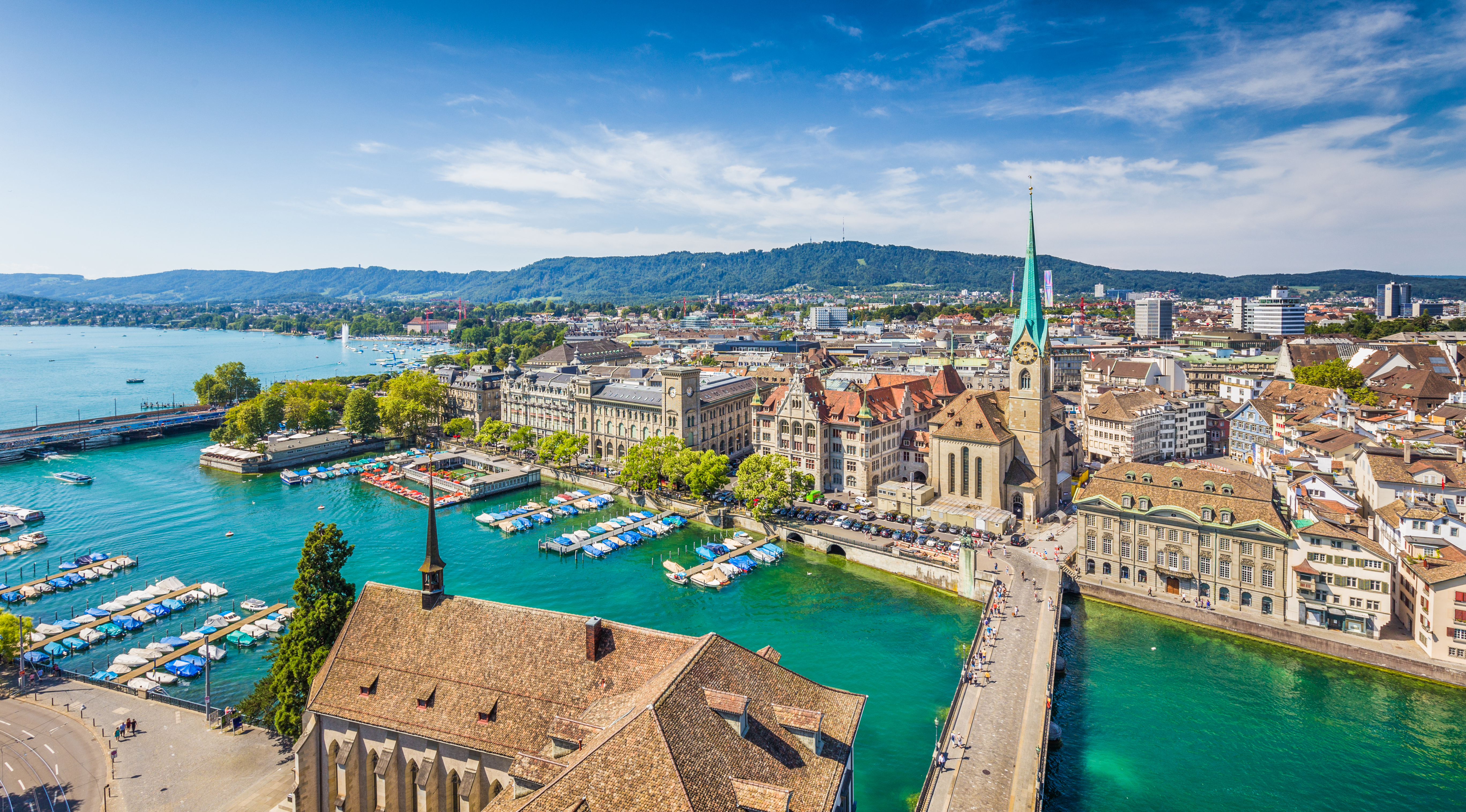
Cross the Limmat and wander through the Altstadt, Zürich's old town.
Explore the lanes of Niederdorf on the eastern bank before crossing towards the twin towers of the Grossmünster, Fraumünster and St Peter's Church.
Then follow the river towards Lake Zürich.
One of the pleasures of Zürich is how quickly city and water merge.
Within minutes you can move from medieval lanes and busy shopping streets to lakeside promenades where boats leave for villages further along the shore.
Don't over-plan this afternoon.
After four countries and several hundred miles of railway, Zürich is somewhere to wander.
Where to Stay in Zürich
For something with personality and an excellent location for rail travellers, 25hours Hotel Zürich Langstrasse @25hourshotels_zuerich sits close to Zürich Hauptbahnhof in one of the city's livelier neighbourhoods.
For something more traditional, look around the old town close to the Limmat, where you'll be within walking distance of both the station and lake.
Where to Eat in Zürich
For classic Zürich, Zeughauskeller is hard to beat.
The building was once an armoury; today its long communal tables and historic interior provide the setting for substantial Swiss dishes including sausages, schnitzel and Zürcher Geschnetzeltes — sliced veal in a creamy sauce traditionally served with rösti. The restaurant has operated here since 1926.
For a more polished Zürich institution, there's Kronenhalle, long associated with the city's artistic and literary world. @kronenhallebar
This is a good night to order something unmistakably Swiss.
You've earned it.
Day 5: Zürich Properly
One of the mistakes people make with Zürich is treating it as an arrival or departure point for somewhere supposedly more exciting.
Give it a day.
Start early in the old town before the shopping streets become busy.
Walk beside the Limmat and explore the quieter lanes climbing away from the river.
Visit the Fraumünster for its stained glass.
Cross to the Grossmünster.
Then spend part of the afternoon beside the lake.
If the weather is clear, however, there's somewhere else worth going.
Take the Train Up Uetliberg
Zürich has its own mountain.
At 871 metres, Uetliberg rises above the city and can be reached by local train, followed by a short walk.
From the summit, you can look back across Zürich, Lake Zürich and — on clear days — towards the Alps.
It is a fitting place to finish this journey.
Because from up here you can see the geography that has been gradually unfolding since you left London.
The cities are only part of the story.
The spaces between them are what make travelling across Europe by train so rewarding.
Don't Fly Home: Zürich to Paris by Train
You could finish here and fly back to Britain.
But there is a much better ending.
Take the train to Paris.
Direct TGV Lyria trains link Zürich Hauptbahnhof with Paris Gare de Lyon in around 4 hours 4 minutes, with up to six direct services a day. Current published fares start from €49/CHF47 in Standard when the cheapest inventory is available.
The route runs via Basel and Mulhouse before accelerating across France towards Paris.
Stay overnight.
Have dinner somewhere you've been meaning to try.
Walk beside the Seine.
Then take Eurostar from Gare du Nord to London the following morning.
The result is a complete European loop:
London → Lille → Strasbourg → Black Forest → Lake Constance → Zürich → Paris → London.
No flights required.
And no part of the return journey feels like retracing your steps.
Can You Travel Zürich to London in One Day?
Yes.
An early TGV Lyria from Zürich can reach Paris around lunchtime, leaving enough time to transfer from Gare de Lyon to Gare du Nord and take an afternoon Eurostar to London.
But we wouldn't build a tight connection.
These are separately booked international trains, and crossing Paris takes time.
If you have the extra night, staying in Paris transforms what could feel like a long journey home into another part of the holiday.
And there are worse ways to finish a European railway adventure than dinner in Paris.
How to Book the Journey Independently
This journey looks complicated on a map.
It isn't.
The secret is to book it as a series of simple journeys rather than searching for one London–Zürich ticket.
Book:
London → Lille with Eurostar.
Lille → Strasbourg with SNCF Connect.
Strasbourg → Konstanz through SNCF Connect or Deutsche Bahn.
Konstanz → Zürich through SBB or Deutsche Bahn.
And, if returning by rail:
Zürich → Paris with TGV Lyria/SBB.
Paris → London with Eurostar.
Eurostar
SNCF Connect
Deutsche Bahn
SBB Swiss Railways
TGV Lyria
Book the Long-Distance Trains First
The trains most likely to become expensive are Eurostar, TGV and TGV Lyria.
Eurostar tickets can generally appear many months ahead, while journeys involving connecting TGV services may have a shorter booking window. SNCF booking windows also vary according to service and seasonal timetable releases. Eurostar Help
So don't wait until every local train is available before booking.
Secure the expensive international legs first.
Regional trains through Germany and Switzerland are much less important to lock down months ahead.
Don't Overbook the Black Forest Section
Strasbourg to Konstanz is largely a regional journey.
Current timetables show frequent options with one change at Offenburg, and the Offenburg–Konstanz section takes around 2 hours 15–20 minutes on direct regional services.
This is a journey where flexibility is useful.
If breakfast in Strasbourg takes longer than expected, catch the next sensible train.
What About an Interrail Pass?
For this itinerary, compare the price rather than assuming a pass will automatically save money.
An Interrail Global Pass can make sense if you're adding more journeys in France or Switzerland, particularly if this five-day route becomes part of a longer European trip.
But remember that a rail pass doesn't eliminate every additional cost.
Eurostar and French high-speed trains require reservations, while most ordinary Swiss trains don't require reservations at all.
If you book early and know exactly when you want to travel, advance point-to-point tickets can be extremely competitive.
If you value flexibility or intend to keep travelling beyond Zürich, a pass becomes more interesting.
Do the sums for your own dates.
When Should You Do This Journey?
This is an unusually good journey across several seasons.
Late April to June brings long days, green landscapes and gardens in bloom around Lake Constance.
September and early October may be even better.
Strasbourg is beautiful in softer autumn light, the Black Forest begins changing colour, vineyards around Lake Constance approach harvest and Zürich is generally more pleasant for walking than during the hottest part of summer.
Summer offers the widest choice of boats and lake activities, but also brings more visitors.
And then there is winter.
Strasbourg's Christmas market dates back to 1570 and is one of Europe's historic festive markets.
Combine it with the Black Forest, Lake Constance and Zürich in December and this becomes a completely different journey.
Just remember that daylight is shorter and many seasonal lake boats don't operate.
The Konstanz–Meersburg ferry, however, continues year-round.
The Journey at a Glance
Day 1 — London → Lille → Strasbourg
Eurostar + TGV. Explore the cathedral, Petite France and the canals. Dinner at @aupontcorbeau or @maison_kammerzell_restaurant. Stay at @courducorbeau.
Day 2 — Strasbourg → Offenburg → Black Forest → Konstanz
Morning in Strasbourg, then one of Germany's great scenic regional rail journeys. Evening beside Lake Constance. Stay at @riva__hotel. Dinner at @brasseriecolette.
Day 3 — Lake Constance
Ferry across the lake to medieval Meersburg and its castle, or spend the day on Mainau Island. Return to Konstanz for a second night.
Day 4 — Konstanz → Zürich
Cross into Switzerland and spend the afternoon exploring Zürich's old town and lakefront. Stay at @25hourshotels_zuerich.
Day 5 — Zürich
Old town, Lake Zürich and Uetliberg. Swiss dinner before a final night in the city.
Optional Days 6–7 — Zürich → Paris → London
Direct TGV Lyria to Paris. Overnight in the capital, then Eurostar home.
Why This Journey Works
There is no single spectacular moment that defines this route.
And that's precisely why we like it.
The journey keeps changing.
London disappears beneath the Channel.
France begins in Lille.
Strasbourg introduces a region where French and German identities have overlapped for centuries.
Cross the Rhine and the railway disappears into the Black Forest.
The forest eventually opens onto one of Europe's great lakes.
Germany gives way to Switzerland.
And five days after leaving St Pancras, you're looking down over Zürich and the Alps from Uetliberg.
You haven't simply visited Strasbourg, Lake Constance and Zürich.
You've travelled between them.
And that's an entirely different way to experience Europe.
Keep Going Through France and Switzerland
This journey only scratches the surface.
From Strasbourg, France's railways open up towards Alsace, Burgundy, the Alps, Provence and the Mediterranean.
From Zürich, Switzerland's extraordinary network can carry you towards Lucerne, Bern, the Bernese Oberland, Lake Geneva, Ticino or some of Europe's greatest panoramic railways.
Our Touring France by Train and Touring Switzerland by Train guides are designed to help you continue independently, with practical rail advice, easy itineraries, scenic journeys and places worth getting off the train to explore.
Discover Touring France by Train
Discover Touring Switzerland by Train
Because Europe doesn't have to be explored one country at a time.