
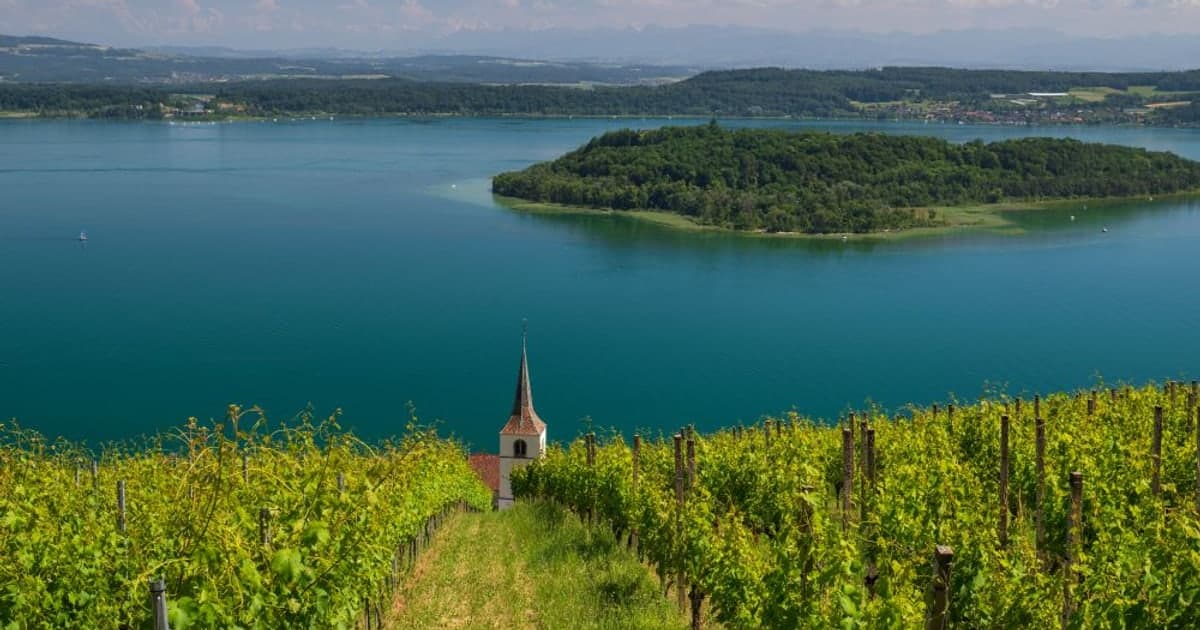
There is another Switzerland beyond the glacier trains, mountain passes and famous Alpine resorts.
Travel north from Lake Neuchâtel into the Jura Mountains and the landscape becomes quieter, the towns more intriguing and Switzerland's relationship with time suddenly begins to make sense.
This is the country's watchmaking heartland.
La Chaux-de-Fonds and Le Locle aren't simply towns where watches happen to be made. They were shaped by watchmaking. Homes, workshops, factories and entire streets were organised around an industry that demanded light, precision and an extraordinarily specialised workforce.
UNESCO describes them as towns constructed "by and for watchmaking", and together they form one of Switzerland's most unusual World Heritage Sites.
Better still, you can explore the whole region by train.
Our three-day journey begins beside Lake Neuchâtel, climbs into the high Jura to La Chaux-de-Fonds and continues to tiny Le Locle, combining lakeside Switzerland with watchmaking history, early Le Corbusier architecture and one extraordinary underground secret.
And if you're coming from France, you can start the adventure in Paris.
The Journey at a Glance
Day 1: Neuchâtel — old town, castle and lake
Day 2: Neuchâtel → La Chaux-de-Fonds — watchmaking, architecture and Le Corbusier
Day 3: La Chaux-de-Fonds → Le Locle — watches and underground mills
Stay one night in Neuchâtel and one night in La Chaux-de-Fonds. At the end of Day 3, either return to Neuchâtel or continue through Switzerland.
The train journeys themselves are remarkably short. Neuchâtel to La Chaux-de-Fonds takes around 27 minutes on direct trains, while La Chaux-de-Fonds and Le Locle are only a few minutes apart by rail.
Check current Swiss timetables at: SBB
Day 1: Begin Beside Lake Neuchâtel
Neuchâtel makes a gentle introduction to the journey.
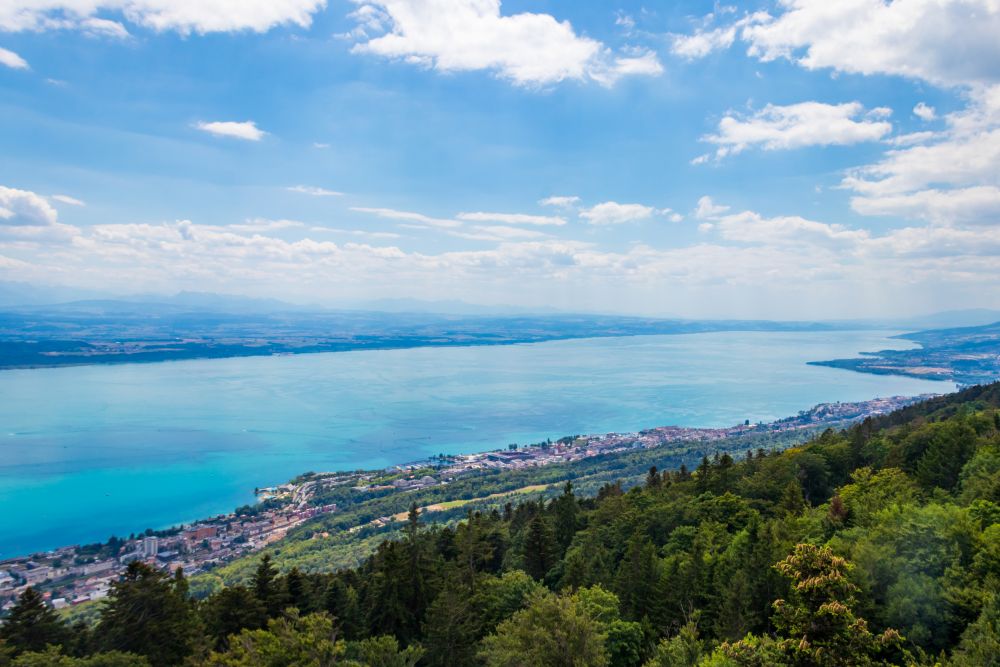
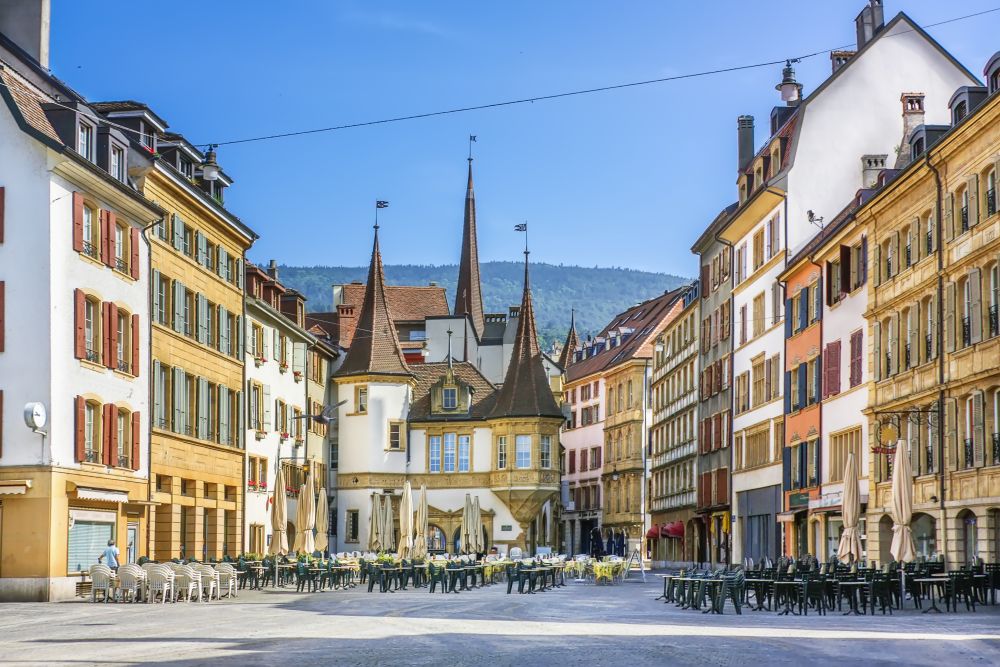
Arriving by train, you're above a compact old town of yellow limestone houses that tumbles towards one of Switzerland's great lakes. On clear days, the Alps appear beyond the water.
Walk down from the station into the historic centre and you'll quickly understand why Neuchâtel deserves more than being treated as a railway connection.
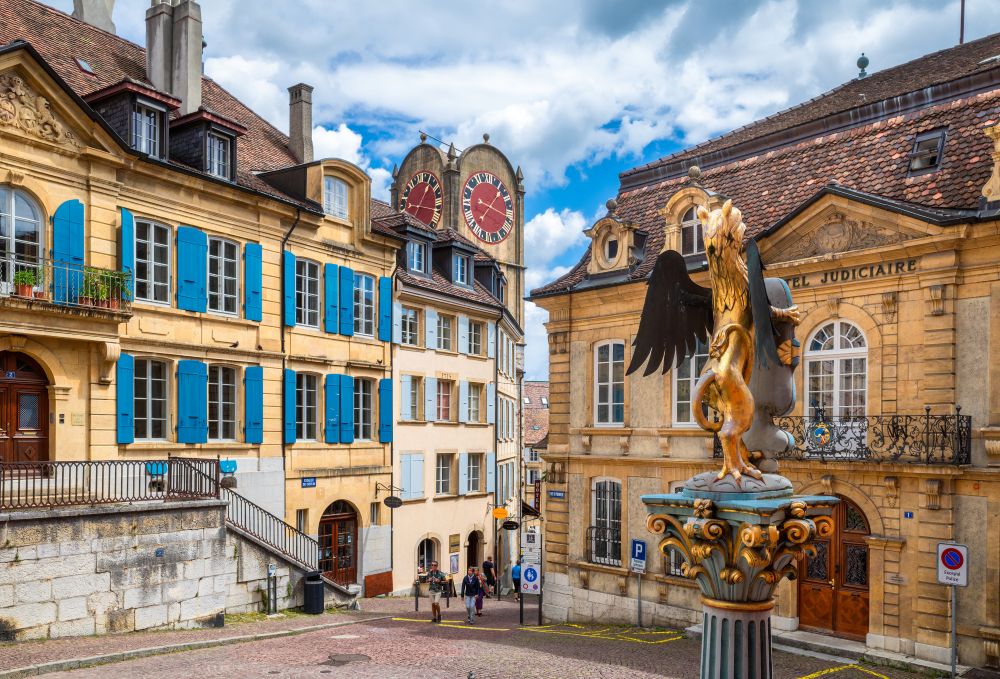
Place des Halles is the heart of the old town, surrounded by cafés, fountains and beautifully preserved buildings. From here, climb through the medieval streets towards the Château de Neuchâtel and neighbouring Collégiale.
The castle has occupied this rocky position above the town for centuries and remains the seat of the cantonal government. From the surrounding terraces and walkways there are wonderful views across the tiled rooftops towards the lake.
Look out, too, for Rue des Chavannes. This narrow street is decorated with changing painted artworks and is an easy little detail to miss if you simply follow the main shopping streets.
A Hidden Link to the Story Ahead
Before leaving Neuchâtel, there's an excellent introduction to what comes next.
Inside the Musée d'Art et d'Histoire are three extraordinary 18th-century automata created by Pierre Jaquet-Droz and his collaborators: the Writer, the Musician and the Draughtsman.
Containing thousands of tiny mechanical components, they demonstrate the extraordinary precision engineering that developed in this region long before anyone carried a Swiss watch on their wrist.
Check demonstration times before visiting.
Hidden Gem: Take the Funicular Above the Lake
If the weather is clear, add one of Neuchâtel's loveliest short excursions.
Travel out to La Coudre and take the funicular up to Chaumont. In around 13 minutes it climbs more than 500 metres above the city.
Suddenly you're looking across Lake Neuchâtel, the Three Lakes region and, on a clear day, towards the Alps.
It's a surprisingly easy way of adding a little mountain Switzerland to a journey that is primarily about culture and history.
Where to Eat in Neuchâtel
For a memorable lakeside setting, try Les Bains des Dames @bainsdesdames.
Built right beside the water, it's particularly atmospheric in warmer weather when you can sit outside overlooking Lake Neuchâtel. The cooking has a Mediterranean influence and it's the sort of place we'd choose for a long first evening rather than rushing through dinner.
Another option is Brasserie Le Cardinal, a beautiful historic brasserie close to the castle. The restaurant has occupied the building since 1902 and its Art Nouveau interior makes it worth seeking out for the setting alone.
And don't leave the region without trying its wine. Vineyards have been cultivated around Lake Neuchâtel for around 2,000 years, with Chasselas, Pinot Noir and the local rosé speciality Œil-de-Perdrix among the wines to look for.
Where to Stay in Neuchâtel
For the strongest combination of location and social presence, we'd choose Hôtel Beaulac @hotelbeaulac.
It's directly beside the lake and within easy walking distance of the old town. Its WAVES rooftop lounge is another reason to stay: head up for a drink and panoramic views across Neuchâtel and the water.
For something more traditional, Beau-Rivage Hotel @beaurivageneuchatel also sits on the lakeshore, close to the historic centre, with views towards the lake and Alps.
Day 2: Neuchâtel to La Chaux-de-Fonds
This morning's train journey is short but transformative.
Direct trains cover Neuchâtel to La Chaux-de-Fonds in around 27 minutes, climbing from the lakeshore into the Jura Mountains.
By the time you arrive, you're roughly 1,000 metres above sea level.
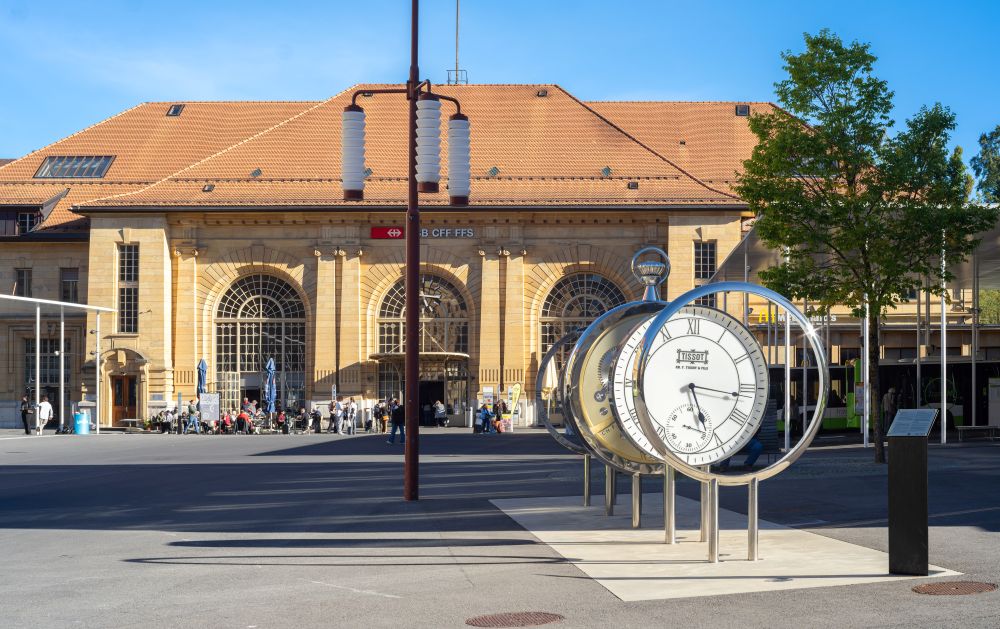
And La Chaux-de-Fonds doesn't look like the Switzerland you may be expecting.
There are no medieval lanes curling around a church square. Instead, long straight streets stretch across the hillside in an ordered grid.
That is precisely why you've come.
The City Built for Watchmakers
La Chaux-de-Fonds was largely reconstructed after a devastating fire at the end of the 18th century.
But what emerged wasn't simply another rebuilt town.
Watchmaking shaped its architecture.
Workshops and homes were arranged to provide watchmakers with the natural light they needed for extraordinarily precise work. Residential buildings stood alongside workshops and, later, factories. Streets were laid out rationally across the hillside.
The result is an entire urban landscape built around one industry.
Together with neighbouring Le Locle, La Chaux-de-Fonds was inscribed on UNESCO's World Heritage List in 2009.
Begin at the Espace de l'urbanisme horloger on Rue Jaquet-Droz. Its short multimedia exhibition explains the relationship between watchmaking, architecture and the unusual layout of the city.
Once you understand what you're looking at, La Chaux-de-Fonds becomes much more interesting.
Step Inside the World of Swiss Time
Next visit the Musée International d'Horlogerie.
This isn't simply a display of expensive watches.
Its collection contains more than 10,000 objects connected with the measurement of time: watches, clocks, tools, machines, automata and scientific instruments spanning centuries of technological development.
It is one of those museums that makes the subject far more interesting than you expect it to be.
Allow at least a couple of hours.
The Other La Chaux-de-Fonds: Art Nouveau
Watchmaking brought wealth to the city, and around the turn of the 20th century that money began appearing on its buildings.
Look for the local variation of Art Nouveau known as the Style sapin — the "fir-tree style" — inspired by the forests and natural forms of the Jura.
And one young local architect was absorbing those influences.
His name was Charles-Édouard Jeanneret.
The world would later know him as Le Corbusier.
Hidden Gem: Le Corbusier Before Le Corbusier
La Chaux-de-Fonds was Le Corbusier's birthplace, and some of his earliest architectural work survives here.
The most rewarding place to visit is Maison Blanche, the house he designed for his parents in 1912 when he was just 25.
It predates the stark white modernist buildings for which he later became famous. Instead, you can see a young architect experimenting with space, light and landscape before developing the ideas that would transform 20th-century architecture.
Maison Blanche is open on limited days, so check before planning your visit.
Architecture enthusiasts should also look out for Villa Fallet, another remarkably early work associated with the young Jeanneret.
Where to Eat in La Chaux-de-Fonds
One of the most characterful choices is La Ferme des Brandt ( fermesdesbrandt.ch )
The restaurant occupies a Jura farmhouse dating from 1614 and specialises in regional cooking using ingredients from small local producers. Bread is baked in a wood-fired oven and the setting couldn't be further removed from a polished city restaurant.
It also connects beautifully with the story of this region.
Before industrial watch factories appeared, watchmaking was often combined with farming. During the long Jura winters, families worked on tiny watch components inside their homes and farmhouses.
Eating in a centuries-old Jura farmhouse after spending the day learning about watchmaking somehow brings that history together.
For something more contemporary and central, Jindamour @jindamour_lachauxdefonds on Place du Marché mixes Mediterranean and Turkish influences with local dishes and has a relaxed café-bar feel.
Where to Stay in La Chaux-de-Fonds
The strongest hotel choice is Grand Hôtel Les Endroits @lesendroits.
It sits at 1,111 metres on the edge of La Chaux-de-Fonds, surrounded by Jura countryside, with panoramic views and a wellness area.
It isn't in the historic centre, so you'll need to use local transport or a taxi, but that's partly the appeal: after a day exploring the watchmaking city, you're suddenly back among the forests and open landscapes that surround it.
Its restaurant also focuses on regional and seasonal cooking, making it an easy option if you'd rather stay in for the evening.
Day 3: La Chaux-de-Fonds to Le Locle
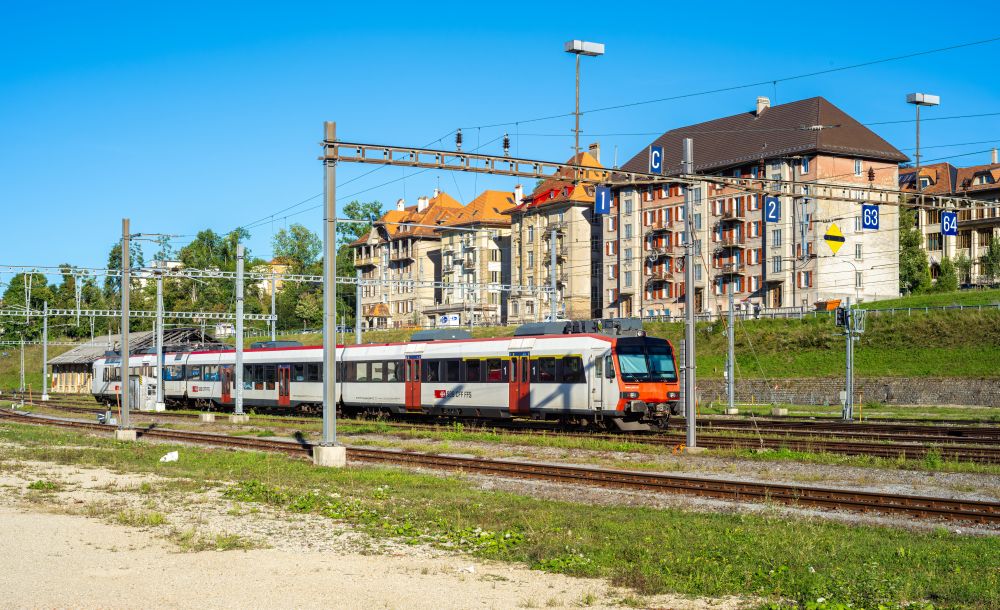
The final train journey is almost comically short.
La Chaux-de-Fonds and Le Locle sit just a few kilometres apart, connected by frequent trains.
Yet together they form the UNESCO World Heritage Site.
Le Locle is smaller and quieter, but watchmaking is just as deeply embedded in its identity.
Start by simply walking.
Once again you'll see the ordered streets, substantial watchmaking houses and former workshops that reveal how thoroughly the industry shaped the town.
Château des Monts: Watches in a Watchmaker's Mansion
If yesterday's International Watchmaking Museum explained the science and technology of time, today's museum provides a very different experience.
The Musée d'horlogerie du Locle – Château des Monts occupies an elegant historic mansion surrounded by gardens.
Inside are clocks, watches and automata, including richly decorative pieces that show watchmaking as both engineering and art.
The Hidden Gem Beneath the Jura
Then save the strangest place on the journey for last.
Just outside Le Locle, beside the French border, is Col-des-Roches.
From the outside, there is little indication of what lies beneath you.
Inside the limestone mountain is a system of underground mills where the force of water was harnessed to power machinery within a natural cave.
The site developed over centuries as local people found increasingly ingenious ways to exploit an underground stream. Today you can descend into the cool cavern and see reconstructed water wheels and machinery inside the rock.
The temperature underground remains around 7°C, so take an extra layer even in summer.
It is one of those wonderfully unexpected places that makes you wonder why you've never heard of it.
From Le Locle, local buses connect with the mills; check the current journey when planning your day.
Where to Eat in Le Locle
For lunch, Restaurant de la Gare Chez Sandro @chezsandrolelocle is particularly convenient for a rail itinerary. Close to the station, it combines a brasserie and restaurant and is recognised by Gault&Millau.
Alternatively, Le Repère du Lion d'Or @leliondorlelocle in the centre focuses on seasonal produce, buckwheat galettes and French-inspired cooking.
Then take the short train back towards La Chaux-de-Fonds and Neuchâtel.
Starting in Paris?
This journey works particularly well as an extension to a trip to France.
Current timetables include Paris to Neuchâtel journeys taking just under four hours, travelling from Paris Gare de Lyon by TGV Lyria and changing at Frasne for the regional train across the Jura into Switzerland.
It's a wonderful transition.
Leave one of Europe's great capitals after breakfast and, by lunchtime, you can be beside Lake Neuchâtel.
Check schedules for your travel date, as international timetables and connections vary.
For France and international tickets: SNCF Connect
For Swiss trains: SBB
Where Next?
From Neuchâtel it's easy to continue deeper into Switzerland.
Bern and Lausanne are natural next stops, while Basel provides excellent onward rail connections towards France, Germany and northern Europe.
You could therefore turn the journey into:
Paris → Neuchâtel → La Chaux-de-Fonds → Le Locle → Bern
or
Paris → Neuchâtel → La Chaux-de-Fonds → Le Locle → Basel
And suddenly a visit to Switzerland becomes something rather different from the familiar circuit of Alpine resorts.
When to Go
This is a genuine year-round journey, although each season gives it a different character.
Spring and early autumn are particularly good for combining the towns with walking and lake time in Neuchâtel.
Summer brings long evenings beside the lake and makes it easier to combine the cultural sights with the surrounding countryside.
Winter may be the most atmospheric time to see watchmaking country. La Chaux-de-Fonds and Le Locle sit high in the Jura, where snow transforms the ordered streets and surrounding forests.
Just remember that smaller attractions such as Maison Blanche operate limited opening days, while museum hours can change seasonally. Check individual websites before fixing your itinerary.
Booking the Journey
Swiss domestic trains generally don't require seat reservations. Buy tickets through SBB or use a Swiss Travel Pass if this forms part of a longer rail trip.
If travelling from Paris, book the international portion in advance, particularly the TGV Lyria sector.
Why Take This Journey?
Switzerland is exceptionally good at spectacular railway journeys.
But sometimes the most interesting train trip isn't the one with the biggest mountains.
This journey tells you something about the country itself.
You begin beside a lake in an elegant French-speaking city. Less than half an hour later you're high in the Jura, walking through streets designed around an industry that made Switzerland famous throughout the world.
You discover why watchmakers needed light, how farmers became precision craftsmen, how an industrial town helped shape one of the most influential architects of the 20th century and how water was harnessed deep inside a mountain.
And all of it is connected by train.
Explore More of Switzerland by Rail
Inspired to keep going?
Our best-selling Touring Switzerland by Train guide makes it easy to explore the country independently, with practical rail advice, scenic journeys, city itineraries and ideas for discovering far more than Switzerland's most famous resorts.
Or discover the complete Real Travel Guides collection.
Because some of Switzerland's most fascinating journeys aren't the ones everyone already knows.