Launched in September 2026, this exciting new overnight rail connection links Belgium, the Netherlands, Germany, Switzerland and Italy, offering a memorable journey through the Alps before arriving in the heart of Milan.
Europe's night train revival has a new star.
In September 2026, European Sleeper launched a direct overnight service between Brussels and Milan, opening up one of Europe's most appealing rail journeys: a night on board, a morning crossing through the Swiss Alps and an arrival in northern Italy in time for lunch.
And the service is already evolving. From December 2026, a revised route through Belgium and the Netherlands brings the sleeper within easier reach of even more European travellers.
It's the sort of journey that makes a compelling case for slowing down.
Instead of navigating airports, baggage queues and transfers, travellers can board in Brussels, settle into a couchette or sleeper compartment and wake up to an entirely different landscape.
By morning, the train is travelling through central Switzerland, past mountain valleys and dramatic lakes. It then continues south through Italian-speaking Ticino, calling at Bellinzona, Lugano and Como before reaching Milan.
For anyone planning a European holiday by rail, this new connection is more than another sleeper service. It's an opportunity to turn the journey itself into part of the adventure.
And with convenient connections from London, Paris and other European cities, it makes exploring Switzerland and Italy without flying more practical than ever.
Why This New Night Train Matters
For years, travelling between Brussels and northern Italy by rail meant either spending much of the day on high-speed trains or arranging an overnight stop along the way.
The new European Sleeper service changes that.
Launched on 9 September 2026, the train connects Brussels with northern Italy via Germany and Switzerland, operating several nights a week.
It also opens up some wonderful possibilities for travellers who don't necessarily want to go all the way to Milan.
Lake Como is now an overnight journey from Brussels. Lugano, with its palm-lined waterfront and Italian atmosphere, is another attractive destination. And the train's route through Switzerland creates opportunities for exploring the country's spectacular mountain railways.
For independent travellers, this is the real attraction: the ability to connect several destinations without needing a car or an internal flight.
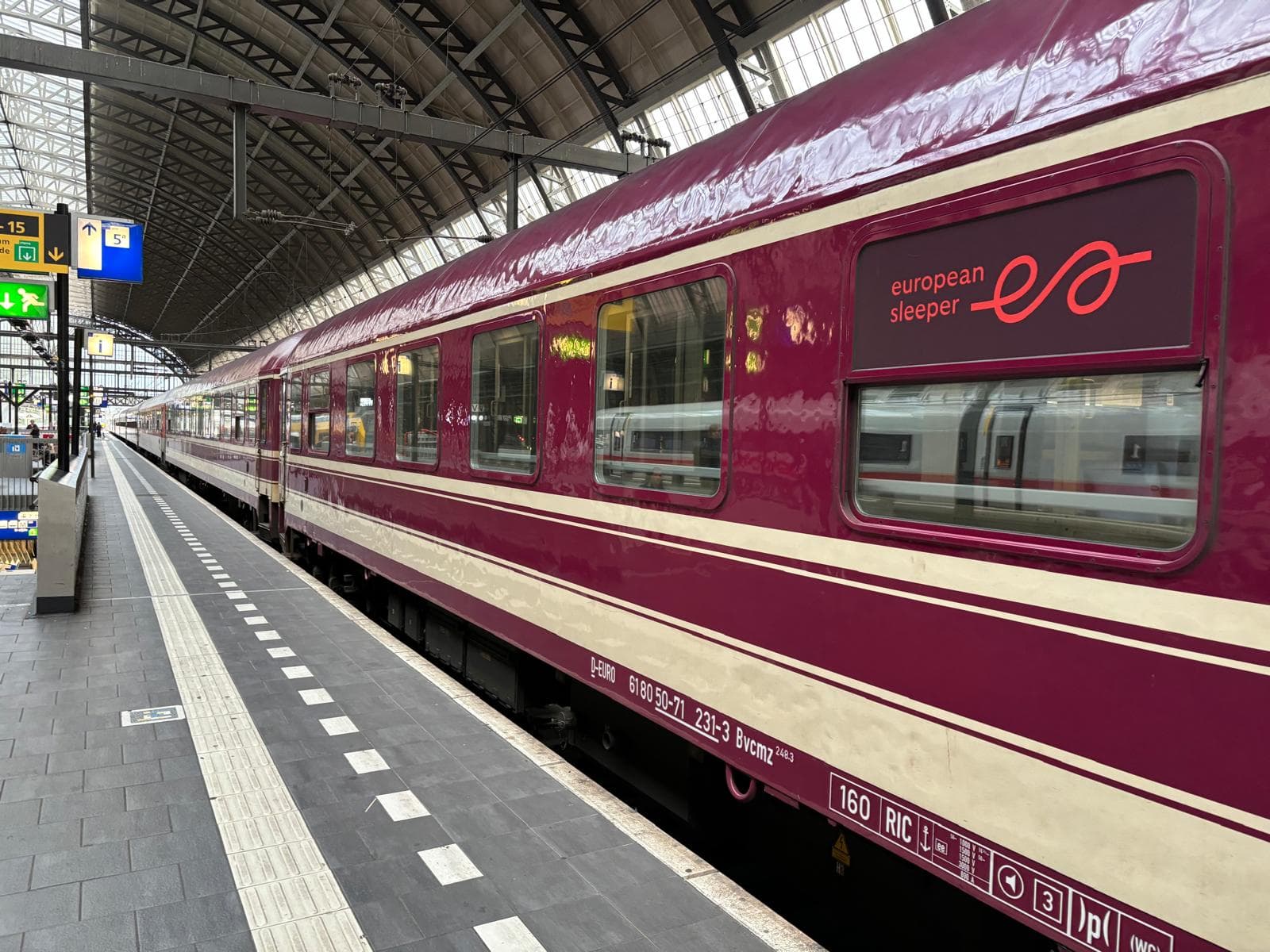
The train is operated by European Sleeper, a cooperative railway company helping to rebuild Europe's overnight rail network. Its other services include connections between Brussels and Prague, and Paris and Berlin.
Unlike the sleek new-generation Nightjet trains operated by Austrian Railways, European Sleeper uses refurbished traditional sleeping carriages.
That means a more old-fashioned experience, with shared couchettes, compact sleeper compartments and the familiar rhythm of a long-distance European train.
It isn't luxury rail travel, but it offers something increasingly appealing: the chance to travel across borders while you sleep.
The Route: Five Countries in One Journey
The journey begins at Brussels-Midi, one of Europe's major international railway hubs.
Under the revised timetable introduced in December 2026, the train heads north towards Antwerp before crossing into the Netherlands, stopping at Breda and Eindhoven, then continuing towards Cologne in Germany.
The route then heads south overnight, reaching Switzerland by early morning.
This is where the journey becomes particularly interesting.
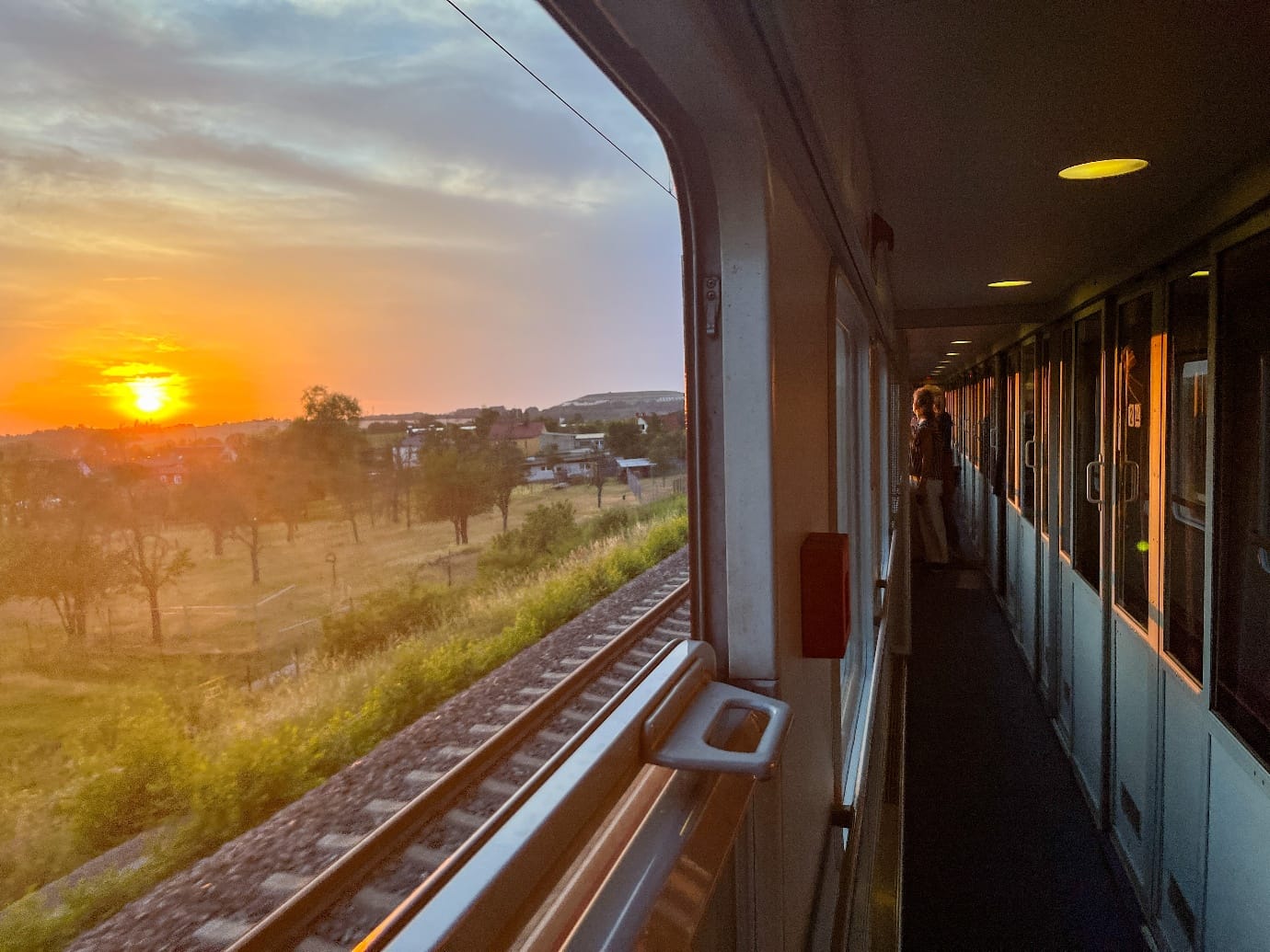
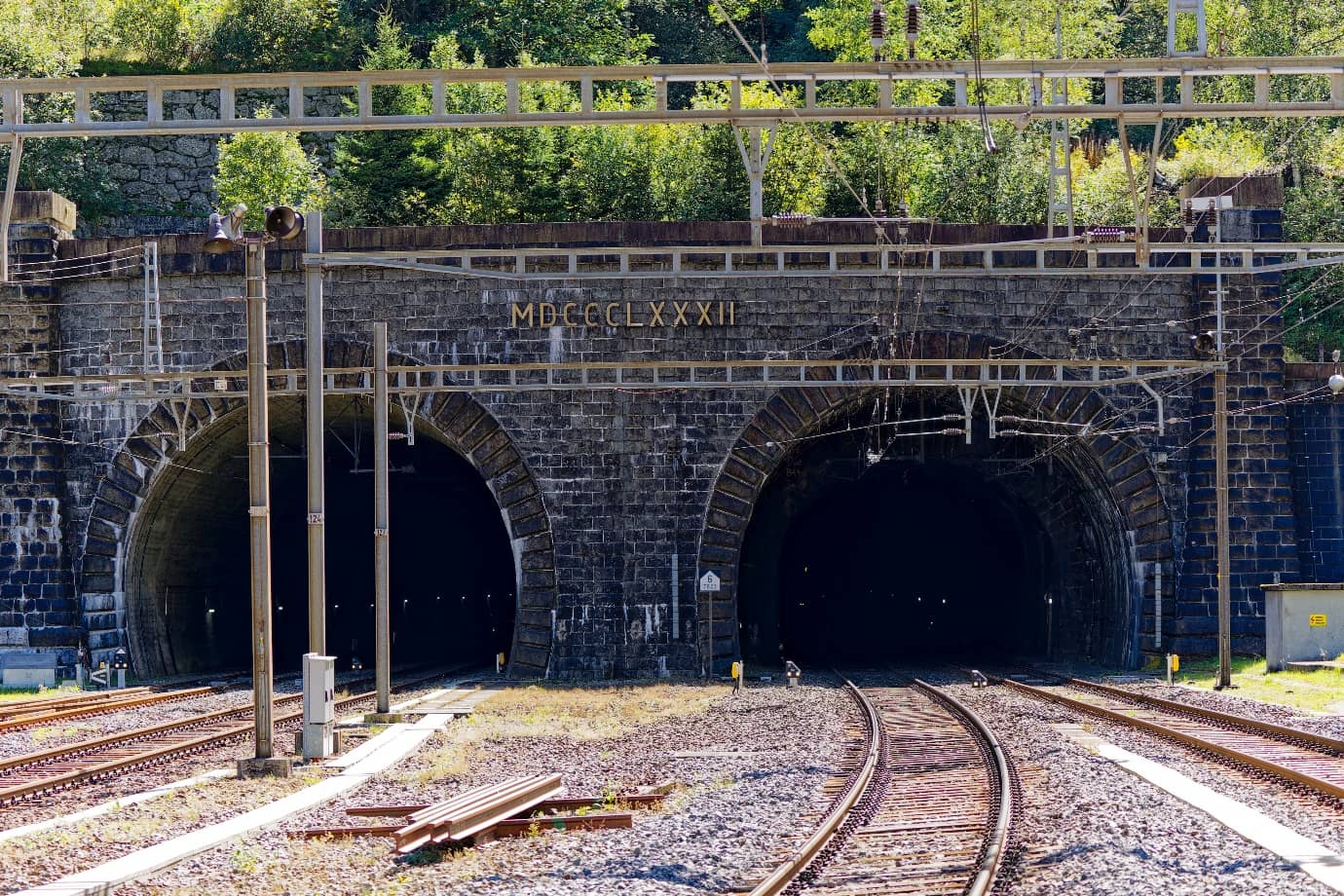
Rather than using the fastest possible route through the long Gotthard Base Tunnel, the service follows the historic Gotthard mountain railway, one of Switzerland's most celebrated engineering achievements.
The line winds through valleys and climbs towards Göschenen, with dramatic mountain scenery, tunnels, bridges and glimpses of traditional Swiss villages.
From there, the train continues south through the original Gotthard railway tunnel towards Bellinzona, Lugano and the Italian border.
The final stretch passes through Como before reaching Milano Porta Garibaldi.
It's an extraordinary geographical transition.
In the space of a morning, travellers move from the high mountains of central Switzerland to the palm trees and Mediterranean atmosphere of Ticino, then into the bustling urban landscape of northern Italy.
Few overnight journeys offer such a varied introduction to three very different regions.
New for December 2026: More Ways to Reach Italy by Sleeper
Although the Brussels–Milan sleeper only launched in September 2026, European Sleeper has already revised its route to make the service accessible to more travellers.
From 13 December 2026, the train serves Antwerp, Breda and Eindhoven before continuing towards Cologne, opening up direct overnight connections from the southern Netherlands to Switzerland and northern Italy.
This is particularly useful for travellers who previously needed to make their way to Brussels or Cologne to join the service.
Under the published revised timetable, the train is scheduled to leave Brussels-Midi at approximately 5.22pm, reaching Switzerland the following morning and arriving at Milano Porta Garibaldi at around 11.30–11.40am.
The revised service is scheduled to depart Brussels on Sundays, Tuesdays and Thursdays.
The most appealing part of the journey remains the same: the historic Gotthard mountain railway, followed by the beautiful lakes and towns of Ticino before crossing into Italy.
Because European sleeper timetables can change due to engineering work and seasonal adjustments, always check the latest departure dates and times on the European Sleeper website before making plans.
Boarding in Brussels: A City Worth Exploring
Brussels makes an excellent starting point, whether you're travelling from Belgium itself or connecting from elsewhere in Europe.
Rather than arriving just in time to board, consider spending a day or even a night exploring the Belgian capital.
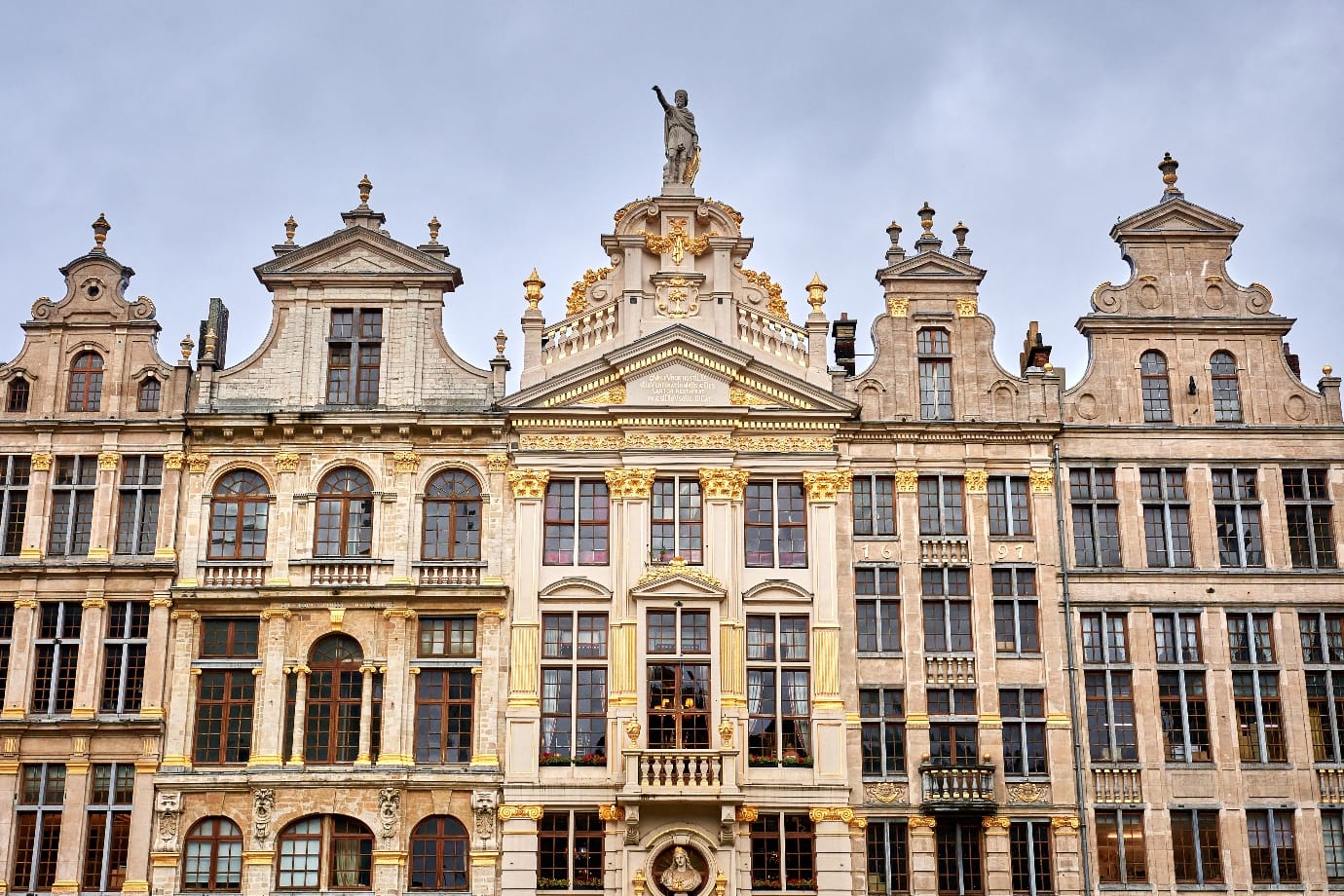
Start at the Grand-Place, one of Europe's most beautiful squares, surrounded by ornate guild houses and the magnificent Gothic Town Hall.
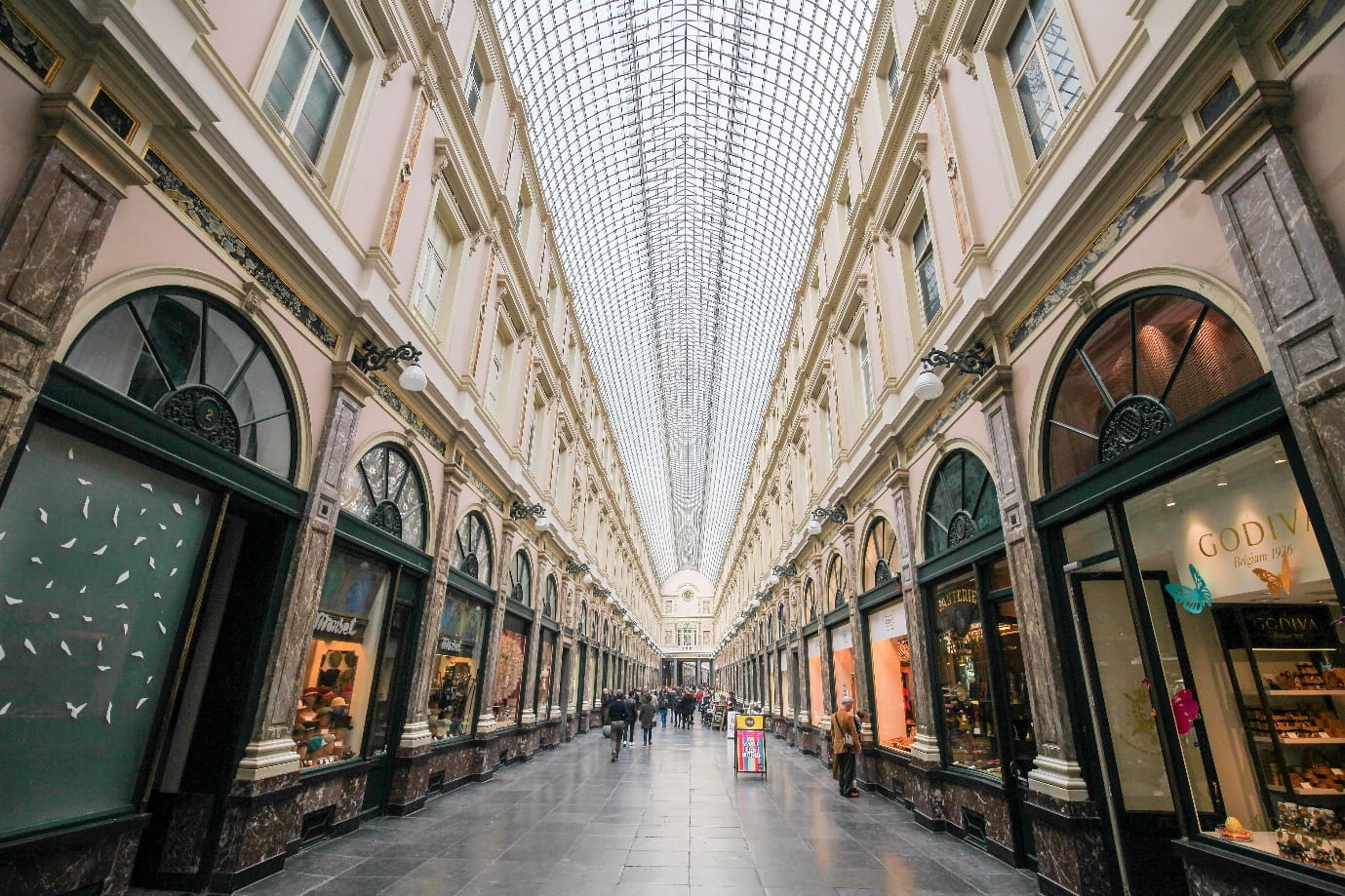
From there, wander through the Galeries Royales Saint-Hubert, browse the chocolate shops and cafés, or explore the streets around the Sablon district, known for its antiques, galleries and elegant restaurants.
Brussels is also a wonderful city for food lovers, with everything from traditional Belgian brasseries to innovative contemporary restaurants.
Try carbonnade flamande, the rich beef stew cooked in beer, or moules-frites, mussels served with crisp Belgian chips.
For something more refined, the city's excellent modern dining scene offers creative interpretations of Belgian and French cooking.
Where to Eat in Brussels
La Buvette, in Saint-Gilles, is a particularly interesting choice for travellers looking for something beyond the usual brasserie.
Set in a former butcher's shop with beautiful Art Deco details, this intimate restaurant serves a creative seasonal tasting menu, drawing on Belgian and French traditions with contemporary influences.
It's an appealing choice for a special dinner if you're spending the previous evening in Brussels. A tasting menu would be difficult to fit comfortably around an early-evening train departure.
@labuvettebruxelles
Where to Stay in Brussels
Pullman Brussels Centre Midi is a contemporary four-star hotel directly connected to Brussels-Midi station.
Its comfortable rooms and exceptionally convenient location make it a sensible choice for travellers arriving from London or elsewhere in Europe.
It's particularly useful if you want to explore Brussels during the day, return to collect your luggage and board the sleeper without navigating the city at the last minute.
@pullmanbrusselscentremidi
Choosing Your Sleeper Accommodation
European Sleeper offers several accommodation categories, ranging from ordinary seats to more comfortable sleeping compartments.
Choosing the right one can make a considerable difference to the experience.
Budget Class
The cheapest option is a regular seat.
It's suitable for travellers prioritising cost, but for a journey of this length, spending the night upright may leave you rather tired on arrival.
Classic Couchette
For most travellers, a couchette is a sensible compromise between comfort and price.
These compartments have seats during the day that convert into sleeping berths at night. Bedding is provided, and compartments can be shared with other passengers or booked privately.
Four- and six-berth configurations are available, making this a good choice for couples, families and groups of friends.
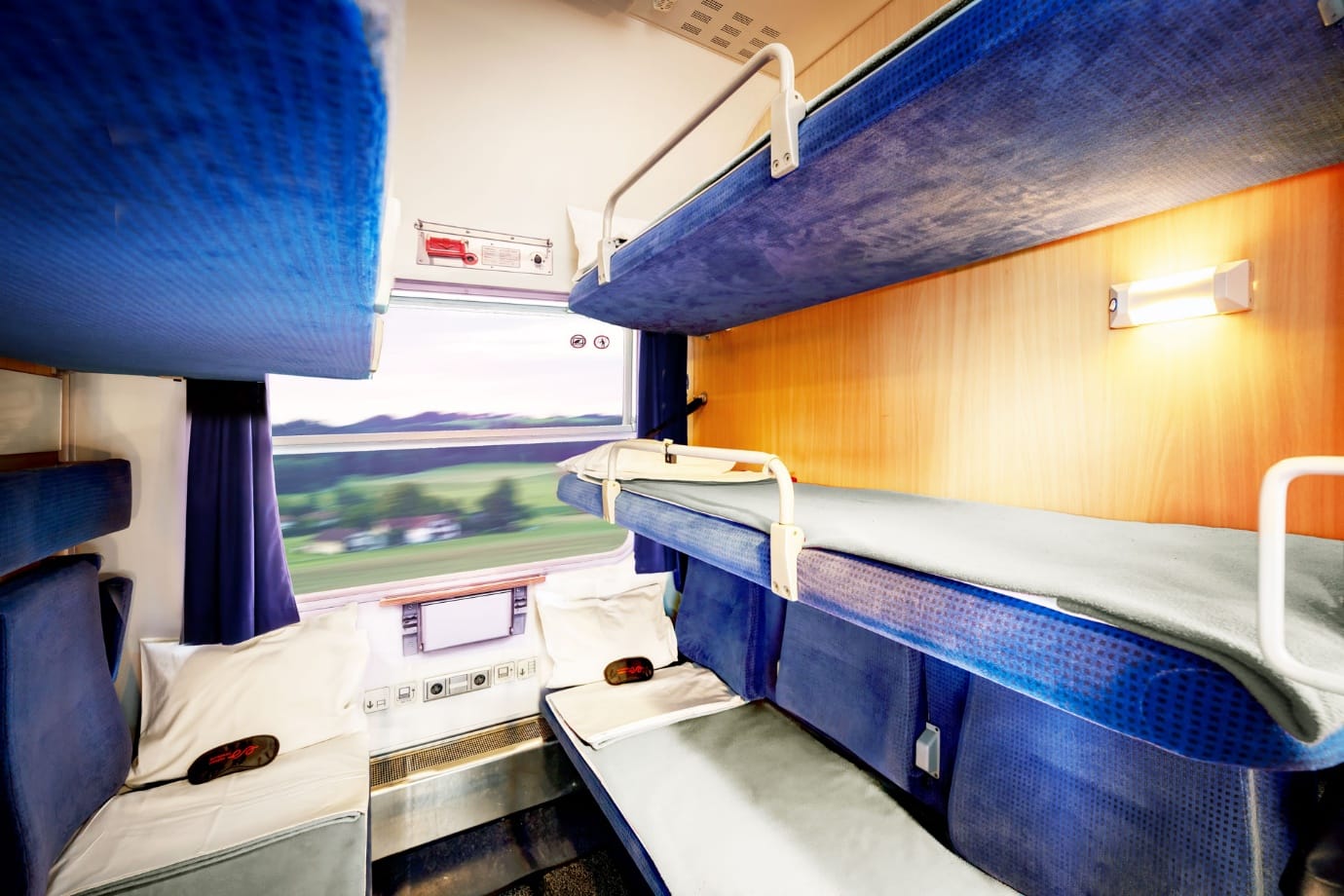
Comfort Standard
This category offers more comfortable sleeping accommodation in compartments with up to three beds.
With prepared bedding and greater privacy, it's a worthwhile upgrade for travellers who want a proper night's sleep.
Comfort Plus
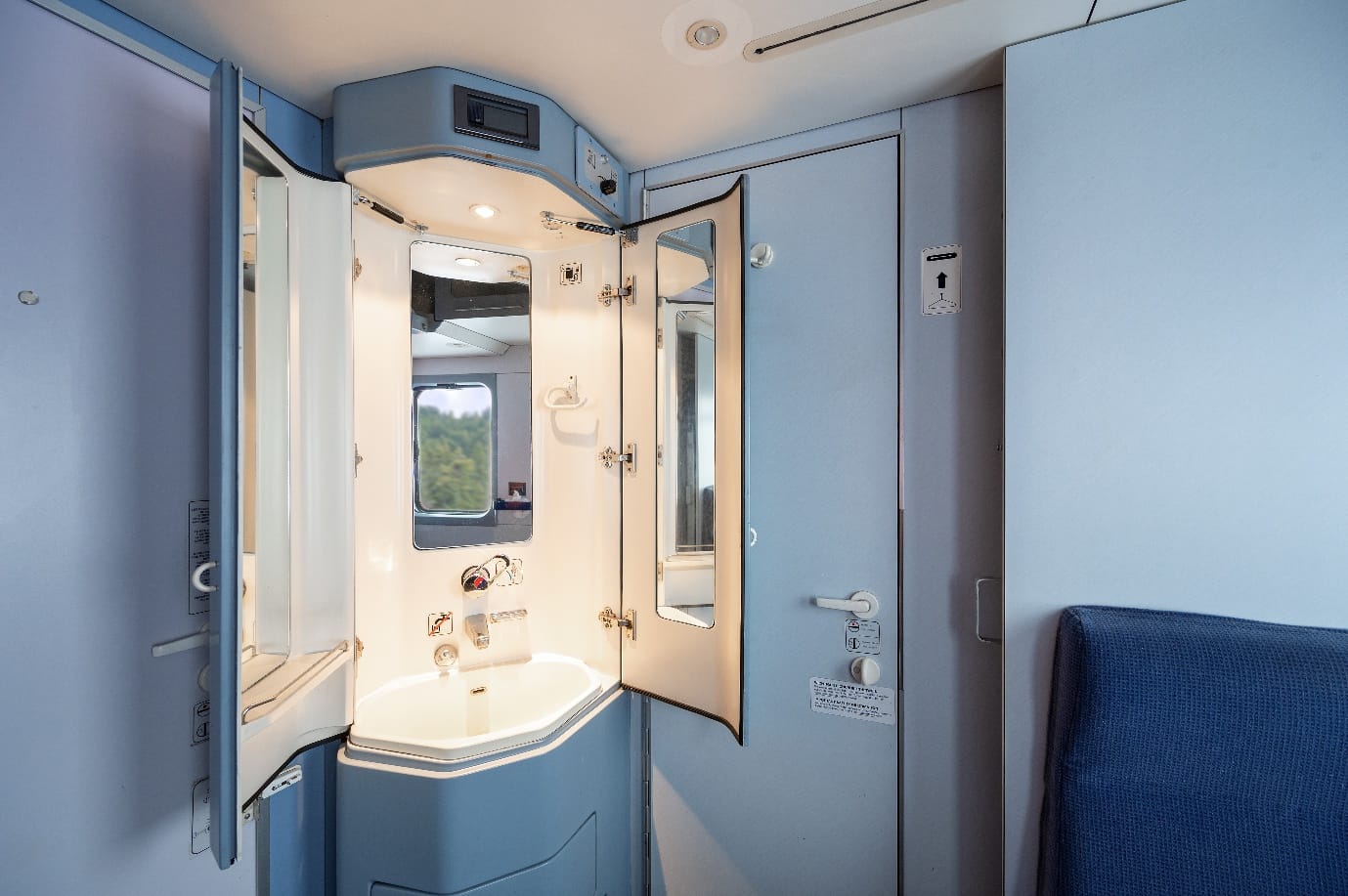
The most comfortable option offers private sleeping accommodation with additional amenities, including a washbasin, bedding, toiletries and breakfast.
For travellers who want to arrive rested and ready to explore, this is the option worth considering.
Toilets are generally shared along the corridor, so don't expect the facilities of a modern hotel room.
For an overnight journey between Brussels and Milan, we'd recommend choosing a couchette at minimum. If your budget allows, a private sleeper compartment will make the experience considerably more relaxing.
What Does the Night Train Cost?
European Sleeper has advertised Brussels–Milan tickets in shared Classic accommodation from approximately €59.99 one way, although actual fares depend on the date, demand and availability.
Budget seats may be cheaper, while private compartments and more comfortable sleepers cost considerably more.
As with many European night trains, booking early generally gives you the best choice of accommodation and fares.
When comparing the cost with flying, remember to include airport transfers, baggage charges and the value of travelling overnight instead of paying for a hotel.
A sleeper ticket won't always be cheaper than a budget flight, particularly for travellers choosing private accommodation.
But the comparison isn't simply about the lowest ticket price.
The train delivers you directly to a city-centre station, allows you to travel with luggage and turns a night of accommodation into a journey across Europe.
For many travellers, that experience is worth paying a little extra for.
A Night on Board
One of the pleasures of a traditional sleeper train is the gradual change of atmosphere after departure.
Passengers find their compartments, organise luggage and settle in for the evening.
Some bring a picnic and a bottle of wine. Others read, chat or simply watch the lights of the city disappear through the window.
The train continues through Belgium, the Netherlands and Germany, stopping at major railway stations before heading south.
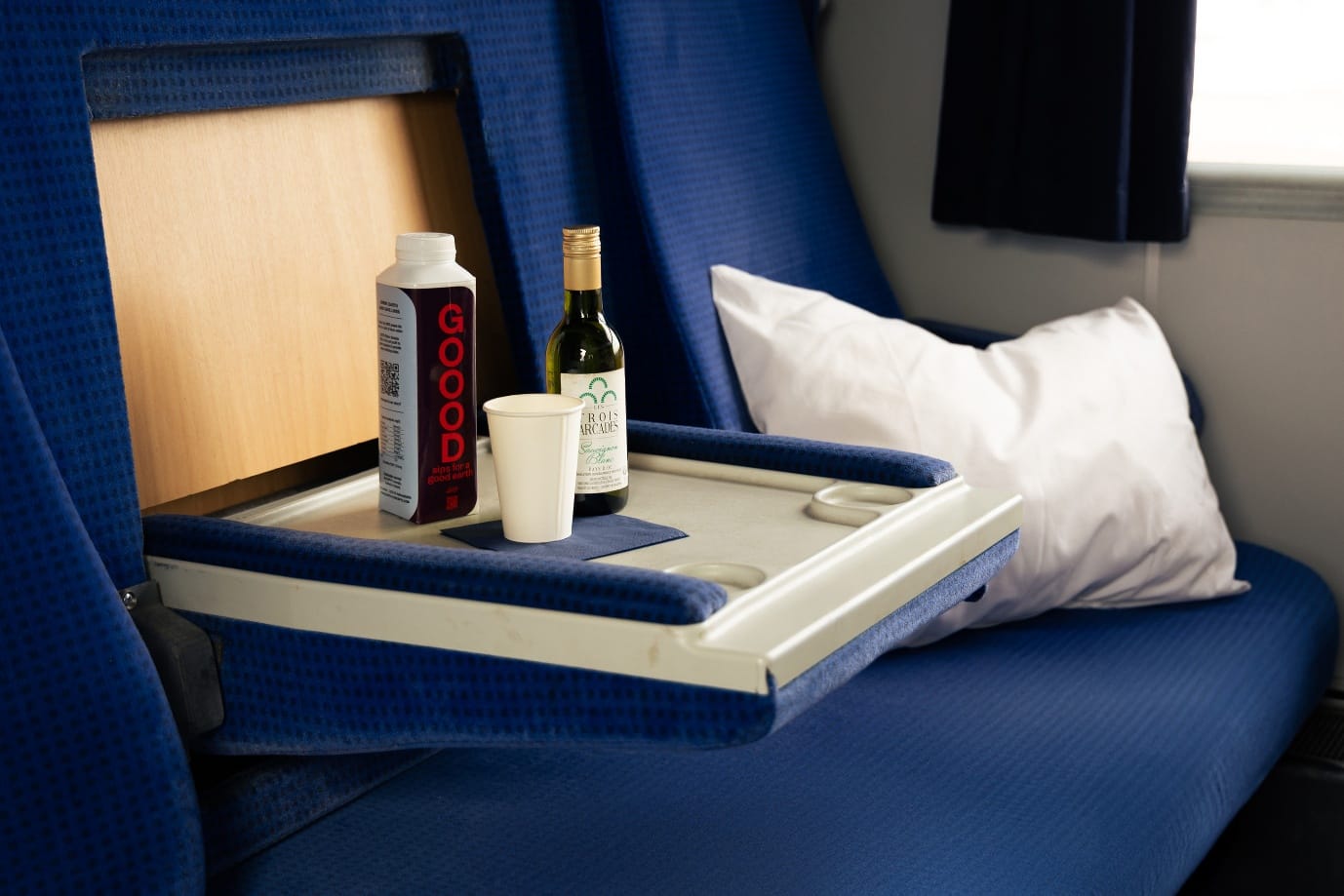
There is no dining car, although the train crew sells a limited selection of drinks and snacks.
Bringing your own dinner, breakfast extras and plenty of water is therefore a good idea.
Pack a small overnight bag with everything you'll need before morning: toiletries, medication, a change of clothes, phone charger and perhaps earplugs.
It's much easier than trying to retrieve items from a large suitcase in a compact compartment.
The movement of a sleeper train takes a little getting used to. There may be station stops, changes in speed and occasional noises during the night.
But once settled, there's something wonderfully comforting about the rhythm of the railway.
And while you're sleeping, the train is carrying you hundreds of kilometres closer to the Alps.
Waking Up in Switzerland: The Historic Gotthard Railway
This is the part of the journey worth setting an alarm for.
The historic Gotthard railway is one of Switzerland's great engineering achievements, built in the nineteenth century to connect northern and southern Europe across the Alps.
Its opening in 1882 transformed trade and travel between Switzerland and Italy.
The route is famous for its dramatic mountain scenery, spiral tunnels and carefully engineered climbs through steep valleys.
Travelling south, the train passes through the central Swiss landscape around Arth-Goldau before continuing towards Göschenen.
Depending on the season and timetable, the morning light may reveal mountains rising above narrow valleys, traditional villages and stretches of water framed by steep slopes.
The approach towards the Gotthard is particularly rewarding because the railway follows the contours of the landscape rather than simply disappearing beneath the mountains.
At Göschenen, the train enters the historic Gotthard railway tunnel, emerging on the southern side of the Alps at Airolo.
The change in scenery can be remarkable.
Northern Alpine landscapes gradually give way to the valleys of Ticino, where Italian is the main language and the architecture, food and atmosphere begin to feel distinctly Mediterranean.
It's a beautiful reminder of how much cultural variety Switzerland contains within a relatively small country.
The amount of scenery visible depends on the season, daylight hours and operating timetable. Travelling in spring or summer generally offers more daylight for enjoying the Alpine section.
Bellinzona: Medieval Castles and a Taste of Ticino
The first major stop in southern Switzerland is Bellinzona, the capital of Ticino.
Often overlooked by travellers heading straight to Lugano or Italy, Bellinzona is well worth discovering.
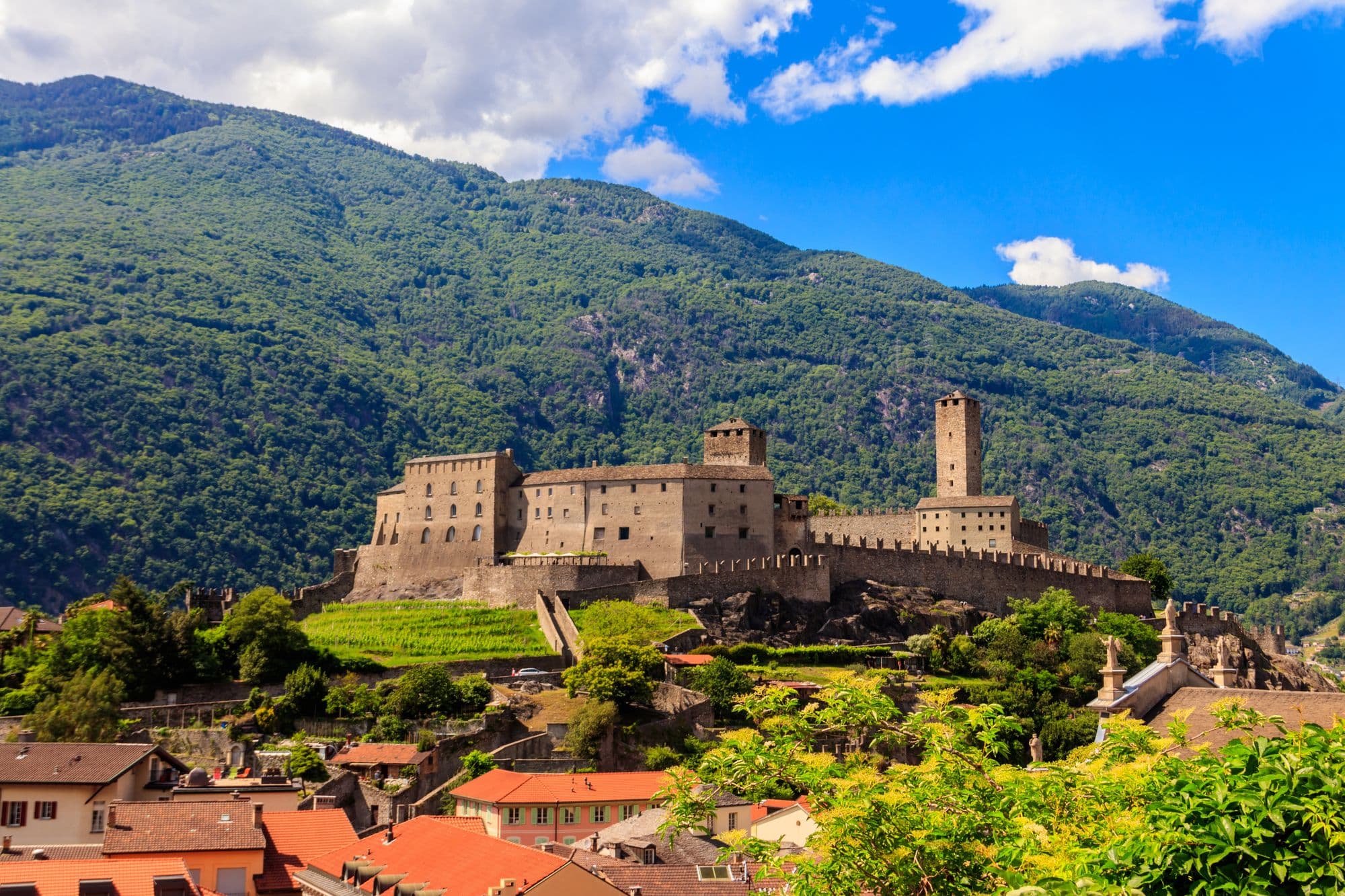
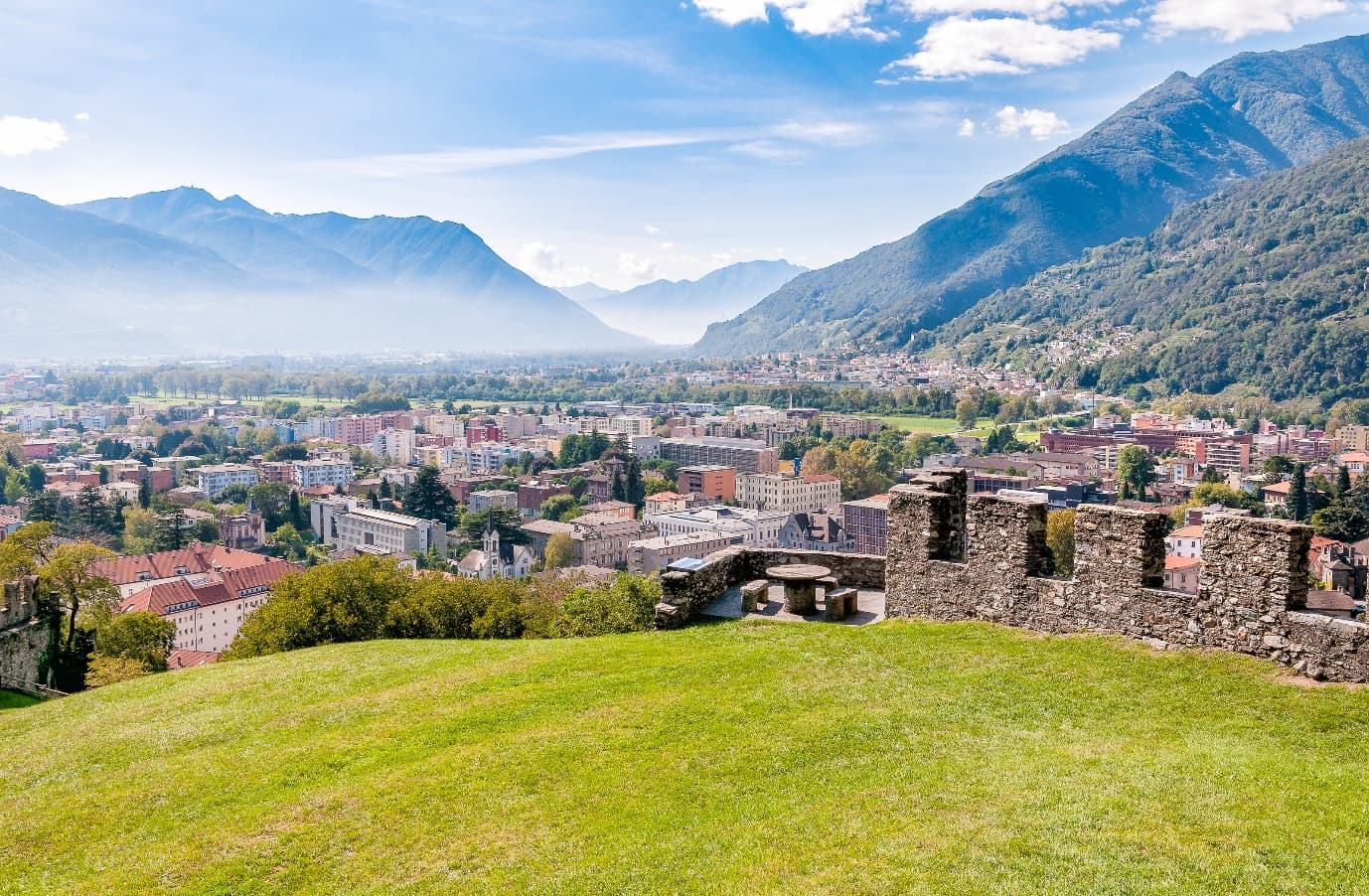
Its most famous attractions are three remarkable medieval castles: Castelgrande, Montebello and Sasso Corbaro.
Together, they form a UNESCO World Heritage Site, reflecting the town's historic importance as a gateway through the Alps.
Castelgrande rises directly above the old town, its imposing stone walls and towers overlooking the surrounding valley.
Below, Bellinzona's historic centre is a pleasant collection of narrow streets, cafés, arcades and small squares.
The town also has an excellent Saturday market, where stalls sell local produce, cheeses, cured meats and seasonal specialities.
Where to Eat in Bellinzona
For lunch in a particularly memorable setting, Grotto San Michele is located within the Castelgrande complex, with a panoramic terrace overlooking Bellinzona and the surrounding mountains.
The restaurant celebrates regional Ticinese cooking, making it an atmospheric place to enjoy local specialities after exploring the castle.
@ristorantecastelgrande
Bellinzona is compact enough to explore on foot, and the railway station is within walking distance of the historic centre.
For travellers interested in exploring a less familiar side of Switzerland, it makes an appealing place to spend a night before continuing south.
Lugano: Palm Trees Beneath the Alps
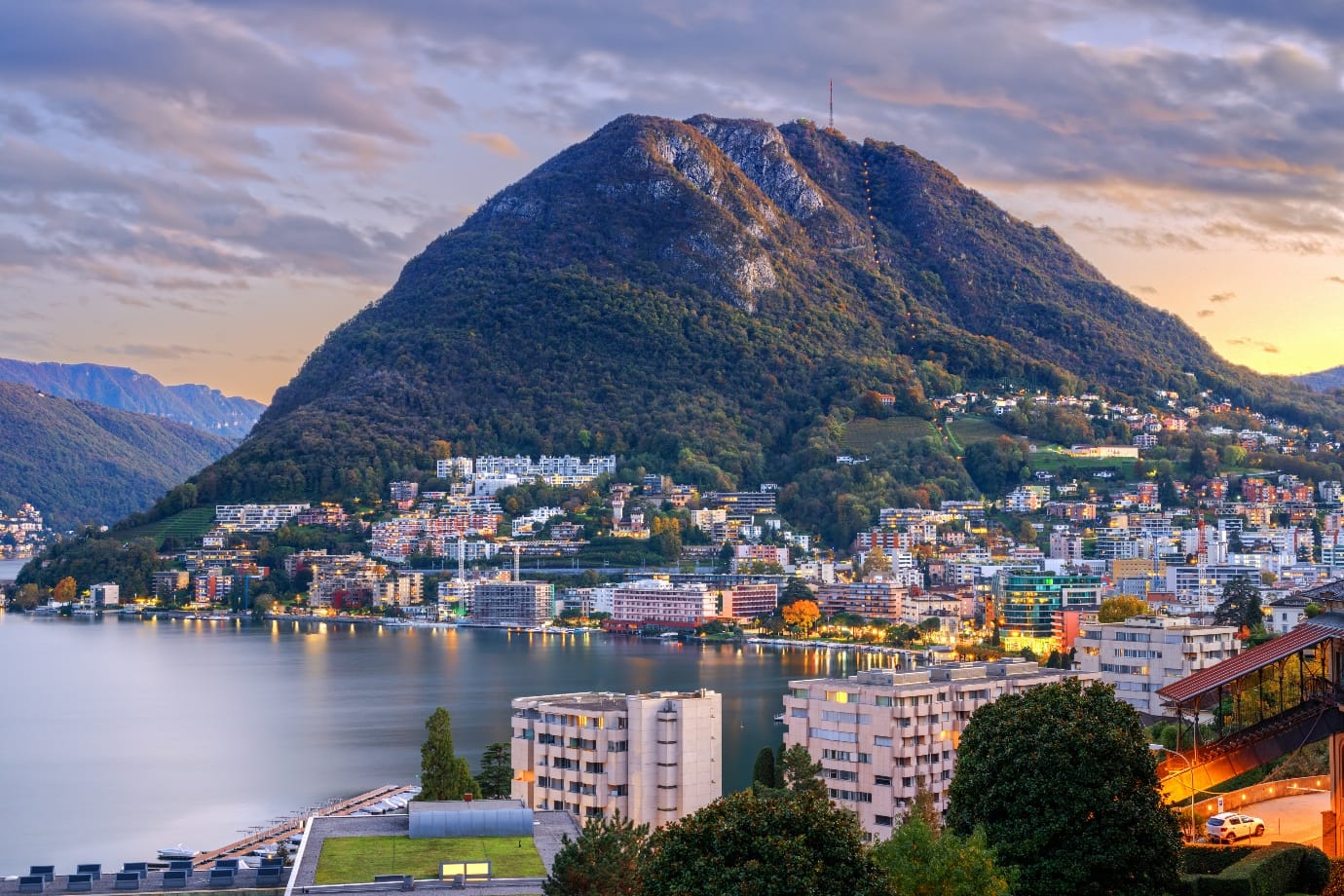
Further south, the train reaches Lugano, one of Switzerland's most attractive lakeside cities.
With its palm trees, pastel-coloured buildings and café-lined squares, Lugano feels closer to northern Italy than the Alpine Switzerland many visitors imagine.
The city stretches along the shores of Lake Lugano, surrounded by wooded hills and mountains.
A stroll along the waterfront leads towards Parco Ciani, a beautifully maintained lakeside park with mature trees, gardens and views across the water.
In the historic centre, Piazza della Riforma is the natural gathering place, lined with cafés and restaurants.
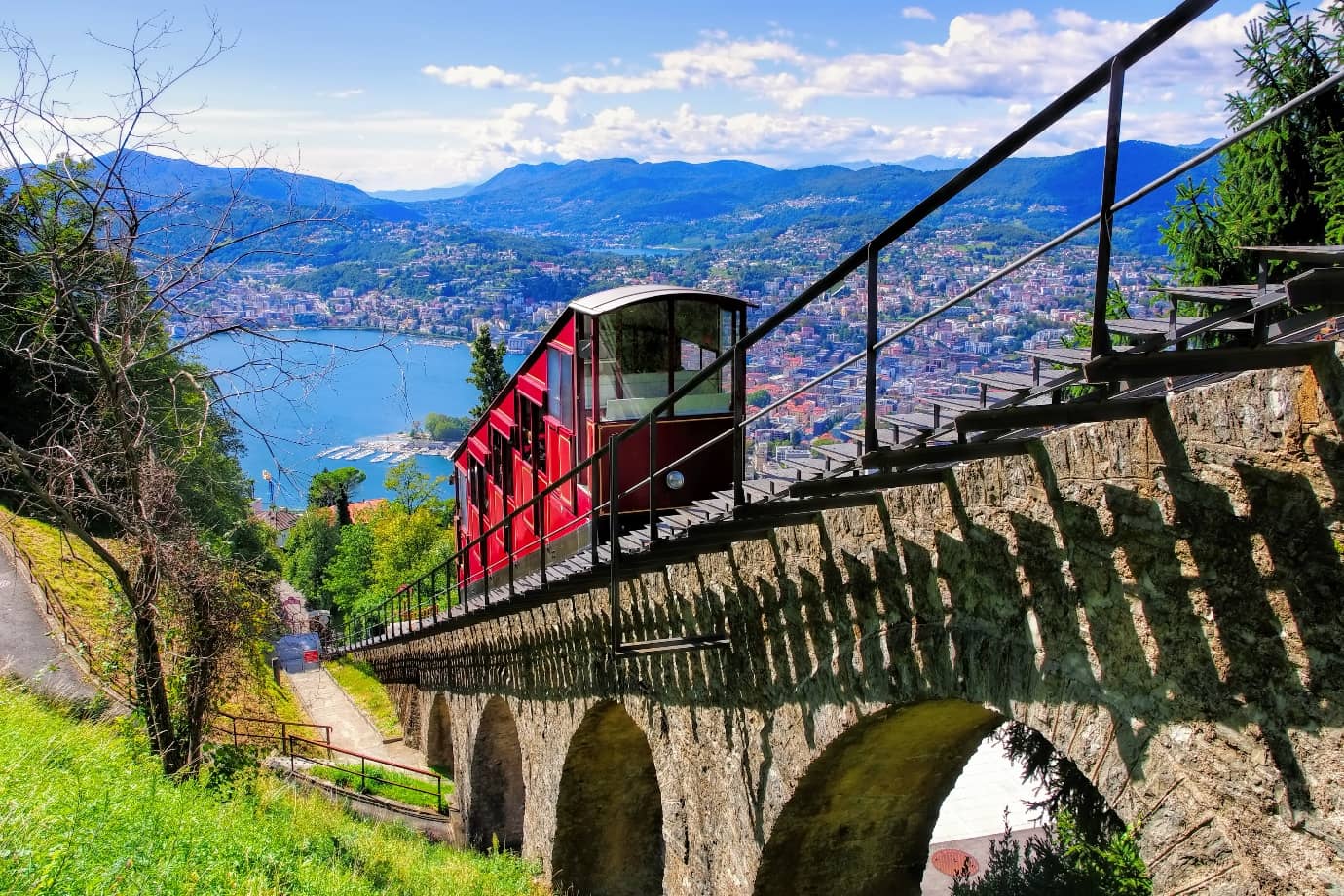
For spectacular views, take the funicular to Monte San Salvatore or travel up Monte Brè, both overlooking the lake and surrounding mountains.
Lugano is also a wonderful place to discover Ticino's food culture.
Expect fresh pasta, risotto, polenta, local cheeses and Merlot wines, often served in traditional grotti — rustic restaurants typically found in shady woodland or countryside settings.
Where to Eat in Lugano
La Cucina di Alice is a charming contemporary restaurant overlooking Lake Lugano, combining seasonal Italian cooking with an elegant but relaxed atmosphere.
The menu features carefully prepared pasta, seafood and regional ingredients, while the lakeside setting makes it particularly appealing for a leisurely lunch or dinner.
@la_cucina_di_alice
For travellers combining Switzerland and Italy, Lugano makes an ideal place to break the journey.
You can spend a few days exploring the lakes and mountains before continuing south to Como or Milan.
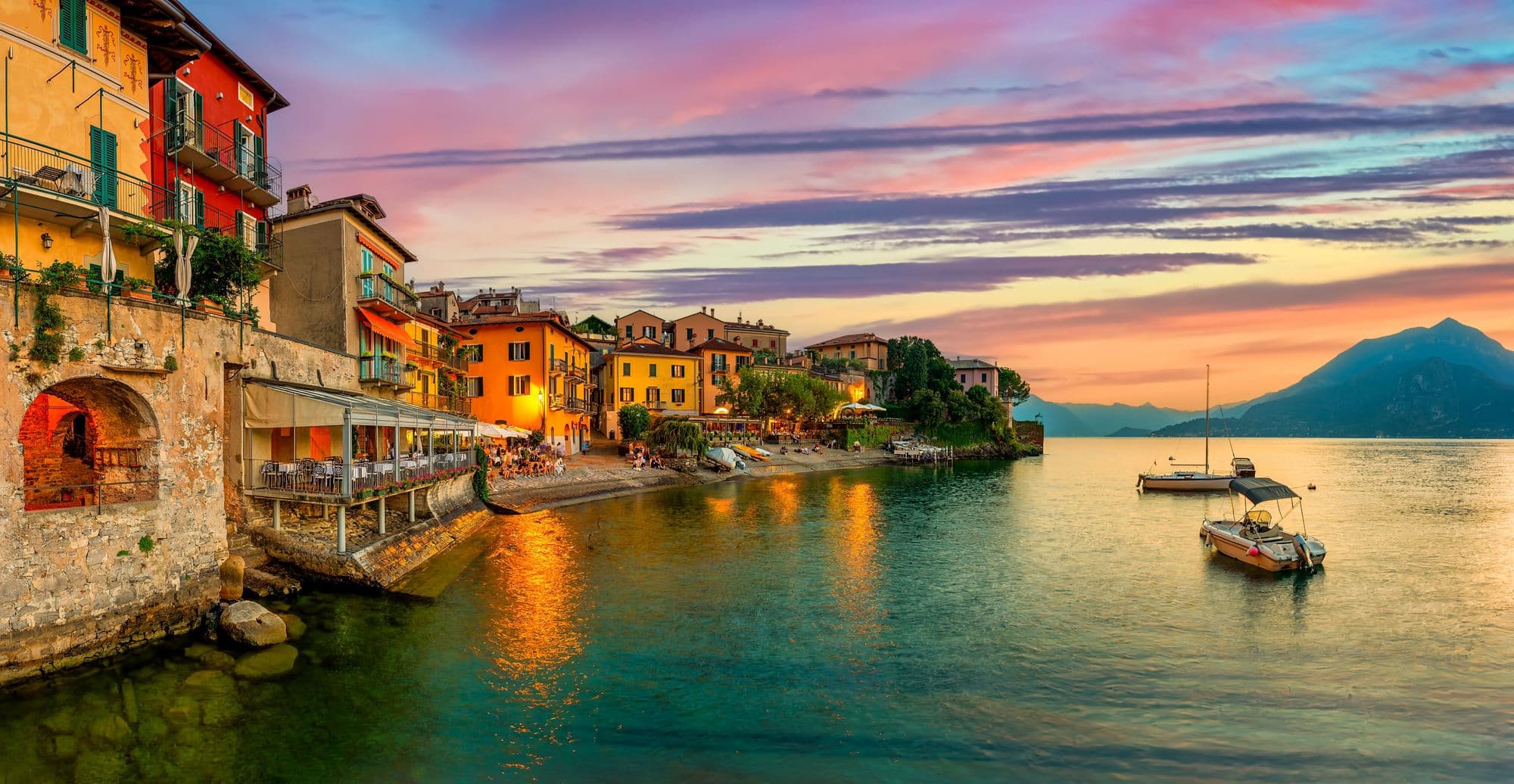
Lake Como: An Italian Escape Without the Airport
One of the most appealing features of the new sleeper service is its stop at Como San Giovanni.
This makes Lake Como accessible directly from Brussels without changing trains.
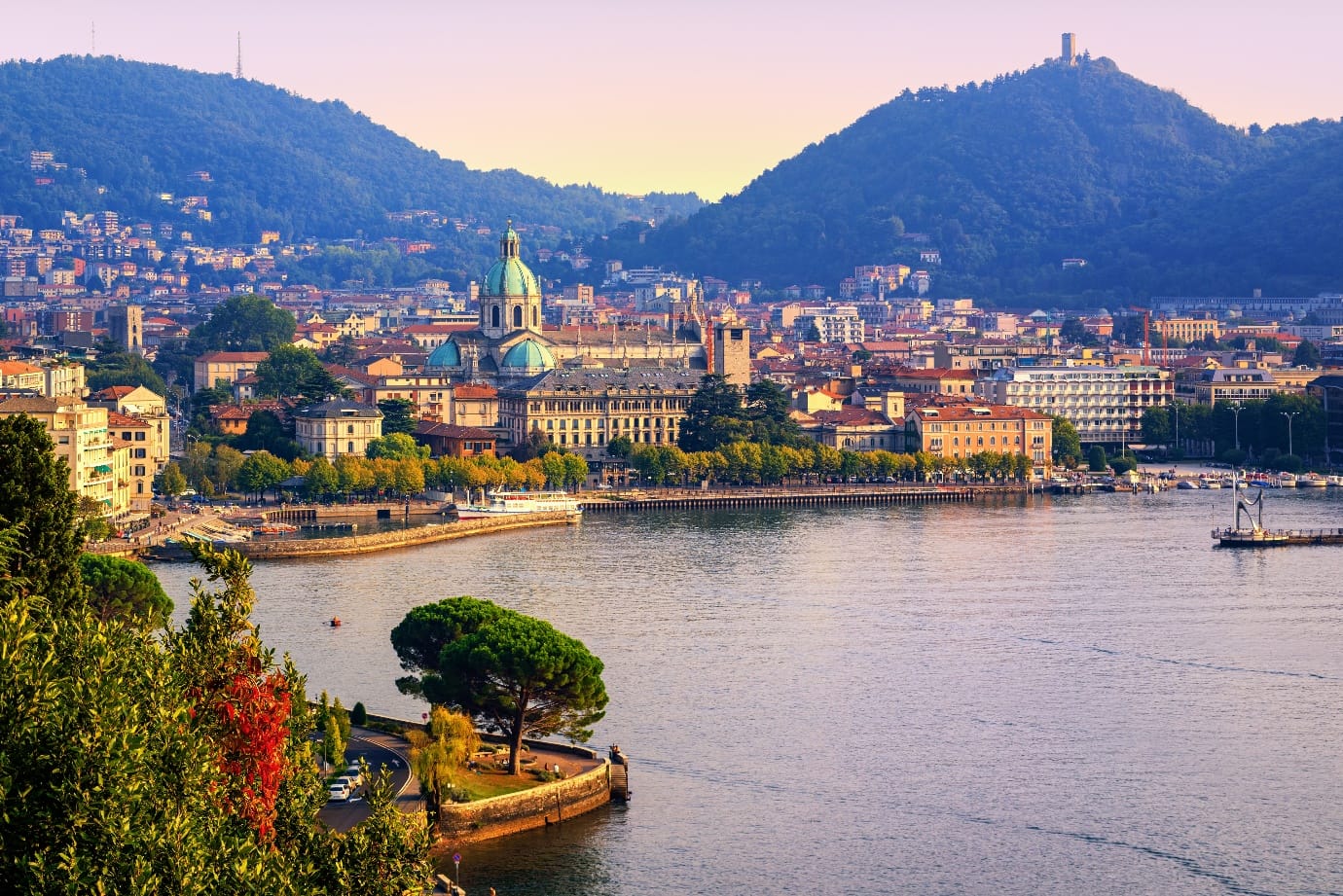
Como itself is a lively and attractive town, with a beautiful cathedral, historic streets and a waterfront promenade overlooking the southern end of the lake.
The old town is compact and easily explored on foot.
Start at Piazza del Duomo, where the cathedral's elaborate façade dominates the square, before wandering through the surrounding streets and cafés.
For panoramic views, take the funicular up to Brunate, a hillside village overlooking the lake and mountains.
From Como, passenger boats connect many of the lake's famous towns and villages.
Bellagio, Varenna and Menaggio are among the most popular, with elegant villas, gardens, narrow lanes and waterfront restaurants.
For a slower and more rewarding visit, consider staying several nights rather than treating Lake Como as a hurried day trip.
Travelling by ferry is one of the best ways to appreciate the scenery, and it allows visitors to explore much of the lake without hiring a car.
If you're travelling in summer, book accommodation early. Lake Como is extremely popular, particularly around the central lake villages.
Arriving in Milan: A Different Side of the City
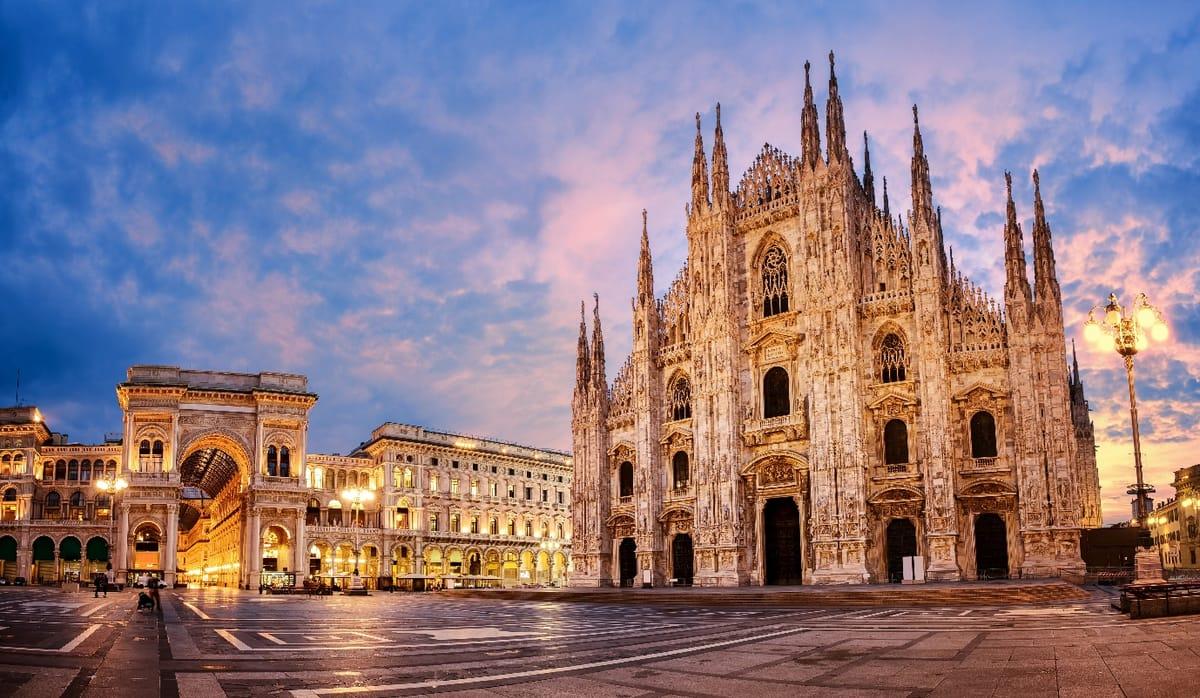
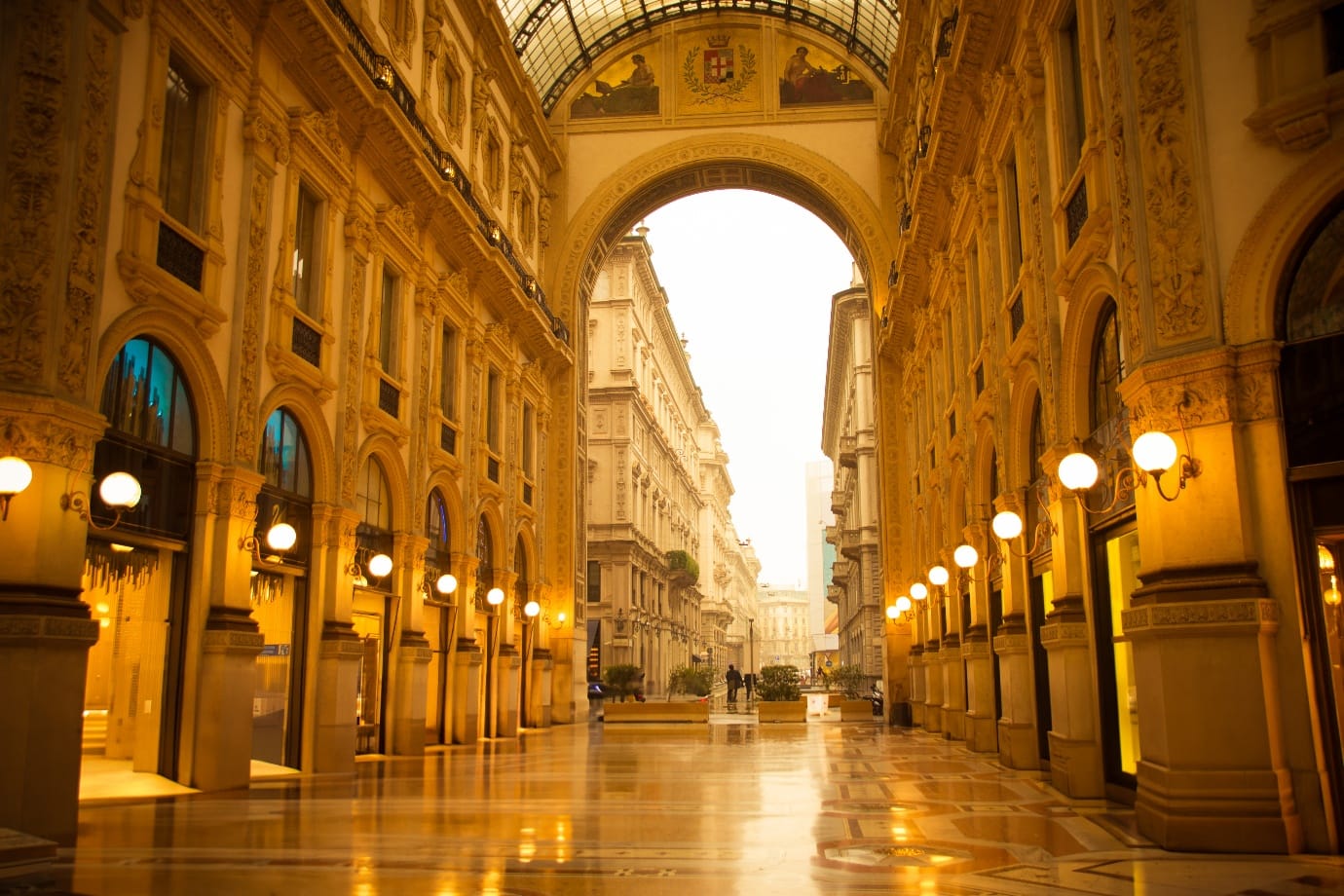
The final destination is Milano Porta Garibaldi, one of the city's major railway stations.
Unlike Milano Centrale, with its monumental architecture and grand concourse, Porta Garibaldi sits close to Milan's modern Porta Nuova district.
This makes it an excellent starting point for exploring a different side of the city.
Just a short walk away, Piazza Gae Aulenti is surrounded by contemporary glass towers, shops and cafés.
Nearby stands the Bosco Verticale, Milan's famous pair of residential towers covered with trees and vegetation.
The surrounding streets lead towards the lively Isola district, known for its independent restaurants, bars and creative atmosphere.
Where to Eat in Milan
Osteria Brunello, on Corso Garibaldi, is a polished but welcoming restaurant specialising in Italian classics, with particular attention to Milanese cooking.
It's a good choice for a leisurely lunch or dinner after arriving, with an appealing wine list and a lively atmosphere in one of Milan's most enjoyable neighbourhoods.
@osteriabrunello
For something more adventurous, Trippa is one of Milan's most interesting modern trattorias.
Chef Diego Rossi's changing menu celebrates traditional Italian ingredients with creativity and confidence, and the restaurant has developed a loyal following among Milanese food lovers.
It's located in Porta Romana rather than beside the station, and reservations are highly sought after, so book well ahead.
@trippamilano
Where to Stay in Milan
For a luxurious stay, Palazzo Parigi Hotel & Grand Spa offers elegant accommodation in Milan's fashionable Brera district.
Combining Italian design with Parisian influences, the hotel has spacious rooms, a beautiful spa and a sophisticated atmosphere.
It's a particularly appealing choice for travellers wanting a special stay in Milan, with Brera's galleries, boutiques and restaurants close by.
@palazzoparigi
Milan is also an excellent base for exploring northern Italy by rail.
Direct trains connect the city with Florence, Venice, Bologna, Turin and many other destinations.
It's entirely possible to step off the sleeper train in Milan and begin a longer Italian rail adventure without ever needing a car.
How to Turn the Journey into a Longer European Holiday
The Brussels–Milan sleeper is particularly attractive because it links several destinations that work beautifully together by train.
Rather than travelling directly to Milan and stopping there, consider building a longer itinerary around the route.
Brussels, Lake Como and Milan
Spend two nights exploring Brussels before boarding the sleeper.
Leave the train at Como for three or four nights beside the lake, exploring Bellagio, Varenna and other lakeside villages by ferry.
Continue to Milan for two nights, discovering its architecture, museums and restaurants.
This is an excellent introduction to slow travel through northern Europe.
Brussels, Ticino and the Italian Lakes
Take the sleeper from Brussels to Bellinzona or Lugano.
Spend several days exploring the historic castles of Bellinzona, the beautiful waterfront of Lugano and the surrounding mountains.
Continue south to Lake Como before finishing in Milan.
This itinerary offers a wonderful contrast between Alpine scenery, Swiss culture and Italian lakeside life.
London to Italy Without Flying
For travellers starting in Britain, Eurostar provides a convenient connection from London St Pancras to Brussels.
Allow plenty of time between trains, particularly because Eurostar and European Sleeper are booked separately.
After arriving in Milan, continue by high-speed rail to Florence, Venice, Rome or Naples.
It's a practical way to make the journey to Italy part of the holiday rather than simply a flight to the destination.
Practical Tips for Booking the Brussels–Milan Sleeper
Book directly with European Sleeper. The official website is https://www.europeansleeper.eu, where you can check departures, compare accommodation categories and make reservations.
Check the new timetable. From 13 December 2026, the service follows a revised route through Antwerp, Breda and Eindhoven. Check the operating days and departure times for your particular date.
Choose a bed rather than a seat. For a long overnight journey, a couchette or sleeper compartment is well worth considering.
Book early for summer travel. Private sleepers and the most comfortable compartments can sell out, particularly around popular holiday dates.
Bring your own food. There is no dining car, although limited snacks and drinks are available from the crew.
Keep your overnight essentials accessible. A small bag with toiletries, medication, chargers and a change of clothes makes life easier.
Check your arrival station. The train terminates at Milano Porta Garibaldi, not Milano Centrale.
Allow generous connection times. If you're joining the train from London or another city, avoid tight connections between separately booked services.
Set an alarm for Switzerland. The morning journey through the Gotthard region is one of the highlights.
Consider an Interrail pass. European Sleeper accepts Interrail travellers with the appropriate paid reservation, although you should compare the total cost with an ordinary ticket.
When Is the Best Time to Travel?
The route operates across the seasons, and each offers a different experience.
Spring is particularly attractive, with longer days, snow still visible on the higher mountains and pleasant temperatures around the Italian lakes.
Summer offers the greatest chance of enjoying the Alpine scenery in daylight, although Lake Como and Milan can be busy and hot.
Early autumn is another excellent choice, with generally pleasant conditions for exploring cities and lakeside towns.
Winter brings a different atmosphere, with snow-covered Alpine landscapes and festive city breaks in Brussels or Milan.
However, shorter daylight hours mean that some of the mountain scenery may be less visible from the train.
For travellers particularly interested in the Gotthard railway, late spring through early autumn would be our preferred period.
Is the Brussels–Milan Night Train Worth Taking?
If your only priority is reaching Milan as quickly as possible, flying will usually be faster.
But that's not really the point of a sleeper train.
The pleasure lies in leaving one city in the evening and waking somewhere entirely different.
It's the changing landscapes, the quiet conversations in the corridor, the ritual of preparing a compartment for the night and the excitement of opening the curtains to discover where the railway has taken you.
The Brussels–Milan service also offers something particularly valuable: a practical new connection between northern Europe, Switzerland and Italy.
You can reach the Italian lakes without an airport transfer, explore the Alps along the way and continue across Italy using the country's excellent rail network.
For travellers who enjoy the journey as much as the destination, it's a welcome addition to Europe's growing network of night trains.
And perhaps the greatest pleasure is knowing that, while you've been sleeping, you've crossed half a continent.
Explore More of Europe by Rail
The Brussels–Milan sleeper is a wonderful reminder that travelling between European countries can be part of the adventure rather than simply a way of reaching your destination.
For more inspiration, practical rail advice, local discoveries and flexible itineraries, explore our collection of Touring by Train guidebooks, covering Italy, Switzerland, France and Spain.
Discover all our travel guides: https://www.realtravelguides.com/books
Real Travel Guides — Real Travel. By Rail.
Photographs taken inside the train, and of the sleeper, courtesy of European Sleeper.