
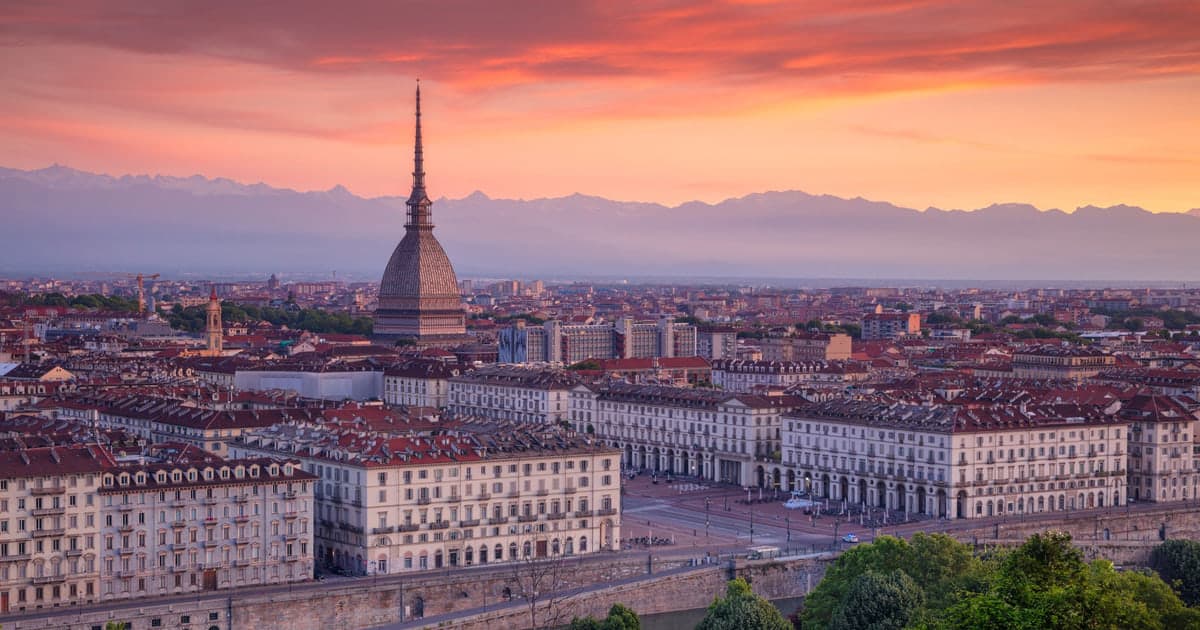
Paris to Turin sounds like a journey between two great European cities.
But the place we’d add is the one most travellers pass straight through.
Chambéry sits at the foot of the French Alps, surrounded by the mountains of Savoie and just a few hours by train from both Paris and Turin. Once the capital of the Duchy of Savoy, its pastel-coloured old town is threaded with hidden passageways beneath a great ducal château.
Spend a night here and Paris to Turin becomes something much more interesting.
One morning you’re drinking coffee in Paris. That afternoon you’re wandering beneath the walls of the Château des Ducs de Savoie. The following day, the railway carries you through the Maurienne Valley and beneath the Alps into Italy.
Your destination is Turin — Baroque, elegant, gastronomic and still one of Italy’s most underrated cities.
And the two stops are connected by far more than a railway line.
The House of Savoy ruled first from Chambéry and later from Turin. Even the Shroud of Turin made the journey across the Alps before you.
Coming from London? You can join the same adventure by Eurostar, turning this into a completely flight-free journey from the UK too.
The Journey at a Glance
Day 1: Paris → Chambéry
Take a morning TGV from Paris Gare de Lyon to Chambéry. The fastest direct services take under three hours.
Spend the afternoon and evening exploring Chambéry.
Stay one night.
Day 2: Chambéry → Turin
Enjoy another morning in Chambéry before taking an afternoon TGV through the Alps to Torino Porta Susa.
Stay two nights.
Day 3: Turin
A full day exploring the city.
Day 4: Turin
Enjoy another morning or afternoon in Turin before finishing your journey — or continuing south through Italy.
Day 1: Paris to Chambéry
Start at Paris Gare de Lyon.
Direct TGV INOUI services reach Chambéry-Challes-les-Eaux in as little as around 2 hours 50 minutes.
Book through SNCF Connect:
Choose a morning departure if you can.
Paris quickly disappears behind you and the journey becomes increasingly rural as the train heads southeast.
Then the landscape begins to change.
Mountains appear around the railway.
You’re in Savoie.
Why Stop in Chambéry?
Most international travellers don’t.
That’s part of its appeal.
Chambéry was the political centre of the House of Savoy for centuries, long before Turin became the dynasty’s capital.
The Savoys controlled territories stretching across the Alps, and their story eventually became inseparable from that of Italy itself. The dynasty would go on to provide the kings of unified Italy.
So Chambéry isn’t simply a convenient place to break the railway journey.
It provides the missing chapter between France and Turin.
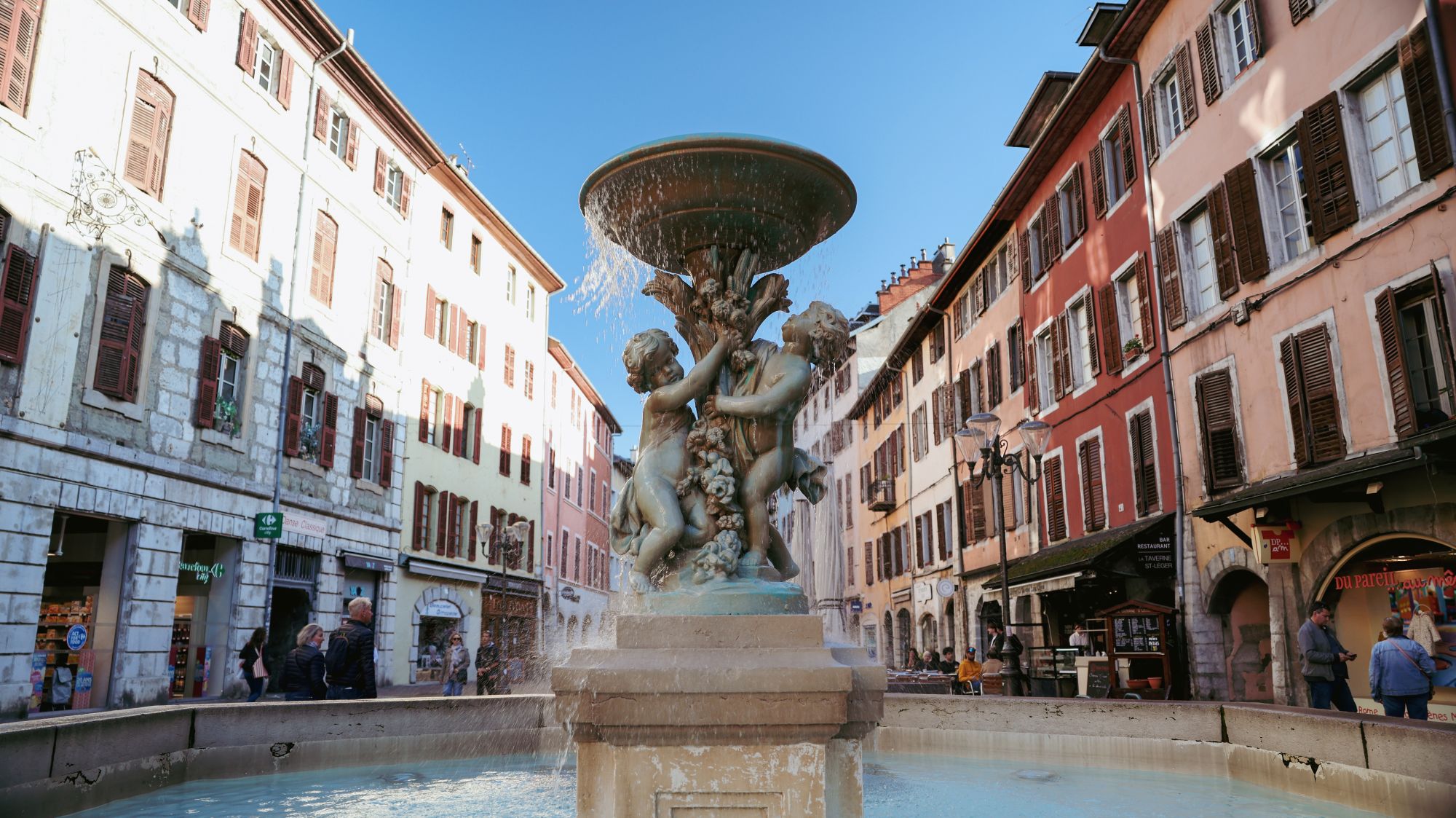
The historic centre is compact enough to explore on foot, but wonderfully atmospheric: narrow lanes, pastel façades, Italianate courtyards and mysterious passageways beneath the former castle of the Dukes of Savoy.
Leave your bags and start walking.
Begin with the Elephants
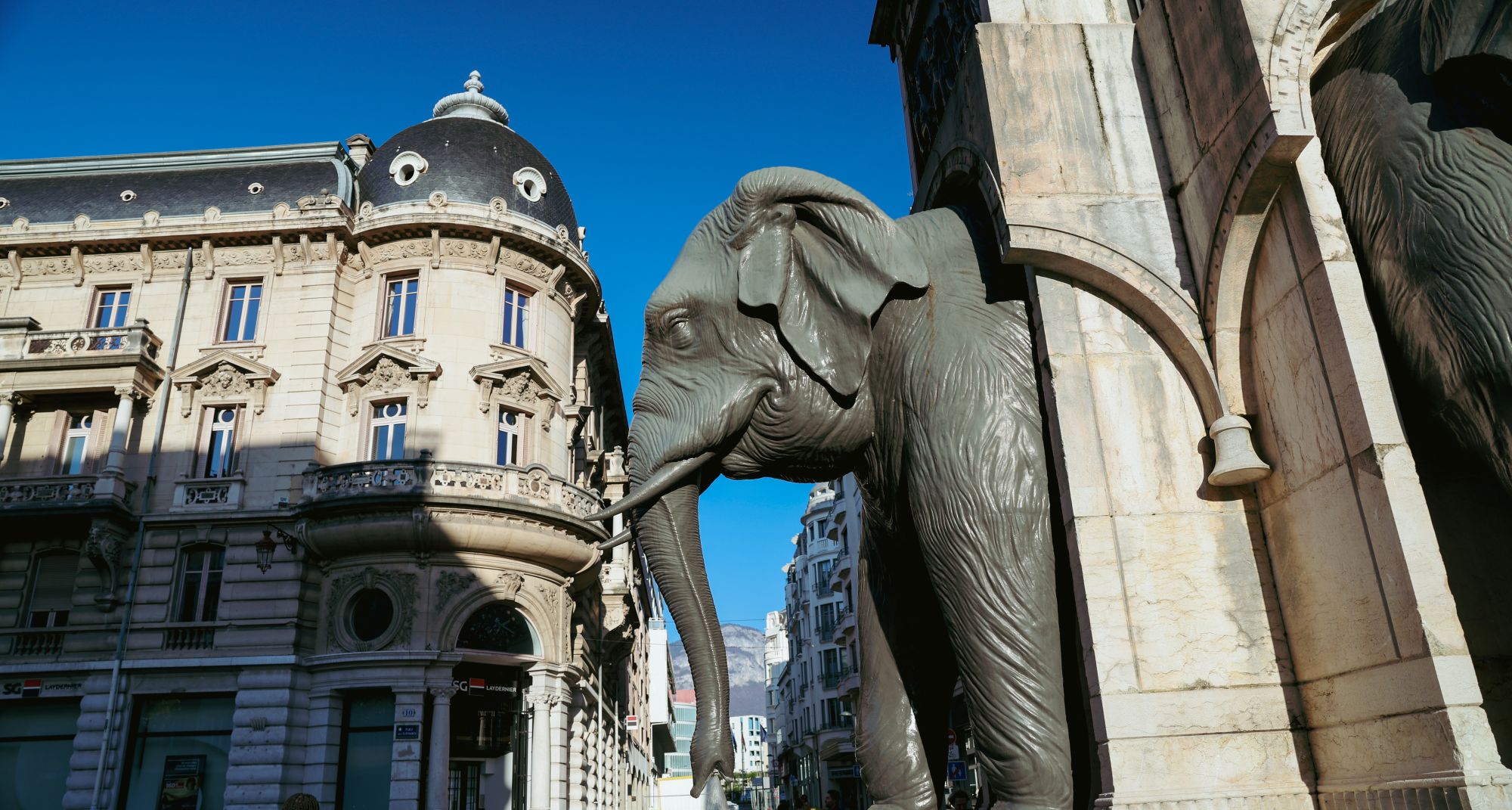
Chambéry’s most famous landmark is certainly one of France’s more unusual fountains.
The Fontaine des Éléphants consists of four elephant forequarters emerging from the base of a monumental column dedicated to General Benoît de Boigne.
Born in Chambéry, de Boigne made his fortune during an extraordinary military career in India before returning home and becoming an important benefactor of the city.
Chambéry’s inhabitants have given his grand monument a rather less dignified nickname: les quatre sans culs — the four without backsides.
From here, disappear into the old town.
Find Chambéry’s Hidden Passages
Don’t explore Chambéry by marching directly between monuments.
Get lost.
The medieval centre developed within a confined space and buildings were gradually squeezed together as the city grew.
The result is a network of narrow passageways known as allées, cutting beneath and between buildings to connect streets and hidden courtyards.
Some are immediately obvious.
Others look like private entrances until you realise they lead somewhere.
Duck beneath the arches. Look upwards at painted façades and wrought-iron balconies. Follow whichever lane looks interesting.
This is a city where curiosity pays off.
Eventually, make your way towards the building that explains why this relatively small Alpine city was once so important.
Château des Ducs de Savoie
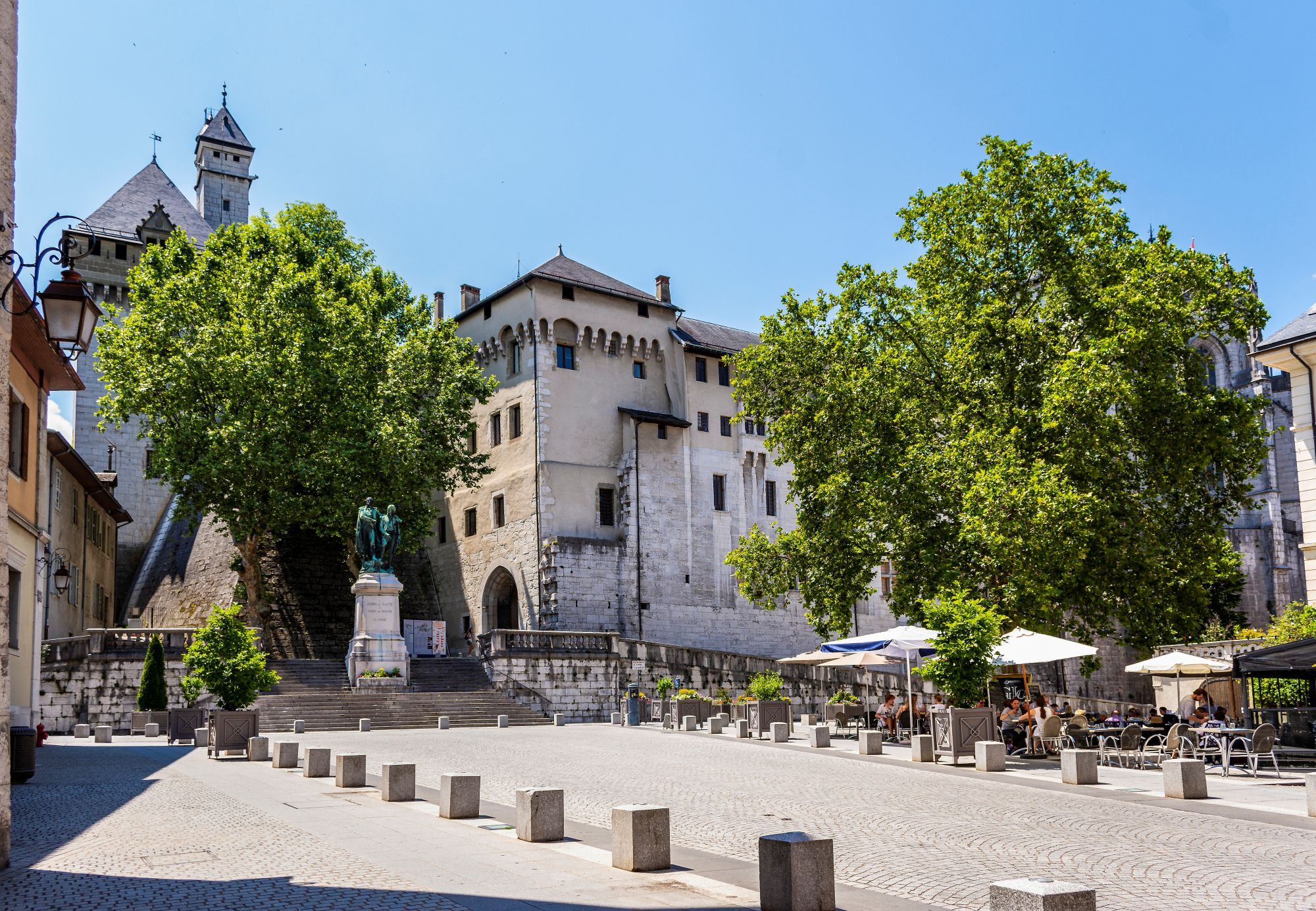
The Château des Ducs de Savoie dominates Chambéry’s historic centre.
What began as a medieval fortress gradually developed into the seat of the Counts and later Dukes of Savoy.
Their territories stretched across the Alps.
That geography matters.
In the 16th century, the dynasty shifted its political centre from Chambéry to Turin.
Tomorrow’s train journey therefore follows, in a loose sense, the historic movement of Savoy power from one side of the Alps to the other.
Parts of the château are occupied by government offices today, but guided visits provide access to areas of the historic complex.
And inside is another fascinating connection with tomorrow’s destination.
Before Turin, the Shroud Was Here
The Sainte-Chapelle of Chambéry once housed the object now known throughout the world as the Shroud of Turin.
The House of Savoy brought the Shroud to Chambéry during the 15th century, and it remained here for more than a century.
In 1578 it was transferred across the Alps to Turin.
Tomorrow, you’re following it.
Whatever your views about the Shroud itself, the historical connection gives the journey between these two cities an unexpected coherence.
Chambéry and Turin stop feeling like separate destinations.
They become chapters of the same story.
Where to Eat in Chambéry
You’re in Savoie.
This is not the evening for restrained portions.
Look for tartiflette, made with potatoes, onions, lardons and Reblochon; Savoyard fondue; raclette; local charcuterie; and mountain cheeses including Beaufort and Tomme de Savoie.
For something contemporary, Le Café de Lyon @cafedelyonchambery works with seasonal ingredients and local producers, combining the feel of a French restaurant with a relaxed wine-bar atmosphere.
Another appealing option in the old town is La Maniguette @la.maniguette.epicurieux, where the menu changes with the seasons and draws on produce from local artisans and suppliers.
Or simply find a traditional Savoyard restaurant and order the cheese.
Tomorrow you’re going to Piedmont.
Things aren’t about to get lighter.
Where to Stay in Chambéry
For a special overnight stop, our choice would be Petit Hôtel Confidentiel @phc_chambery
Hidden behind a discreet entrance on Rue de la Trésorerie, immediately below the Château des Ducs de Savoie, this small boutique hotel occupies a historic building in the pedestrianised old town.
Inside, the style is contemporary rather than traditionally Alpine, with individually designed rooms and suites and a spa with pool, sauna and hammam.
It suits Chambéry perfectly: intimate, slightly hidden and much more interesting than you might expect from the outside.
Most importantly for this itinerary, you wake up right in the historic centre.
Day 2: Don’t Rush to Turin
Don’t take the first train out.
Give Chambéry another morning.
One of the most interesting places to visit before crossing into Italy is the Musée des Beaux-Arts, housed in the city’s former grain hall.
Its collection is particularly strong in Italian painting from the late Middle Ages onwards.
There is something wonderfully appropriate about spending the morning looking at Italian art before boarding a train across the Alps.
Alternatively, simply enjoy Chambéry at a slower pace.
Browse the food shops around Les Halles, pick up some local cheese and wander through the allées you missed yesterday.
If you have more time, head slightly beyond the centre to Les Charmettes.
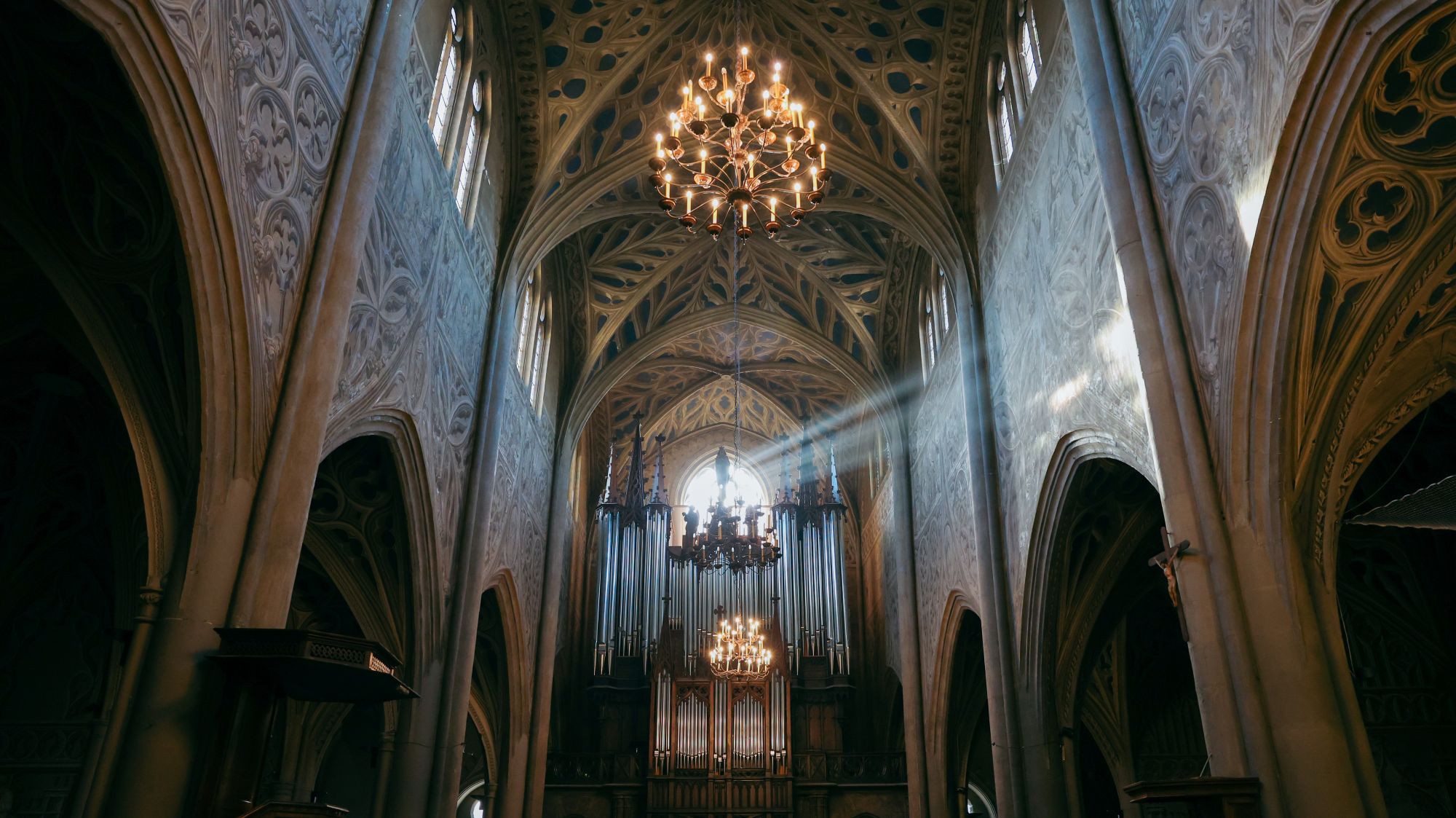
Rousseau at Les Charmettes
The philosopher Jean-Jacques Rousseau lived at Les Charmettes with Madame de Warens during the 1730s and later remembered this period as one of the happiest of his life.
The house sits in a green valley above Chambéry, surrounded by gardens and woodland.
Here Rousseau read, studied music, explored botany and developed ideas that would later influence his writing.
It feels remarkably rural considering how close you are to the city.
Check opening times before setting out, particularly outside the main visitor season.
Then collect your luggage.
It’s time to cross the Alps.
Chambéry to Turin: The Journey Through the Mountains
This is the train ride that makes the entire itinerary worthwhile.
Direct international TGV services connect Chambéry-Challes-les-Eaux with Torino Porta Susa, with the fastest journeys taking around 2 hours 40 minutes.
There are far fewer international trains than domestic French services, so check the timetable for your particular date before booking your hotels.
Book through SNCF Connect:
And if you have a choice, travel during daylight.
From Chambéry, the railway enters the Maurienne Valley, following one of the great historic corridors across the Western Alps.
Villages appear beneath steep mountain slopes as the valley narrows towards Modane.
Then the train disappears beneath the mountains through the Fréjus rail tunnel.
You emerge in Italy.
From Oulx, the railway descends through Piedmont towards Turin.
France hasn’t abruptly become Italy.
You’ve watched one become the other.
Arriving in Turin
Turin appears gradually.
The mountains begin to recede, the landscape opens and then the city takes over.
Arrive at Torino Porta Susa and you’re in a place that many international travellers still bypass on their way to Milan, Florence or Venice.
Don’t.
Turin deserves time.
It was the first capital of unified Italy, the historic home of the House of Savoy and later the powerhouse of Italy’s industrial revolution.
But those descriptions don’t really capture how enjoyable it is.
Turin is elegant without being showy.
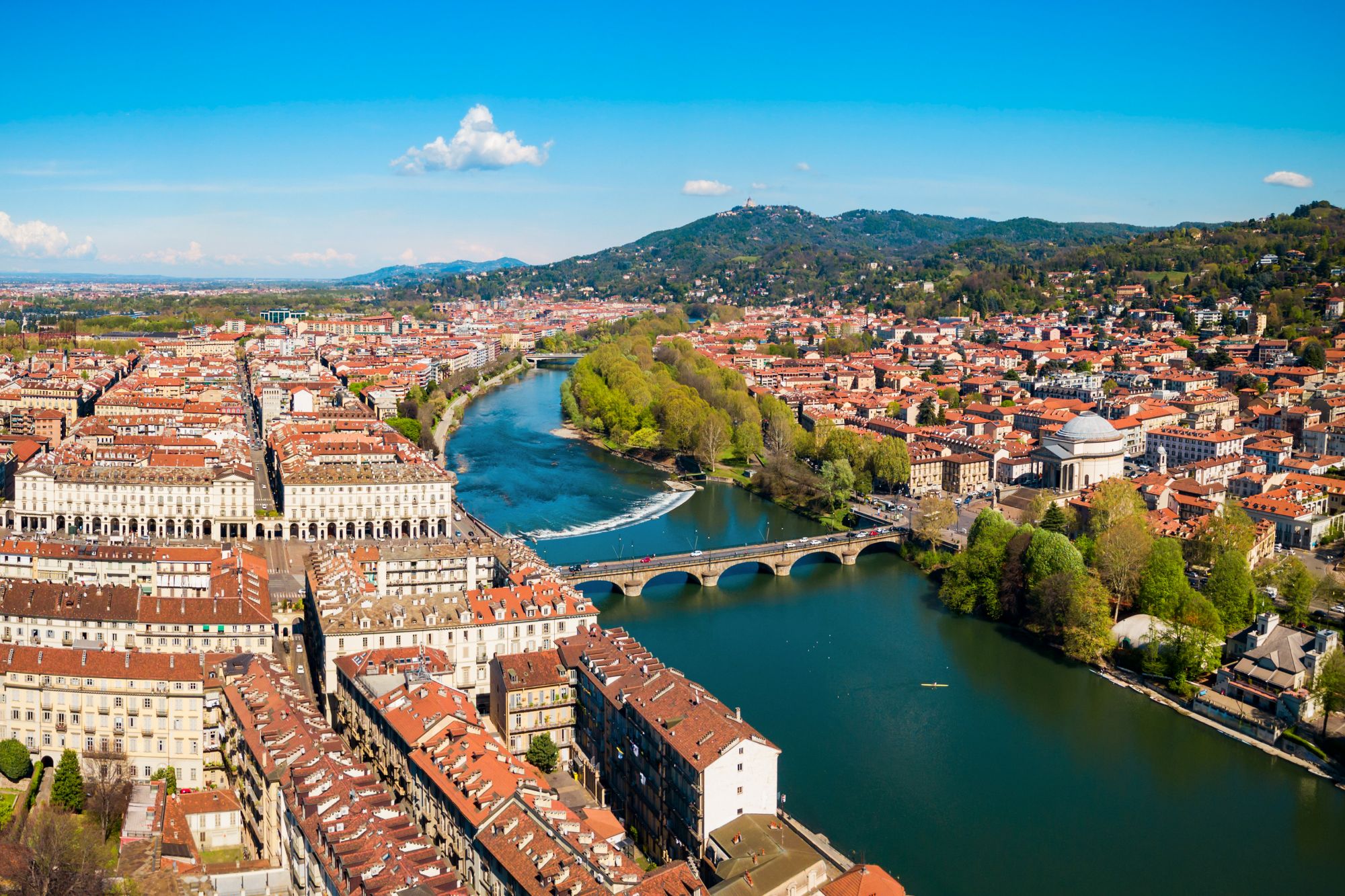
Baroque palaces frame enormous squares. Kilometres of covered arcades shelter cafés, bookshops and chocolate shops. The River Po curves along the eastern side of the centre and, on clear days, the Alps form an extraordinary backdrop.
And then there’s the food.
Two nights won’t feel excessive.
Where to Stay in Turin
For somewhere creative, sociable and completely different from a conventional city hotel, try Combo Torino @thisiscombo.
Combo occupies a converted historic fire station beside Porta Palazzo, one of Turin’s most fascinating neighbourhoods and home to its huge food market.
Part hotel and hostel, part restaurant, bar and cultural space, it has a distinctly contemporary feel, with private rooms alongside shared accommodation and a programme that can include DJ sets, live music, exhibitions and other events.
It’s the sort of place where you can come back from sightseeing, order a drink and actually want to stay downstairs for the evening.
For something quieter and more grown-up without losing the independent feel, Opera35 Boutique Hotel @opera35_torino occupies a restored 19th-century neoclassical palazzo close to Piazza Vittorio Veneto.
Original frescoes, stucco and historic architectural details have been retained alongside contemporary interiors, with a peaceful internal courtyard at the heart of the property.
Its location is particularly good for this itinerary: the River Po, Piazza Vittorio Veneto, Piazza Castello and much of central Turin can all be reached on foot.
Two very different stays — but both feel far more connected to Turin than an anonymous international hotel.
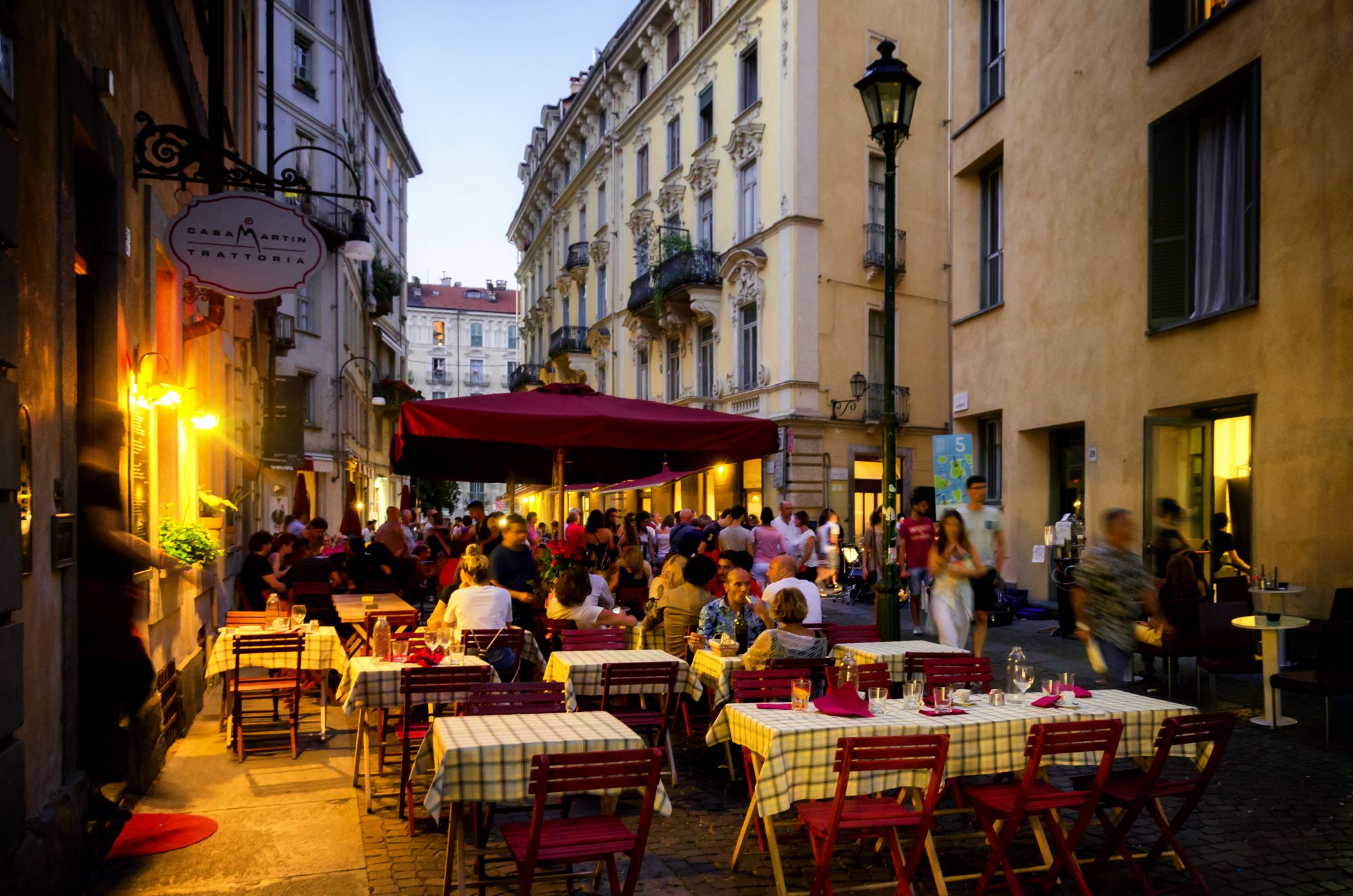
Your First Evening: Learn the Art of Aperitivo
Don’t rush immediately into dinner.
Turin has an important place in the history of the Italian aperitivo.
Vermouth became commercially established here during the 18th century, and the ritual of meeting for a drink accompanied by something to eat remains part of city life.
Walk towards Piazza Vittorio Veneto, one of Europe’s great open urban spaces, then continue towards the River Po.
The domed Gran Madre di Dio rises on the opposite bank.
Find a table.
Order a vermouth, local wine or cocktail.
Sit.
Watch Turin go by.
You’ve arrived in Piedmont.
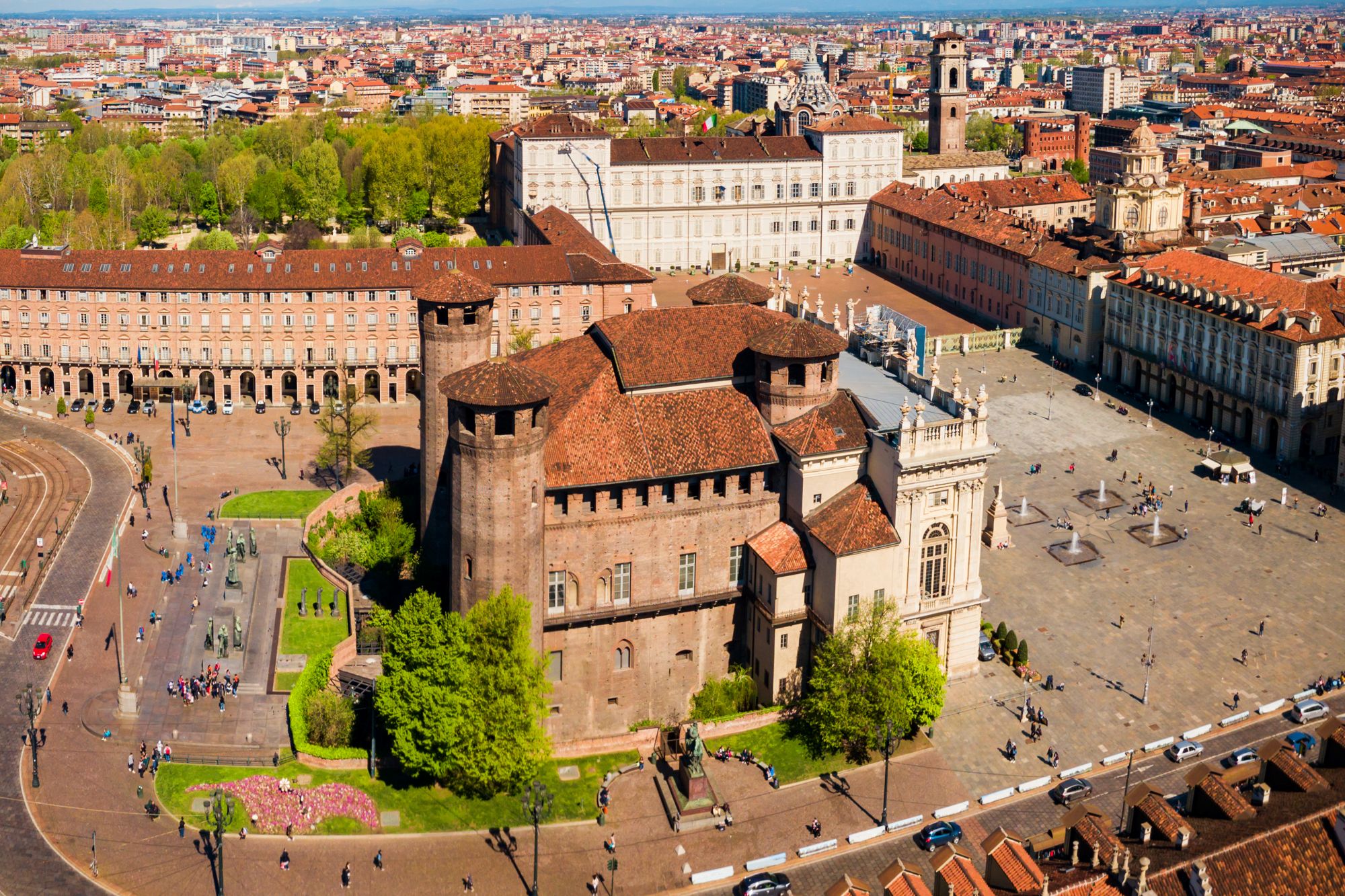
Day 3: Begin with Royal Turin
Start in Piazza Castello.
Few places explain Turin better.
Around you are buildings associated with the House of Savoy, whose story you first encountered yesterday in Chambéry.
Visit the Musei Reali, the Royal Museums complex centred on the former Royal Palace.
The rooms are suitably grand, but after visiting Chambéry the history feels much more connected.
The dynasty you encountered in a relatively small Alpine capital is now surrounded by the architecture of royal power.
And the Chambéry connection continues next door.
The Shroud’s Journey Ends Here
Turin Cathedral houses the Shroud of Turin, although the cloth itself is carefully preserved and isn’t normally on public display.
Its presence completes another strand of your journey.
The Savoy family kept the Shroud in Chambéry’s Sainte-Chapelle before transferring it to Turin in 1578.
Yesterday you stood beside the chapel where it was once kept.
Today you’re in the city that gave it the name by which the world knows it.
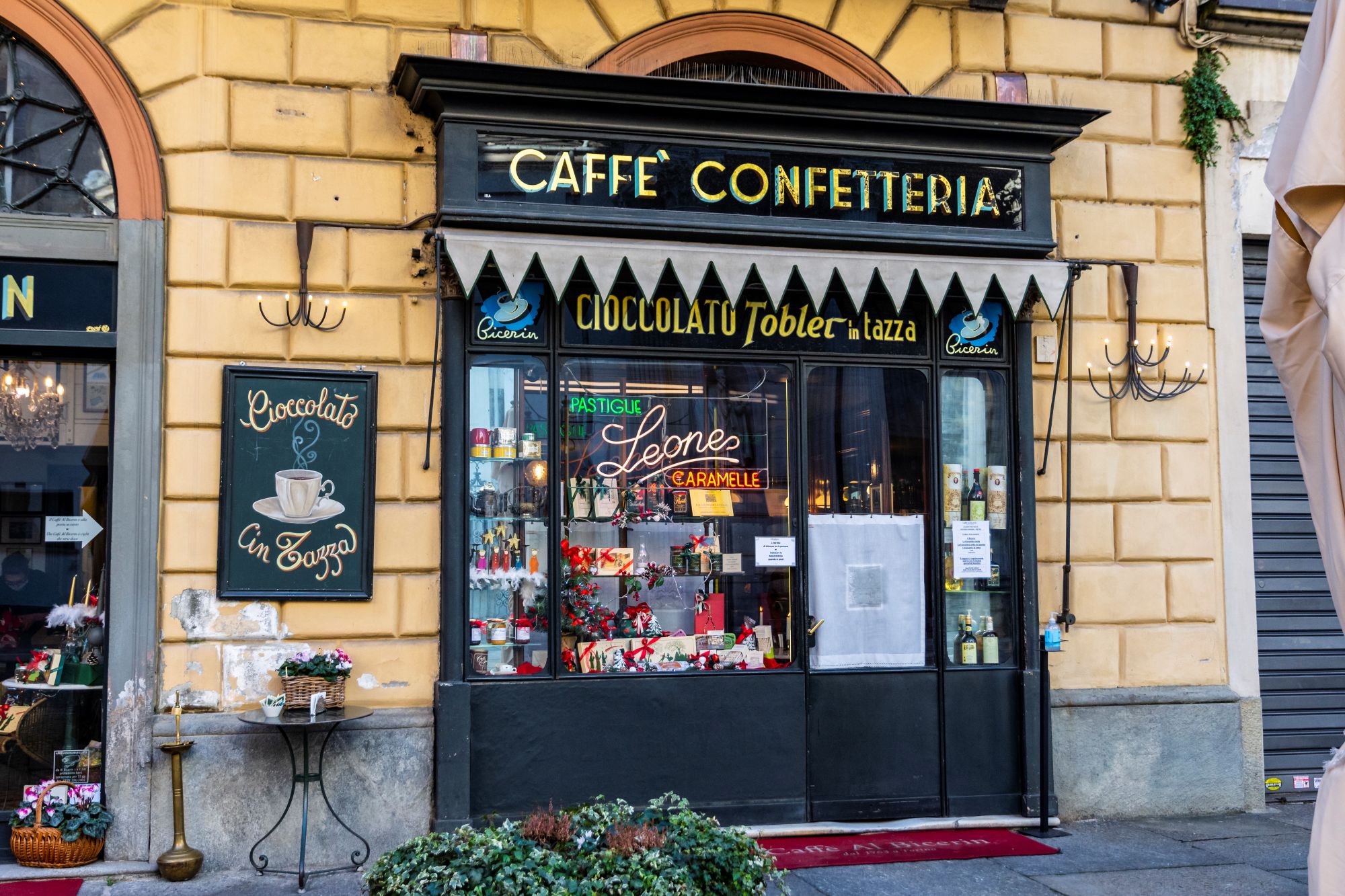
Coffee in a Historic Café
Turin takes cafés seriously.
Historic establishments became meeting places for politicians, writers, aristocrats and revolutionaries during the 19th century, and several still retain their extraordinary interiors.
One of the loveliest is Caffè Mulassano @caffemulassano, a tiny jewel-box café beneath the arcades of Piazza Castello.
It is also associated with the invention of the tramezzino, Italy’s soft triangular sandwich.
Order one.
And sometime during your stay, try a bicerin too.
This traditional Turin drink combines coffee, chocolate and cream into something sitting somewhere between breakfast and dessert.
Choose Your Museum
Turin has two museums that could easily occupy half a day each.
Unless you particularly love museums, choose one rather than rushing through both.
The Museo Egizio is the world’s oldest museum devoted to Egyptian civilisation and holds one of the most important Egyptological collections anywhere.
Book ahead, particularly at weekends and during busy periods.
Alternatively, head for Turin’s unmistakable skyline landmark: the Mole Antonelliana.
Inside is the Museo Nazionale del Cinema, an imaginative museum devoted to the history and experience of cinema.
Then take the panoramic lift upwards.
On a clear day, Turin spreads beneath you with the Alps forming a vast wall beyond the rooftops.
Suddenly yesterday’s train journey has a geography.
Walk Beneath Turin’s Arcades
Then put the map away.
Walk along Via Po.
Cross Piazza San Carlo.
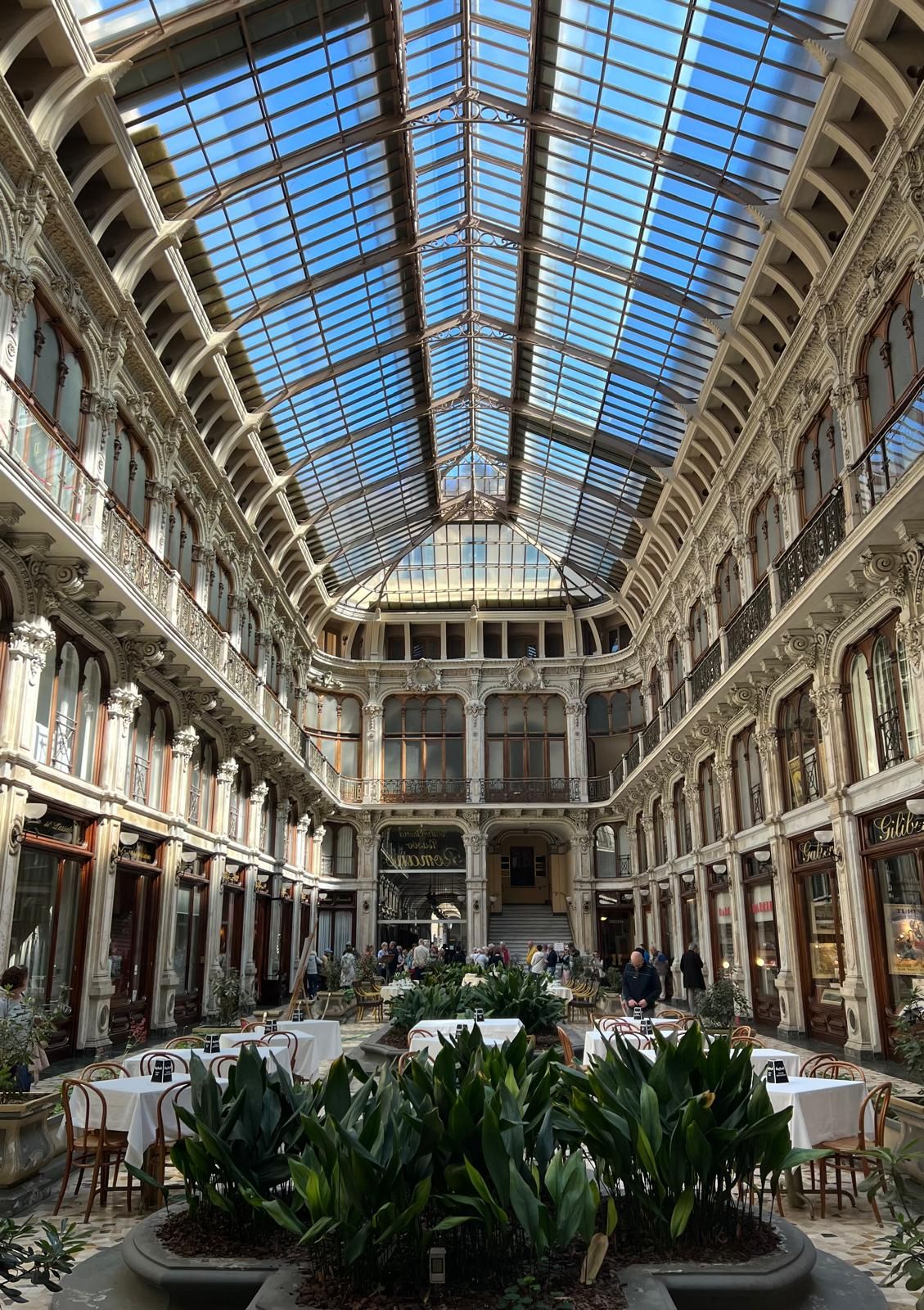
Look inside Galleria Subalpina, Galleria San Federico and Galleria Umberto I.
Turin has kilometres of covered arcades, giving the city a distinctive rhythm and making it particularly enjoyable to explore on foot.
Cafés, bookshops, boutiques and chocolate shops appear beneath them.
Take your time.
Turin rewards wandering.
What to Eat in Turin
Piedmontese cooking is one of Italy’s great regional cuisines.
Look for vitello tonnato, thin slices of veal with a tuna and caper sauce; agnolotti del plin, tiny stuffed pasta parcels pinched closed by hand; tajarin, exceptionally fine egg pasta; and bagna càuda, the warm anchovy and garlic dip that tastes considerably better than its description might suggest.
For classic fresh pasta in the centre, Pastificio Defilippis @pastificiodefilippis has roots stretching back to the 19th century and is an excellent place to try Piedmontese favourites.
For a longer meal, Scannabue @scannabuecaffe in San Salvario is known for traditional Piedmontese cooking in a lively neighbourhood setting.
And don’t leave Turin without trying gianduja.
The combination of chocolate and Piedmont hazelnuts is one of Turin’s great gifts to the world.
Finish Above the River Po
Towards evening, head back towards Piazza Vittorio Veneto and cross the River Po towards the Gran Madre di Dio.
If you still have energy, continue uphill towards Monte dei Cappuccini.
Then turn around.
Below you, the Po curves past the city.
The Mole Antonelliana rises above the rooftops.
And on a clear day, the Alps form an enormous wall across the horizon.
Those are the mountains you crossed yesterday.
It’s difficult to imagine a better place to finish the journey.
Day 4: One Last Morning in Turin
Don’t book the earliest onward train.
Spend your final morning somewhere that reveals another side of the city.
Head towards Porta Palazzo, home to one of Europe’s great food markets, and wander through the surrounding streets of the Quadrilatero Romano.
Explore the stalls and antique shops around Balon in Borgo Dora if your visit coincides with the market.
Or head towards the river and walk through Parco del Valentino.
You could also simply return to a historic café, order another bicerin and admit that two nights in Turin probably wasn’t enough.
Starting in London?
This journey works beautifully from the UK too.
Take Eurostar from London St Pancras to Paris Gare du Nord, then cross Paris to Gare de Lyon for the TGV towards Chambéry.
Book Eurostar:
Don’t underestimate the Paris transfer.
You’re changing stations, not simply trains, so allow a generous connection rather than building the journey around the minimum possible transfer time.
If the timings aren’t comfortable, there is an even better solution.
Arrive in Paris the previous afternoon and stay overnight.
Have dinner. Go for a walk. Start the next morning with coffee and a direct train towards the Alps.
Then Paris becomes part of the holiday rather than a connection you’re trying to survive.
Not Ready to Stop? Continue to Rome
Turin doesn’t have to be the end of the journey.
Italy’s high-speed rail network makes continuing south remarkably easy.
Fast trains connect Turin with Milan, Bologna, Florence, Rome and Naples.
If you have another three or four days, Rome makes a particularly easy extension.
Board a high-speed train in Turin and a few hours later you can be walking through the streets of the Italian capital.
Book Italian trains through Trenitalia:
You could therefore turn this into a wonderfully simple European journey:
Paris → Chambéry → Turin → Rome
Or continue even further:
Paris → Chambéry → Turin → Rome → Naples
The point isn’t to squeeze all of them into one holiday.
It’s to realise how easily you can keep going.
Booking the Journey
For the core itinerary, there are two principal rail journeys to arrange:
Paris Gare de Lyon → Chambéry-Challes-les-Eaux
Chambéry-Challes-les-Eaux → Torino Porta Susa
Book through SNCF Connect:
Direct Paris–Chambéry services can take under three hours.
Direct Chambéry–Turin international TGVs take around two and a half hours on the fastest services.
Schedules vary by date and the international service is much less frequent, so we’d choose the Chambéry–Turin train first and then build the overnight stay around it.
For onward Italian journeys, use Trenitalia:
If you’re beginning in London, book Eurostar separately:
TGV and Eurostar trains require reservations and fares generally rise as the cheapest allocations sell out, so this is a journey worth booking ahead.
Why Take the Long Way?
You could treat Paris and Turin as two points on a map.
But stop in Chambéry and the journey acquires a story.
You discover the city from which the Dukes of Savoy once ruled their territories.
You see the chapel where the Shroud of Turin was kept before it crossed the Alps.
You eat Savoyard food beneath the mountains.
Then you board a train through the Maurienne Valley, disappear beneath the Alps and emerge in Piedmont.
In Turin, the same Savoy dynasty reappears in palaces, squares and churches.
Even the Shroud has completed the journey before you.
France hasn’t abruptly become Italy.
You’ve watched one become the other.
And that’s exactly why we love travelling across Europe by train.
Explore France and Italy by Train
This journey brings together two of our favourite things about European rail travel: discovering places you might otherwise pass straight through, and crossing a border slowly enough to notice the landscape, architecture and food changing around you.
Our Touring France by Train and Touring Italy by Train guides are designed to help you do exactly that, with easy self-guided rail itineraries, practical planning advice and inspiration for exploring independently.
Because Europe doesn’t have to be explored one country at a time.