
Interlaken by Train: A Spring Escape Into the Heart of the Swiss Alps
Why Go in Spring?
Spring in Interlaken feels like a quiet awakening.
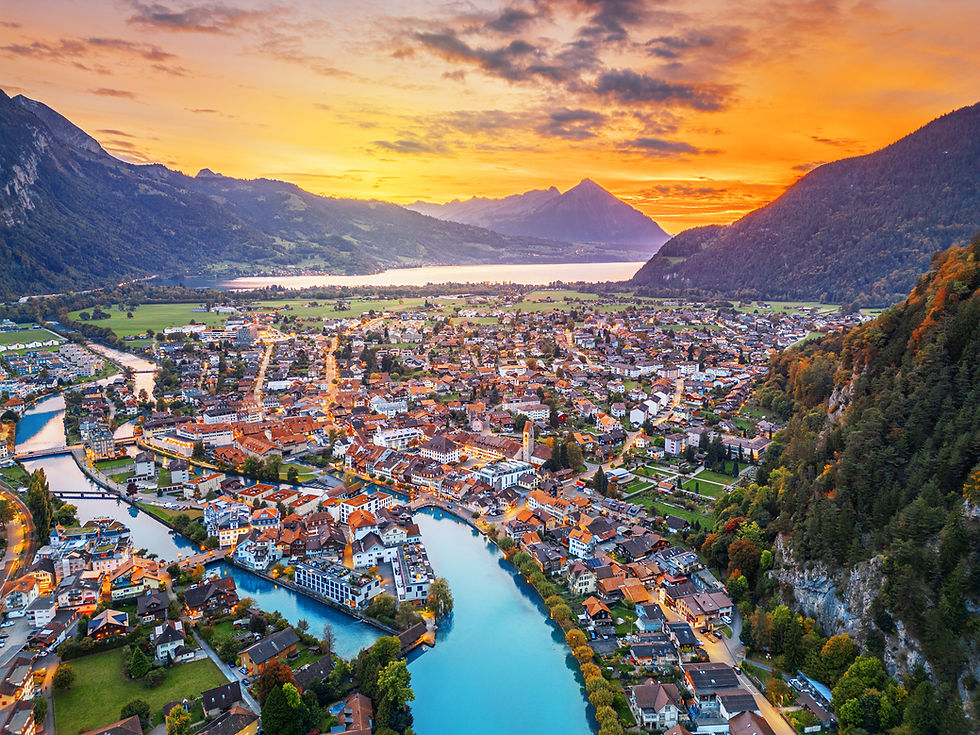
Snow still lingers on the high peaks, but down in the valleys everything begins to soften — meadows turn bright green, waterfalls surge with snowmelt, and the lakes shift from deep winter blue to shimmering turquoise.
Temperatures typically range from 12–20°C, making it ideal for walking without the summer crowds. It’s also one of the best times to experience Switzerland at a slower, more local pace — before peak season arrives.
This is when Interlaken shows its true character: less about adrenaline, more about space, light, and nature.
A Journey Into the Alps
Arriving by train into Interlaken is part of the experience.
From Zurich, Geneva, or Basel, the journey gradually unfolds — lakes appear, mountains rise, and villages become smaller and more traditional.
The final approach into Interlaken is unforgettable:
Lake Thun on one side
Lake Brienz on the other
First clear views of the Jungfrau region ahead
Everything connects seamlessly — no car needed, no stress, just effortless travel into one of Europe’s most spectacular landscapes.
A Bit of History & Setting
Interlaken — meaning “between lakes” — sits perfectly between Lake Thun and Lake Brienz, acting as the gateway to the Bernese Oberland.
Originally a small monastic settlement, it grew in the 19th century as early travellers and writers — including Johann Wolfgang von Goethe — were drawn here by the dramatic alpine scenery.
With the arrival of the railway, Interlaken became one of Switzerland’s most important travel hubs. Today, it blends that accessibility with easy access to quieter, more authentic alpine villages nearby.
What to Expect on the Train
Swiss trains are comfortable, punctual, and built for scenery.
Routes to Interlaken are smooth and well-connected, with large windows and frequent services.
Tips:
Sit on the right-hand side from Zurich for the best lake views
Reservations are not required on most routes
Connections are simple and well-timed
This is rail travel at its best — relaxed, scenic, and part of the journey itself.
Spring Walks & Nature Experiences
Spring is when Interlaken truly comes into its own for walking.
Waterfalls are at their most powerful, trails reopen at lower altitudes, and the air is clear and fresh.
1. Lauterbrunnen Valley Walk : A short train ride away, this is one of the most beautiful valleys in Europe. Walk through towering cliffs and waterfalls, including Staubbach Falls.
2. Harder Kulm Panorama Trail : Take the funicular or hike up for sweeping views over both lakes and the Jungfrau range. In spring, the surrounding woodland is green and peaceful.
3. Lake Brienz Shore Walks : Follow quiet sections of the shoreline for calm water views and fewer crowds than Lake Thun. Early morning and evening light are especially beautiful.
4. St. Beatus Caves & Lake Thun Walk : Walk along Lake Thun toward the St. Beatus Caves — a mix of lakeside scenery and dramatic caves set into the cliffs.
Hidden Gems & Slower Experiences
Beyond the main highlights, this region rewards a slower pace.
Iseltwald – A small lakeside village on Lake Brienz, peaceful and picturesque
Brienz – Known for its wood carving tradition and a quieter feel than Interlaken
Schynige Platte (late spring) – Early wildflowers begin to bloom with wide alpine views
Morning lake walks – Interlaken is at its most atmospheric before day-trippers arrive
What’s Special About Interlaken in Spring
Snow-capped peaks and green valleys at the same time
Waterfalls at full strength from melting snow
Fewer visitors and more space to explore
Easy access to some of Switzerland’s best landscapes without peak-season prices
This is Switzerland at its most balanced — dramatic, but calm.
What to Eat
Food here is simple, hearty, and alpine in style.
Expect:
Cheese dishes like fondue and raclette
Rösti (crispy Swiss potatoes)
Fresh fish from the lakes
Seasonal, locally sourced ingredients
Where to Eat
Restaurant Taverne – Traditional Swiss cuisine with a modern touch. @jnterlaken
Hüsi Bierhaus – A lively, rustic spot for local food and Swiss beer. @/husi.interlaken/
Where to Stay
Interlaken offers a range of excellent, well-located stays.
Hotel Interlaken – A historic hotel with gardens and a peaceful setting. @hotel_interlaken
Hotel Du Nord – Stylish, central, and ideal for exploring on foot. @hoteldunord_interlaken
Practical Tips
Interlaken Ost is the main station for mountain connections
The Swiss Travel Pass is a good option for flexible travel
Spring weather can change quickly — bring layers
Start early for quieter trails and the best light
Final Thoughts
Interlaken is often seen as a gateway — but in spring, it becomes a destination in its own right.
This is when the Alps feel accessible, alive, and surprisingly peaceful. You can walk through green valleys beneath snow-covered peaks, follow lakeside paths in calm surroundings, and travel entirely by train with ease.
It’s not about rushing to the highest viewpoint — it’s about experiencing the landscape as it wakes up.
For more journeys like this, explore our latest guidebook Touring Switzerland by Train: https://mybook.to/SwitzerlandByTrain


Comments