
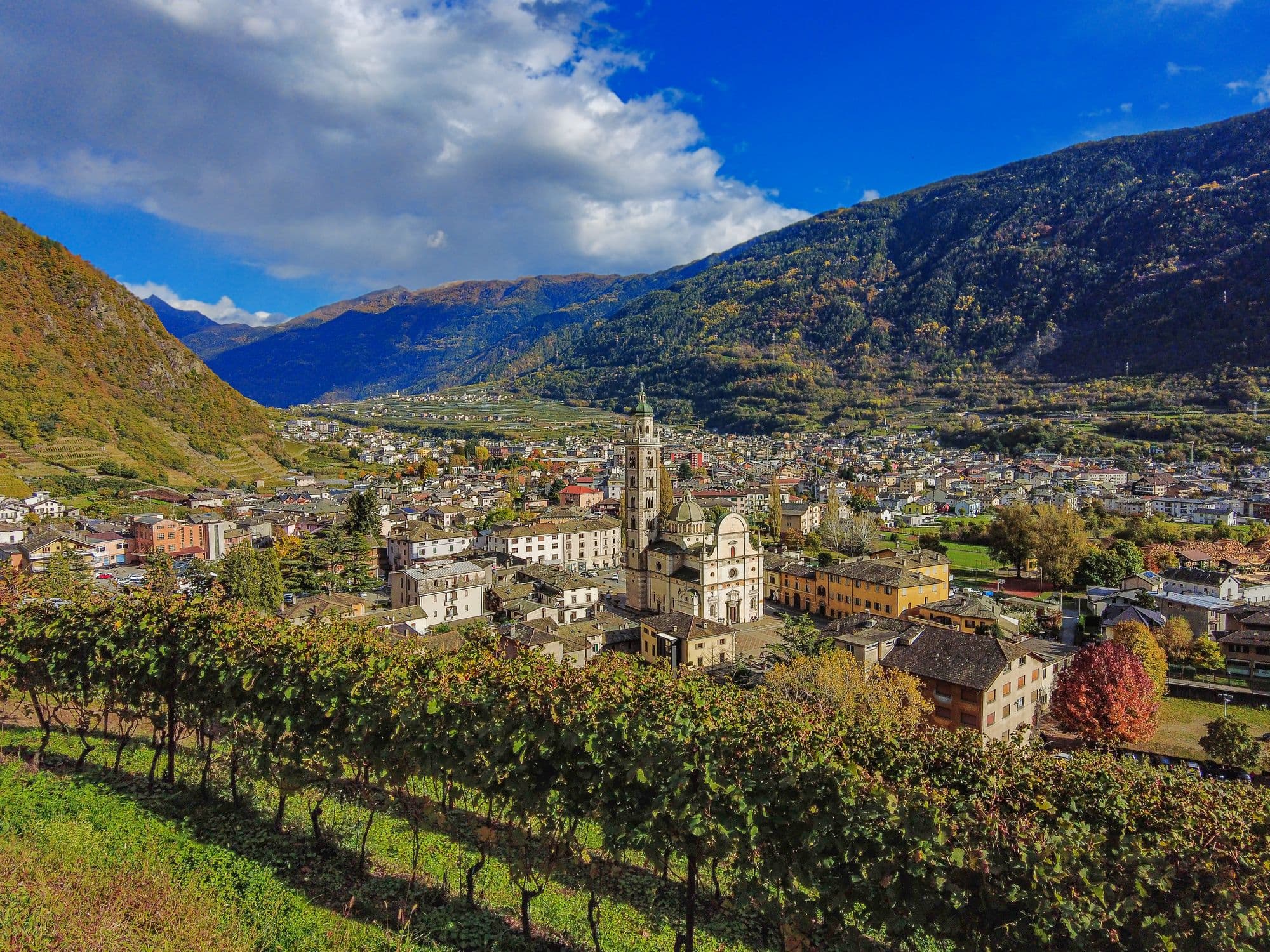
Italy’s great train journeys aren’t always long. Some unfold quietly, revealing their beauty mile by mile — and the route from Milan to Tirano is one of the most rewarding.
In spring, this journey feels even more special. In just over two and a half hours, the train carries you from Milan’s energy into alpine foothills where snow still lingers on the peaks while valleys begin to bloom. Vineyards reawaken, rivers run fuller with snowmelt, and the changing light gives the landscape a soft, shifting clarity.
It’s slow travel in the best sense of the word.
Why Take the Milan–Tirano Train in Spring?
This journey is about gradual transformation — and spring makes that contrast more vivid.
Leaving Milan, the landscape softens quickly — suburbs give way to rivers, then hills, then open valleys framed by mountains. As you move north, you begin to see the season change in real time.
The route follows the edge of Lake Como for part of the journey before heading into the Valtellina, a lesser-known alpine wine region.
In spring:
Waterfalls are fuller and more visible
Vineyards begin turning green
Snow remains on higher peaks for contrast
Fewer tourists make the journey feel more local
For many travellers, Tirano is also the gateway to the Bernina Line — making this route both a destination and a beginning.
What to Expect on the Journey
Route: Milan Centrale → Tirano
Train type: Regional (Trenord / Trenitalia)
Journey time: approx. 2h30–2h45
Frequency: roughly hourly
Best seats: Left-hand side leaving Milan
Large windows, unhurried stops, and constantly shifting scenery make this a journey where the view is the experience.
What You’ll See Along the Way
After passing Lecco, the train hugs the eastern edge of Lake Como — one of the most memorable stretches of the journey.
Further north, vineyards replace lakeside villas, and the valley widens as you approach Tirano.
In spring, this section feels especially alive — green returning to the valley floor while the mountains still hold onto winter.
Milan: Energy, Culture & the Perfect Starting Point
(Best to stay: 1–2 nights before the journey)
Before heading north, Milan deserves time — not as a checklist, but as a city to experience.
What to Do in Milan
The Duomo rooftop for scale and perspective
Brera’s backstreets and galleries
Aperitivo along the Navigli canals in the early evening
Spring brings Milan outdoors — terraces fill, parks open up, and the city feels more relaxed.
Where to Stay in Milan
21 House of Stories Navigli (@21houseofstories)
A creative, design-led hotel in one of Milan’s most vibrant neighbourhoods.
Why stay here:
Lively, social atmosphere with a local feel
Close to canals, restaurants, and aperitivo spots
A more contemporary Milan experience
Room Mate Giulia (@roommategiulia)
A bold, stylish boutique hotel just steps from the Duomo.
Why stay here:
Unbeatable central location
Design-led interiors with personality
Ideal for exploring Milan entirely on foot
What to Eat in Milan
Risotto alla Milanese
Cotoletta alla Milanese
Aperitivo with local wine or a Negroni Sbagliato
Tirano: Alpine Calm, Spring Light & a Sense of Arrival
Arriving in Tirano feels like stepping into a quieter rhythm. In spring, the town sits at the meeting point of seasons — fresh green valleys below, snow still visible above.
It’s compact, walkable, and ideal for slowing down.
What to Do in Tirano
Visit the Sanctuary of the Madonna di Tirano
Wander the old town’s quiet streets and cafés
Explore beyond the centre into surrounding countryside
Spring Walks Around Tirano
Tirano Old Town & Basilica Walk
Distance: 2–3 km
Terrain: Flat
A gentle walk from the centre to the Basilica.
Why it works in spring: Soft light, quiet streets, and mountain views still dusted with snow.
Tirano to Lovero Valley Walk
Distance: ~5 km
Terrain: Flat valley path
Walk through vineyards and open countryside toward Lovero.
Highlights:
Fresh alpine air
Emerging greenery
A peaceful, rural atmosphere
Sentiero Valtellina Path
A scenic walking and cycling path running through the valley.
Ideal in spring for:
Easy, flexible walking
Rivers flowing with snowmelt
Early wildflowers and clear mountain views
Where to Stay in Tirano
Curt di Clement Eco Mobility Hotel (@curtdiclement)
A beautifully restored historic residence with a focus on sustainability and slow travel.
Why stay here:
Thoughtful design blending old and new
Quiet, characterful atmosphere
Perfect for a relaxed night before or after the Bernina journey
Hotel Centrale Tirano (@hotelcentraletirano)
A welcoming, family-run hotel right in the centre of town.
Why stay here:
Excellent location near the station
Comfortable and practical
Ideal for an easy early departure
What to Eat in Tirano & the Valtellina
Pizzoccheri (buckwheat pasta with potatoes, greens and cheese)
Bresaola from nearby valleys
Local red wines grown on steep terraced vineyards
Food here is hearty, local, and shaped by the landscape.
How This Journey Fits a Train-Based Italy Itinerary
The Milan–Tirano route works beautifully as:
A scenic northern escape from Milan
A gentle introduction to the Alps
A connector to Switzerland via the Bernina Line
A slower alternative to Italy’s high-speed routes
Final Thought
The Milan to Tirano train doesn’t shout for attention — it earns it quietly.
In spring, it becomes something even more special: a gradual shift between seasons, where each stop feels like a new landscape unfolding.
If you’re travelling without a car and want to experience a different side of northern Italy, this is a journey worth taking slowly.