
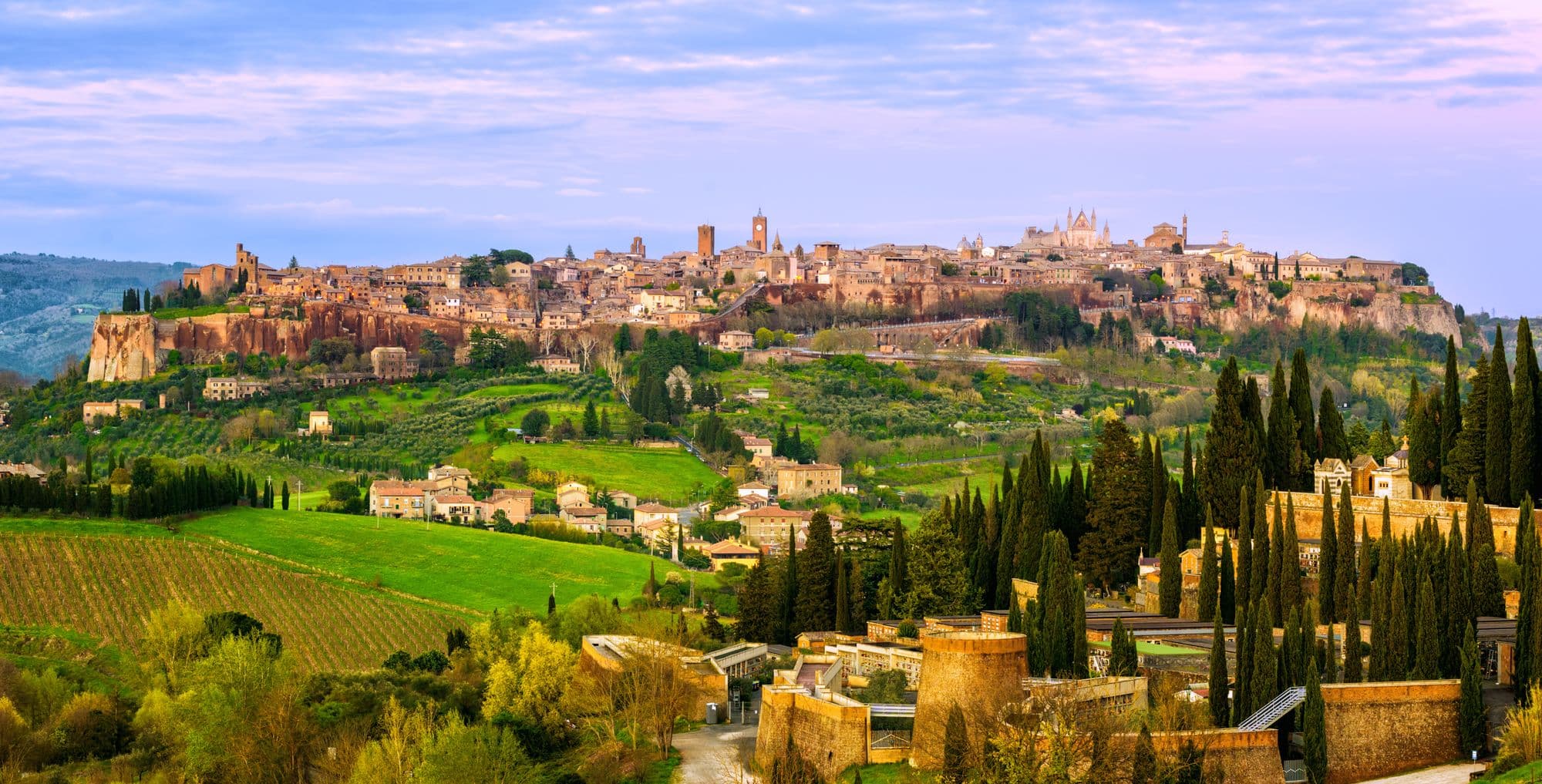
Orvieto is one of Italy’s most striking hill towns — a golden city perched dramatically atop a volcanic plateau high above the Umbrian countryside.
Just an hour from Rome by train, it offers everything travellers love about central Italy: medieval streets, Renaissance art, breathtaking views and extraordinary food.
Yet unlike many famous hill towns, Orvieto still feels calm, authentic and deeply connected to its history.
Arriving here — first by train, then by funicular climbing the cliff — feels like entering another world.
Why Orvieto?
If Tuscany has Siena and San Gimignano, Umbria’s masterpiece is Orvieto.
Rising on a massive cliff of volcanic tuff stone, the town seems almost impossible — its walls dropping vertically to the plains below. For centuries this natural fortress protected the city and made it a strategic stronghold between Rome and Florence.
But Orvieto is far more than dramatic scenery. It’s a place layered with Etruscan heritage, medieval intrigue, and Renaissance artistry.
What makes it special is the balance: impressive monuments, but a relaxed pace of life.
A City Built on Ancient Foundations
Long before the Romans, Orvieto was an important Etruscan settlement more than 2,500 years ago.
The Etruscans carved tunnels, wells and caves deep into the soft volcanic rock beneath the town — creating an underground city that still exists today.
These hidden passages were used for water storage, escape routes, and food preservation.
Exploring Orvieto Underground today offers a fascinating glimpse into how ancient communities adapted to this dramatic landscape.
It’s one of the most unique experiences in central Italy.
The Duomo: One of Italy’s Most Spectacular Cathedrals
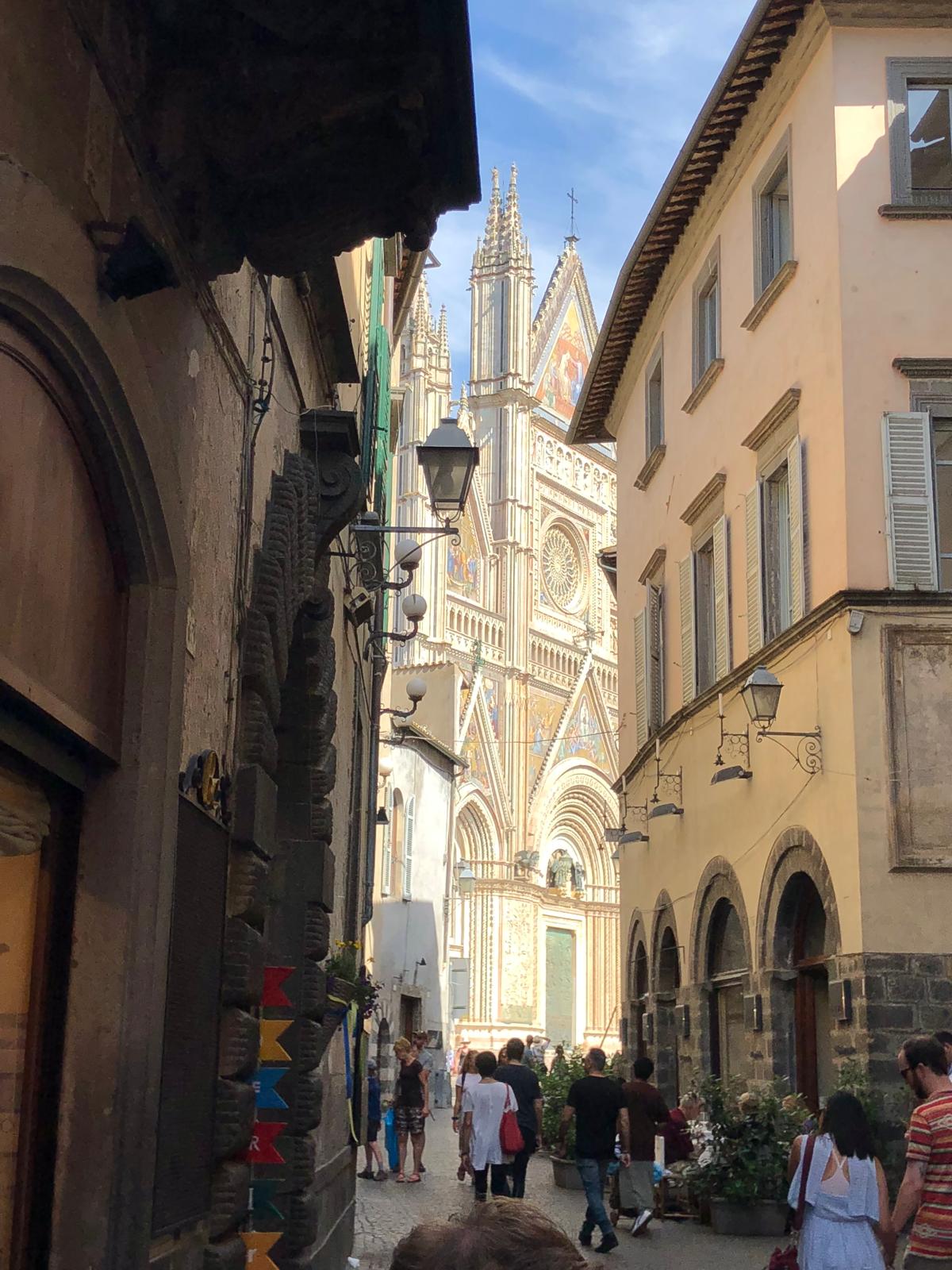
The highlight of Orvieto is its extraordinary cathedral — Il Duomo di Orvieto.
Construction began in 1290 and the result is a masterpiece of Italian Gothic architecture.
The façade alone is breathtaking. Golden mosaics shimmer in the sunlight while intricate marble sculptures frame the enormous rose window.
Inside, the cathedral becomes even more remarkable.
The San Brizio Chapel contains Luca Signorelli’s dramatic fresco cycle depicting the Last Judgment. These powerful, dynamic scenes influenced a young Michelangelo before he painted the Sistine Chapel.
Few churches in Italy deliver such visual impact the moment you step into the piazza.
A Perfectly Walkable Hill Town
One of Orvieto’s greatest pleasures is simply wandering.
The historic centre is compact and elegant, with narrow medieval lanes opening onto quiet piazzas and terraces overlooking the countryside.
You’ll find:
Artisan ceramics shops
Wine bars tucked into stone vaults
Small trattorias serving Umbrian specialities
Hidden viewpoints over the valleys below
Without the crowds of larger cities, Orvieto feels wonderfully relaxed.
It’s a place where slow travel comes naturally.
Wine, Food and Umbrian Traditions
Orvieto has a long culinary tradition rooted in the fertile countryside surrounding the town.
Local specialities include:
Orvieto Classico wine – a crisp white wine produced in nearby vineyards
Wild boar ragu served over handmade pasta
Umbria’s famous black truffles
Porchetta – slow roasted pork seasoned with herbs
Many restaurants occupy ancient stone buildings or underground cellars carved into the rock.
Dining here feels timeless.
Day 1: Discovering Historic Orvieto
Orvieto Cathedral
Begin in the magnificent Piazza del Duomo to admire one of Italy’s most dramatic church façades.
Take time to visit the San Brizio Chapel inside.
Orvieto Underground
Guided tours reveal the fascinating tunnels and caves carved beneath the town over centuries.
It’s an unforgettable glimpse into the city’s ancient engineering.
Torre del Moro
Climb this medieval tower for sweeping views across the Umbrian countryside.
At sunset the landscape turns golden.
Dinner in the Old Town
Try:
Wild boar pasta
Local pecorino cheeses
Orvieto Classico white wine
A candlelit trattoria in a stone cellar is the perfect end to the day.
Day 2: Wells, Views and Countryside
Pozzo di San Patrizio
This extraordinary Renaissance well was built in the 1500s to guarantee water supply during sieges.
A double spiral staircase winds deep into the earth — an ingenious architectural design that allowed mules to descend and ascend without crossing paths.
Walk the City Walls
From several viewpoints along the edge of town you can look out across vineyards, olive groves and distant hills.
Few hill towns offer such dramatic panoramas.
A Slow Afternoon
Spend the afternoon browsing shops, enjoying a long lunch, or simply sitting in a piazza watching local life unfold.
Orvieto rewards unhurried exploration.
Ideal Two-Day Structure
Day 1 – Cathedral, underground city, medieval streets
Day 2 – St Patrick’s Well, viewpoints, food and wine
Many travellers visit Orvieto as a day trip from Rome — but staying overnight reveals its quieter, more atmospheric side.
Getting to Orvieto by Train
One of the best things about Orvieto is how easy it is to reach.
From Rome Termini
Direct regional or Intercity trains
Journey time: approx. 1 hour
From Florence
Direct trains in 2 hours
The train arrives at Orvieto Scalo at the base of the cliff.
From there:
Take the funicular railway up the hill (5 minutes)
Bus or short walk into the historic centre
The arrival itself is unforgettable as the medieval city rises above you.