
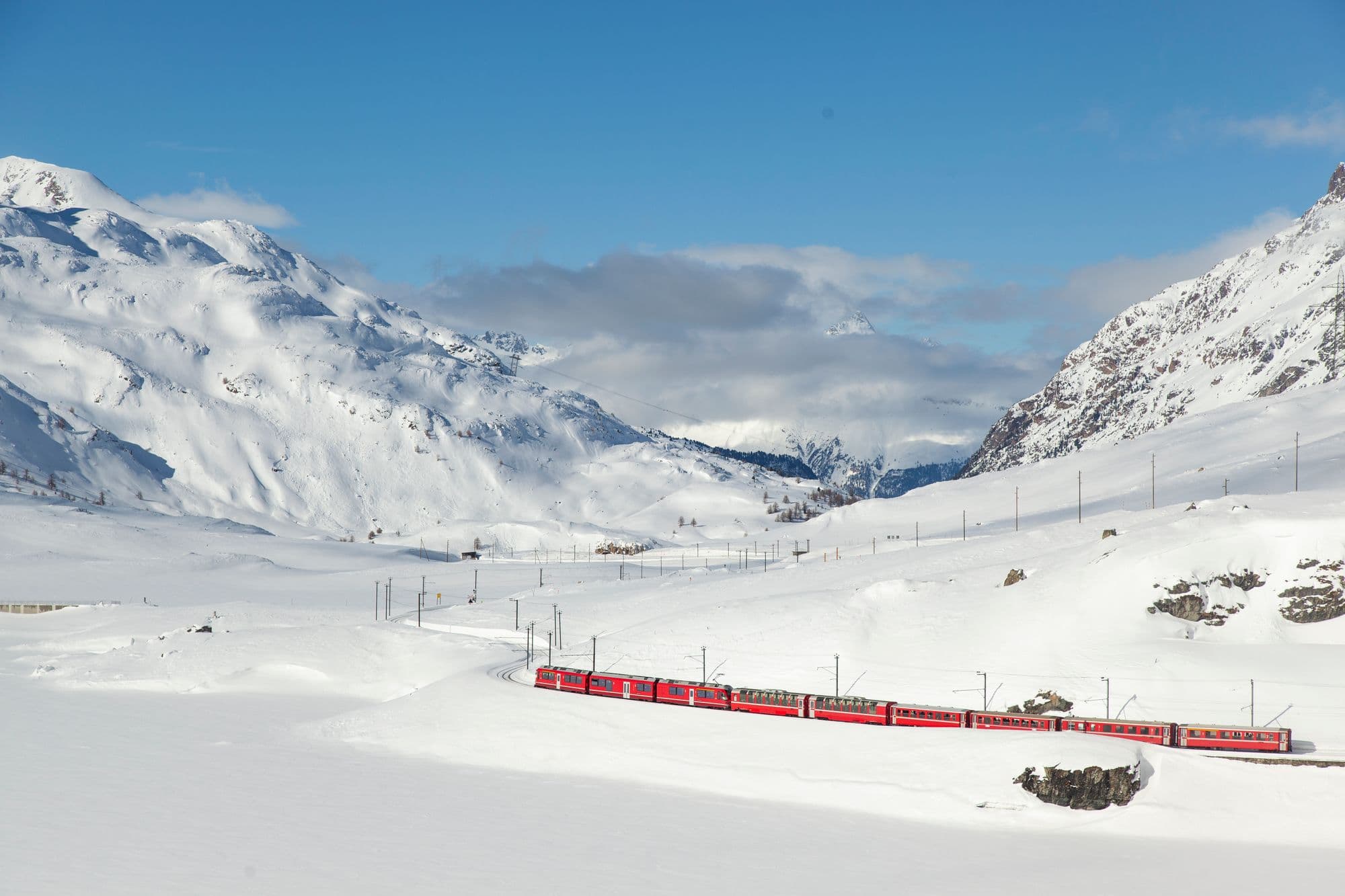
If the Glacier Express is iconic, the Bernina Express is dramatic.
This is a journey that climbs high into the Alps, passes glaciers and frozen lakes, spirals through engineering marvels—and then descends into Italy, where palm trees and espresso replace snow and silence.
It’s not just a train ride. It’s a transition between worlds.
But before you plan it, there’s one important thing most guides don’t explain properly…
The Key Thing to Know (Before You Book Anything)
Despite the name, the “Bernina Express” is actually two different experiences on the same route.
1. The Bernina Express panoramic train
Requires a seat reservation
Has large panoramic windows
Runs a limited number of times per day
Includes commentary and a more structured experience
2. Regular regional trains (same route)
No reservation required
Run frequently throughout the day
Use the exact same tracks and scenery
Often have openable windows (great for photos)
👉 And this is the key insight:
You do NOT need to take the Bernina Express to experience the Bernina route.
Why This Matters
Many travellers assume:
“I have to book the Bernina Express to do this journey.”
You don’t.
In fact, travelling on the regular trains often gives you:
More flexibility
The ability to stop along the way
A more relaxed, independent feel
And often a better experience overall
The Journey: What Makes It So Special
The route runs from Chur or St. Moritz to Tirano (Italy) and takes around 4 hours.
What makes it extraordinary is how quickly the landscape changes.
Key Highlights Along the Route
Albula Line (UNESCO): A masterpiece of tunnels, viaducts, and precision engineering
Morteratsch Glacier: One of the most accessible glaciers in the Alps
Bernina Pass (2,253m): A wild, exposed high-altitude landscape with snow even in summer
Brusio Spiral Viaduct: A perfect circular loop that feels almost surreal
Descent into Tirano: The moment everything changes—architecture, language, climate
A Bit of History
Completed in 1910, the Bernina line was a bold achievement.
Unlike many alpine railways, it was built without cogwheel systems, relying purely on adhesion—making it one of the steepest railways of its kind in the world.
Today, it forms part of the Rhaetian Railway UNESCO World Heritage Site, recognised for both its beauty and its engineering significance.
Culture Shift: Switzerland to Italy
This is one of the most underrated aspects of the journey.
You don’t just cross a border—you feel it.
Swiss precision → Italian spontaneity
Alpine villages → Mediterranean colour
German/Romansh → Italian language
By the time you arrive in Tirano, the atmosphere has completely changed.
What It’s Like On Board
If you choose the panoramic train:
Reserved seating
Large curved windows
A quieter, more “curated” experience
If you take regional trains:
More casual, flexible
Opportunity to open windows
Easier to break the journey
👉 Many experienced travellers quietly choose the second option.
Food & Local Flavour
The journey itself becomes a culinary transition.
Start with Swiss alpine dishes—cheese, cured meats, hearty soups
End with Italian espresso, gelato, and relaxed piazza culture
Tirano is small but full of character—perfect for a late lunch before heading back.
How to Plan It (Simply)
Travel time: ~4 hours
No reservation needed (unless using panoramic train)
Can be done:
As a long day trip
Or split over 1–2 days
Insider Tips (This Is Where You Win)
Take regional trains for flexibility and better photos
Sit on the right-hand side (Chur → Tirano)
Break the journey at Alp Grüm or Pontresina
Bring layers—it can change dramatically at altitude
So… Which Option Should You Choose?
Choose the Bernina Express if:
You want a simple, all-in-one experience
You prefer reserved seating
You’re happy to stay on the train the whole way
Choose regional trains if:
You want freedom and flexibility
You enjoy exploring at your own pace
You prefer a more authentic travel experience
Final Thought
The Bernina route isn’t just one of the most beautiful train journeys in Europe.
It’s one of the most accessible ways to experience the Alps properly—without a car, without stress, and without missing what makes Switzerland (and northern Italy) so special.
👉 For detailed stop-by-stop itineraries, flexible route options, and planning tips, see Touring Switzerland by Train at https://mybook.to/SwitzerlandByTrain