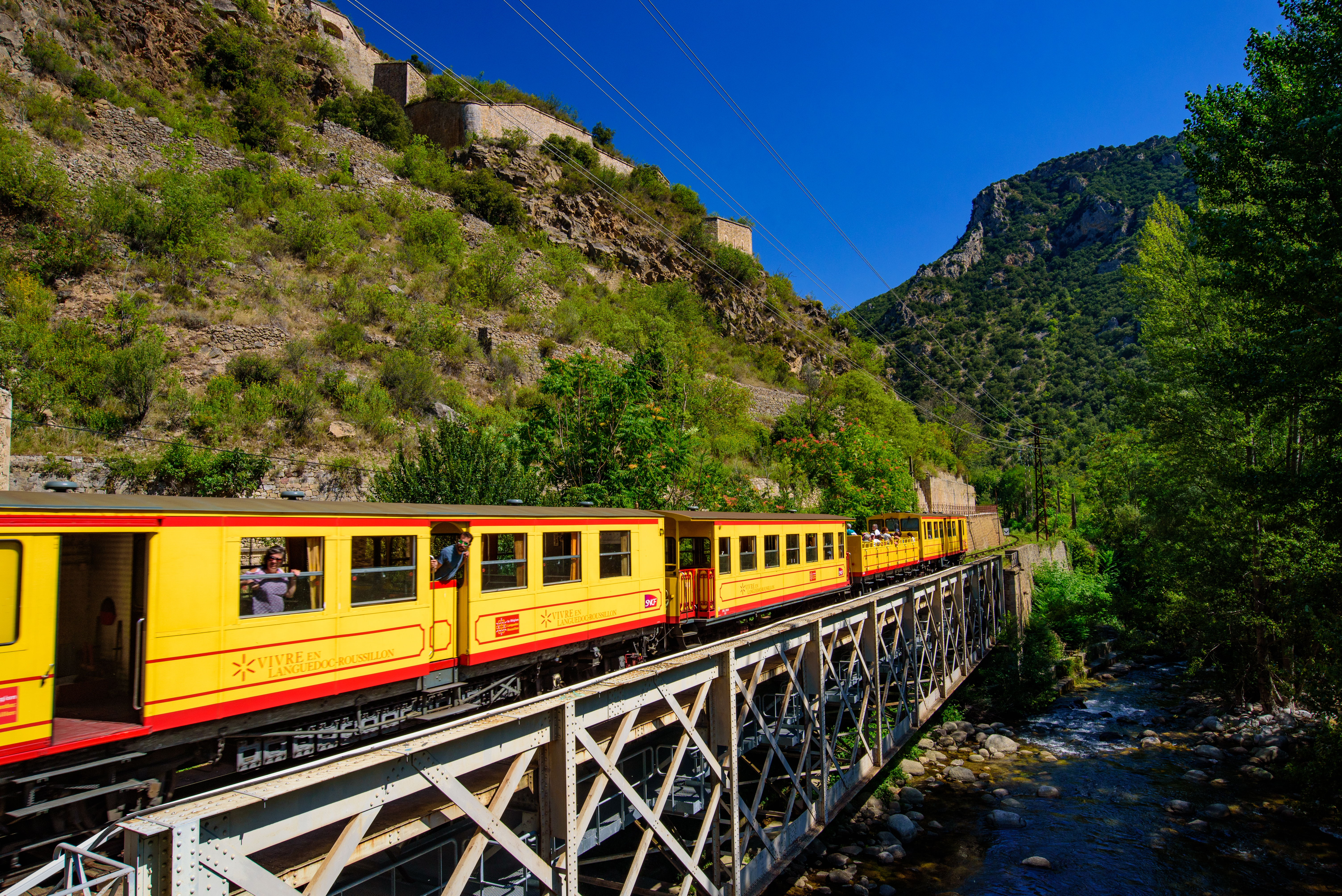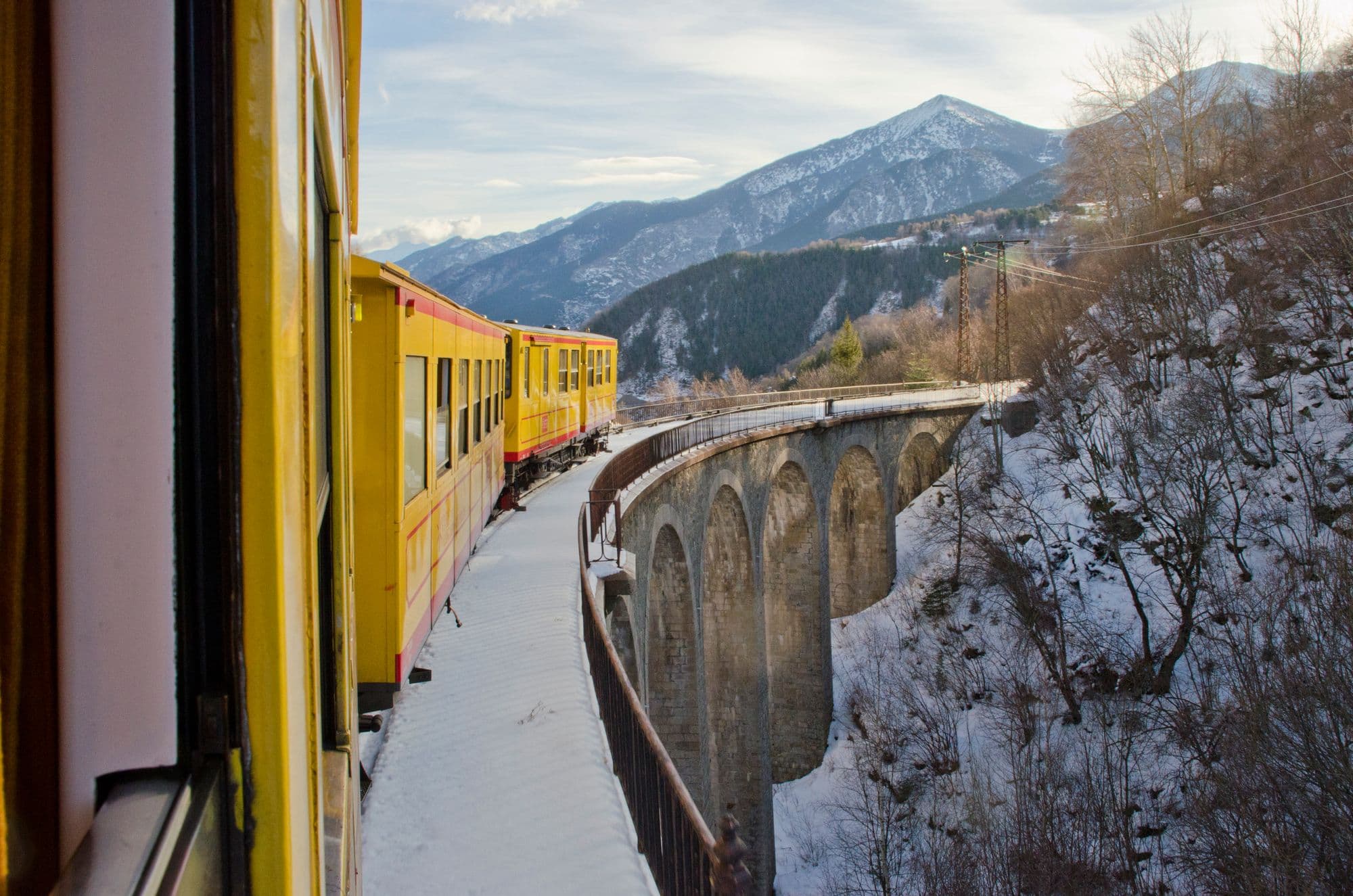
The Train Jaune, or Yellow Train, is one of France’s most iconic and adventurous rail journeys. Climbing high through the eastern Pyrenees, this narrow-gauge railway crosses deep gorges, stone viaducts and sunlit mountain plateaus, linking Catalan villages that feel frozen in time. This guide covers what makes the Train Jaune so special, what you’ll see from the carriage windows, how to ride it, and what to do at both ends of the line — all without a car.
Why Go?
The Train Jaune is not about speed — it’s about altitude, drama and isolation. This is one of the highest railways in France, offering sweeping mountain views and a true sense of journey. It’s perfect for travellers who want something memorable, scenic and far removed from high-speed rail.
A Bit of History
Opened in the early 20th century, the Train Jaune was built to connect remote mountain communities in the Pyrenees. Its bright yellow carriages reflect Catalan colours, and its engineering — including high viaducts and tight mountain curves — remains impressive today. It is now both a lifeline and a tourist icon.
What to Expect Onboard
Expect vintage-style carriages, slow speeds and extraordinary views. In summer, some carriages are open-air, making this one of Europe’s most immersive train rides. Seats are unreserved, windows open, and the atmosphere is relaxed and sociable.
Journey Highlights – What You’ll See
Fortified Villefranche-de-Conflent: A UNESCO-listed walled town at the foot of the mountains.
The Têt River Gorge: Sheer cliffs and rushing water as the train climbs.
Pont Gisclard: A spectacular suspension bridge hanging above a deep ravine.
High Mountain Plateaus: Wide skies, grazing animals and Pyrenean peaks.
Catalan Villages: Stone houses, church towers and remote stations.
Food Culture (Along the Route)
This is Catalan mountain cuisine: rustic, warming and shaped by altitude and isolation.
Regional Food Explained
Trinxat: Potato and cabbage dish similar to bubble and squeak.
Charcuterie Catalane: Mountain-cured meats and sausages.
Sheep & Goat Cheeses: Produced in high pastures.
Mountain Stews: Slow-cooked and hearty.
Local Wines: From lower Roussillon vineyards near the start of the line.
Starting Point: Villefranche-de-Conflent
Things to Do:
Explore the UNESCO-listed fortifications
Walk the medieval streets and ramparts
Visit Fort Libéria (reachable by foot or underground stairs)
Where to Stay:
Hotel Princess – simple and atmospheric
Auberge du Cellier – traditional and welcoming
End Point: Latour-de-Carol
Latour-de-Carol sits at a rail crossroads near the Spanish border.
Things to Do:
Day trip to Puigcerdà (Spain)
Mountain walks and fresh-air hikes
Continue onward by train into Spain or deeper into France
Where to Stay:
Hotel Manel – friendly and well located
Hotel Le Terminus – practical for rail travellers
Off the Beaten Track Stops
Mont-Louis: Vauban fortress town
Font-Romeu: Alpine walks and sunshine
How to Ride the Train Jaune
Route: Villefranche-de-Conflent → Latour-de-Carol (Duration: ~3 hours)
Best season: May–October
Sit on the left-hand side for best views climbing uphill
Perfect Weekend Itinerary
Day 1
Arrive in Villefranche-de-Conflent by train. Explore the old town and fortifications.
Day 2
Ride the Train Jaune end to end. Stop at Mont-Louis or Font-Romeu. Overnight near Latour-de-Carol or return partway.
Real Travel Guides – Real Travel. By Rail.