
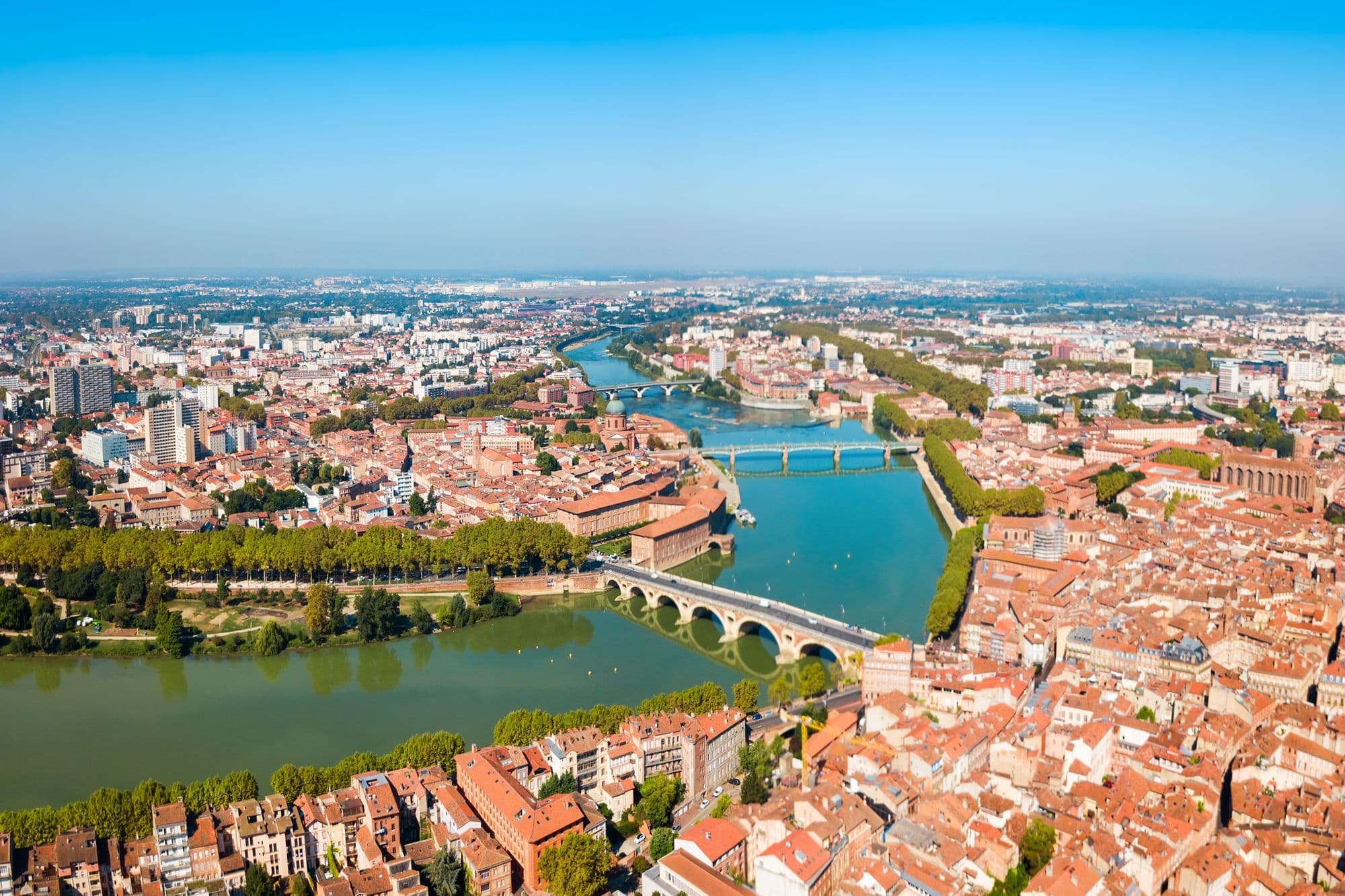
Toulouse is one of France’s most vibrant cities — a place where medieval history, elegant squares and cutting-edge aerospace innovation coexist beneath the warm glow of pink brick buildings.
Known as La Ville Rose — the Pink City — Toulouse owes its distinctive colour to the terracotta bricks used throughout its historic centre.
Located in southwestern France near the Spanish border, it offers a unique blend of southern charm, rich history and lively cultural energy.
Arriving by train, you quickly sense that Toulouse feels different from other French cities.
It’s relaxed, creative and unmistakably Mediterranean in spirit.
Why Toulouse?
Toulouse has been an important city for more than two thousand years.
Founded by the Romans, it later became the capital of the powerful County of Toulouse, one of medieval Europe’s wealthiest regions.
Today the city combines that historic heritage with modern innovation as the heart of Europe’s aerospace industry.
Airbus designs and assembles many of its aircraft here, making Toulouse a global centre for aviation.
But beyond the technology lies a city of beautiful architecture, lively markets and sun-filled squares.
The Pink City
What makes Toulouse instantly recognizable is its colour.
Unlike most French cities built in limestone, Toulouse used locally produced terracotta bricks.Under the southern sunlight these bricks glow with warm shades of pink, orange and gold.The result is a cityscape that feels both elegant and welcoming.
Walking through the historic centre reveals harmonious streets, grand townhouses and beautiful courtyards hidden behind arched gateways.
Place du Capitole: The Heart of the City
At the centre of Toulouse lies Place du Capitole, one of the most impressive squares in France. Dominating the square is the Capitole building, which houses the city hall and opera house. Its vast façade stretches across the entire square, while inside you’ll find magnificent ceremonial rooms decorated with paintings that celebrate the history of the city. The square itself is always lively — filled with cafés, street performers and locals enjoying the sunshine.
The Basilica of Saint-Sernin
One of Toulouse’s most remarkable monuments is the Basilica of Saint-Sernin, the largest Romanesque church in Europe.
Built in the 11th century, it was an important stop for medieval pilgrims travelling to Santiago de Compostela. Its enormous brick structure and elegant bell tower dominate the surrounding neighbourhood. Inside, the church’s calm, spacious interior offers a powerful sense of medieval spirituality. It remains one of France’s most important pilgrimage sites.
Along the Garonne River
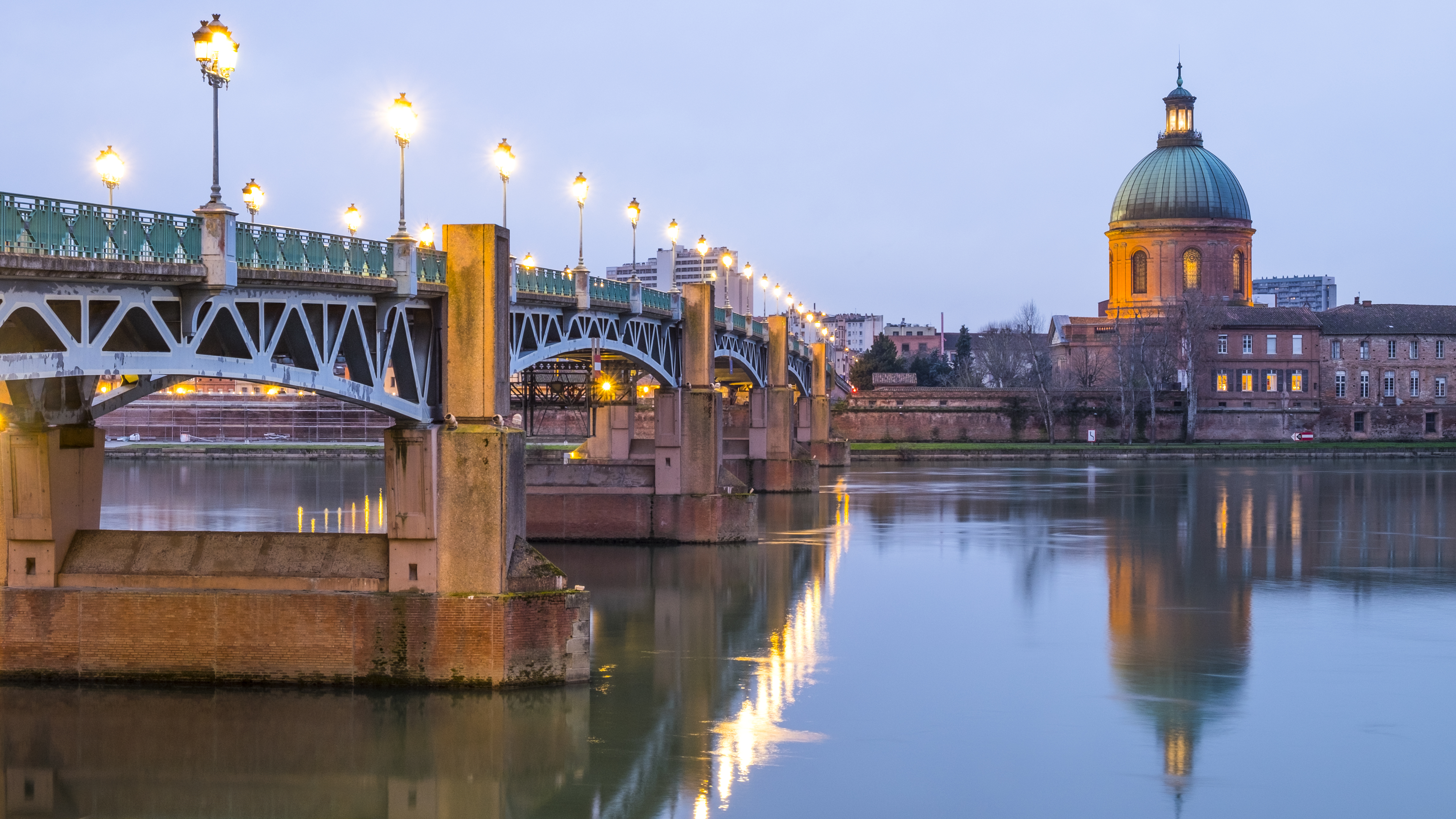
The Garonne River flows through the city, creating some of Toulouse’s most beautiful views. Bridges such as Pont Neuf connect the historic centre with lively neighbourhoods on the opposite bank. At sunset the river reflects the warm tones of the city’s brick architecture — one of the most atmospheric moments of the day.
Riverside walks and terraces make it a favourite place for locals to gather in the evening.
Markets and Southwestern Cuisine
Toulouse is famous for its rich regional cuisine. The surrounding region of Occitanie produces some of France’s most satisfying traditional dishes.
Local favourites include:
Cassoulet, the hearty slow-cooked stew of beans, sausage and duck
Foie gras, a regional delicacy
Saucisse de Toulouse, the famous local sausage
Wines from nearby Gaillac and Fronton vineyards
Food markets such as Marché Victor Hugo showcase the best of southwestern French produce.
Day 1: Discovering Historic Toulouse
Place du Capitole
Begin in the city’s grand central square and explore the magnificent Capitole building.
Basilica of Saint-Sernin
Visit this remarkable Romanesque church and admire its soaring architecture.
Wander the Old Town
Explore the historic streets surrounding Rue du Taur and discover hidden courtyards and elegant mansions.
Dinner in the Pink City
Try a traditional cassoulet paired with regional red wine.
Day 2: Rivers, Culture and Innovation
Pont Neuf and the Garonne River
Walk along the riverbanks and enjoy some of the city’s most scenic viewpoints.
Musée des Augustins
This museum, housed in a former monastery, contains impressive collections of medieval sculpture and fine art.
Cité de l’Espace
A short trip from the city centre brings you to this fascinating space museum celebrating Toulouse’s aerospace heritage.
Ideal Two-Day Structure
Day 1 – Historic centre and Romanesque monuments
Day 2 – River views, museums and markets
Toulouse offers the perfect combination of culture, food and relaxed southern atmosphere.
Getting to Toulouse by Train
Toulouse is well connected to France’s rail network.
From Paris Montparnasse
High-speed TGV trains
Approx. 4 hours 30 minutes
From Bordeaux
Direct trains
Approx. 2 hours
From Montpellier
Approx. 2 hours 30 minutes
The main station, Toulouse Matabiau, is within walking distance of the historic centre.