
Castello di Montecchio Vesponi: The Forgotten Fortress Above Tuscany's Lost Lake
Some Tuscan castles are famous.
Others remain surprisingly overlooked.
Castello di Montecchio Vesponi belongs firmly in the second category.
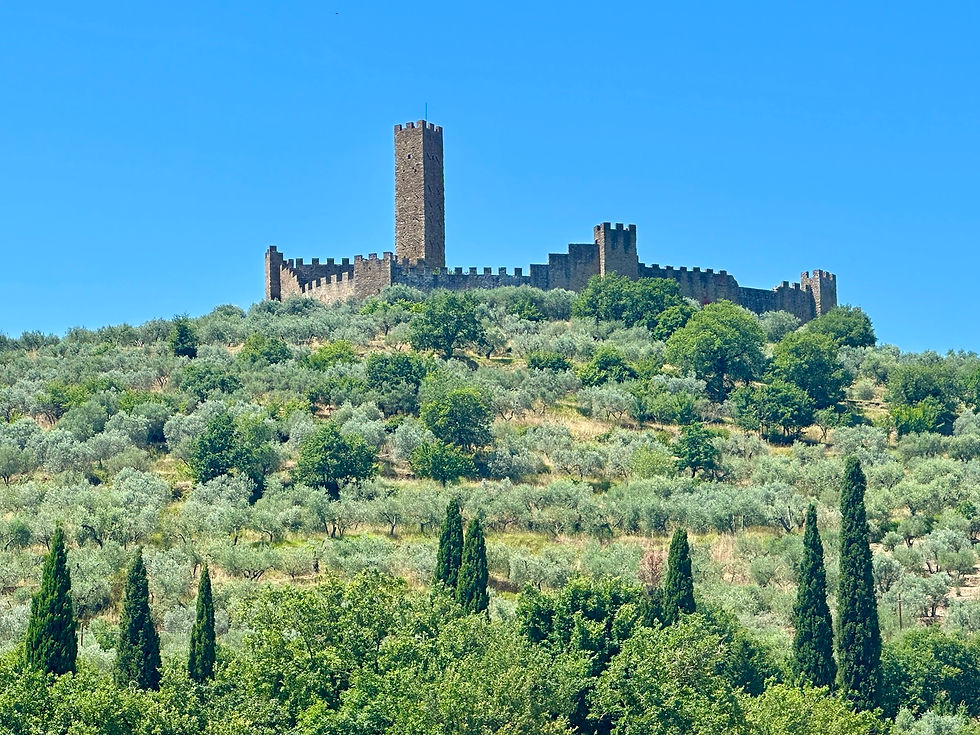
Rising above the Val di Chiana between Castiglion Fiorentino and Cortona, its towers dominate the surrounding countryside much as they have for nearly a thousand years. Yet despite its extraordinary history, relatively few visitors ever make the short journey to explore it.
That may be beginning to change.
Today, the castle is not only one of the best-preserved medieval fortresses in eastern Tuscany, but also the focus of fascinating archaeological investigations that continue to reveal new chapters in its long story.
Visitors arriving this summer will discover far more than a picturesque castle.
They will find a place where layers of Tuscan history are still being uncovered beneath their feet.
A Castle Above a Lake
The landscape surrounding Montecchio Vesponi looks very different today from the one its builders knew.
The fertile Val di Chiana that stretches below the castle was once largely underwater.
During much of the Middle Ages, the valley floor consisted of extensive marshland and shallow lakes that created both opportunity and danger for those who controlled the surrounding hills.
From the battlements of Montecchio Vesponi, medieval guards would not have looked out across vineyards, olive groves and sunflower fields.
Instead, they would have watched a vast expanse of water and wetlands stretching across the valley.
The position was strategically perfect.
Whoever controlled these heights controlled movement through one of Tuscany's most important corridors.
The unusual landscape fascinated many visitors through the centuries.
Even Leonardo da Vinci studied the region and produced detailed maps of the Val di Chiana as part of his investigations into water management and engineering.
Eventually, beginning under the Medici, ambitious drainage projects transformed the valley into the fertile agricultural landscape seen today.
The lake disappeared.
The castle remained.

Origins in an Uncertain Age
The first fortifications here likely date from the early medieval period, when communities sought refuge on elevated ground during centuries of instability.
By the 10th and 11th centuries, Montecchio Vesponi had become an important defensive stronghold.
This was border country.
Power shifted constantly between local noble families, bishops, city-states and military leaders.
The castle grew accordingly.
What visitors see today was not constructed all at once.
Instead, it evolved gradually as successive generations expanded, strengthened and adapted the fortress to changing political and military realities.
More Than a Castle
One of the most fascinating discoveries emerging from recent archaeological work is the extent to which Montecchio Vesponi functioned as a complete community.
This was not simply a fortified residence.
It was a small village enclosed within defensive walls.
Families lived here.
Artisans worked here.
Livestock was sheltered here.
The castle contained streets, workshops, domestic buildings and all the infrastructure required for daily life.
Recent excavations, undertaken in collaboration with professional archaeological teams and supported by the current owners, continue to uncover evidence of these forgotten communities.
Every season reveals new details about how people lived, worked and survived within the fortress.
Rather than presenting the castle as a frozen monument, the project is gradually restoring its human story.
Wars Between Florence and Arezzo
Like much of Tuscany, Montecchio Vesponi spent centuries caught between rival powers.
Its strategic location made it highly desirable.
Control passed between the powerful city of Arezzo and the expanding ambitions of Florence.
The surrounding countryside became a battleground where shifting alliances, noble rivalries and military campaigns shaped everyday life.
The castle's walls, towers and defensive structures reflect this turbulent history.
Each generation strengthened the fortress in response to new threats.
What survives today is the result of centuries of adaptation and conflict.
The Hawkwood Connection
One of the most intriguing chapters involves the famous English mercenary captain Sir John Hawkwood.
Known in Italy as John Hawkwood, Hawkwood became one of the most celebrated military commanders of the 14th century.
His campaigns influenced politics across much of Italy.
At one stage, Montecchio Vesponi passed into his possession, linking this relatively little-known Tuscan castle with one of the most famous condottieri of the medieval world.
The connection serves as a reminder that Tuscany's history was never isolated.
The struggles for power here attracted soldiers, merchants and adventurers from across Europe.
Decline and Romantic Revival
As warfare evolved and political power consolidated, castles like Montecchio Vesponi gradually lost their military importance.
The fortress entered a long period of decline.
Parts fell into ruin.
Buildings deteriorated.
Structures that had once housed entire communities disappeared.
The castle visitors see today is therefore both medieval and surprisingly modern.
During the 19th century, when romantic enthusiasm for the Middle Ages swept across Europe, restoration projects dramatically altered many historic buildings.
Montecchio Vesponi was no exception.
Some surviving structures were demolished.
The crenellations and battlements visible today were partly recreated according to Victorian notions of what a medieval castle should look like.
The result remains undeniably beautiful, even if not entirely authentic.

A New Chapter
The castle eventually passed into the hands of the Del Balio family, whose stewardship helped preserve the site for future generations.
Today, their commitment extends beyond conservation.
The ongoing archaeological investigations are adding new understanding to the castle's story while allowing visitors access to discoveries that might otherwise remain hidden.
This combination of living history and active research makes Montecchio Vesponi feel unusually dynamic.
It is not simply a preserved monument.
It is a place still revealing its secrets.
Visiting the Castle
The castle opens for guided visits during selected periods, including special openings throughout June.
These tours offer access to areas that are normally closed and provide valuable insight into both the architecture and the ongoing archaeological work.
For the latest opening dates, guided tours and special events, check the castle's Instagram page: @castellomontecchiovesponi
The experience feels particularly rewarding because it remains relatively uncrowded compared with many of Tuscany's more famous attractions.
Exploring the Val di Chiana
The castle sits in one of Tuscany's most underrated regions.
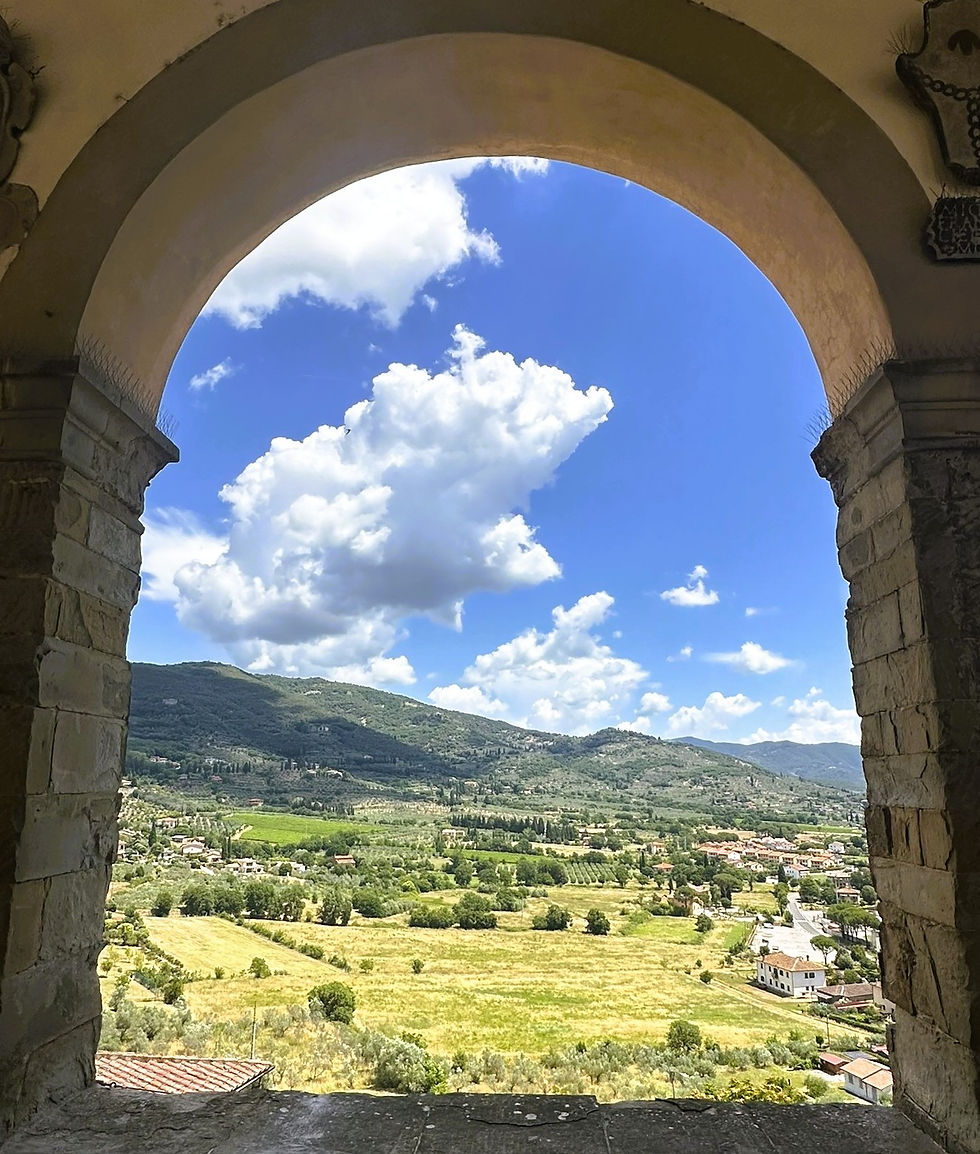
The Val di Chiana lacks the international profile of Chianti or Val d'Orcia but rewards visitors with equally beautiful landscapes and far fewer crowds.
Nearby Castiglion Fiorentino remains one of Tuscany's most attractive hill towns, with medieval streets, excellent restaurants and panoramic views across the valley.
A little further away, Cortona offers Renaissance architecture, Etruscan history and some of the finest viewpoints in the region.
Both make excellent bases for exploring the area.
Getting Here by Train
One of the great advantages of visiting this part of Tuscany is that it is remarkably easy to reach without a car.
Castiglion Fiorentino sits directly on the main railway line linking Florence, Arezzo and Perugia.
Direct trains from Florence typically take around 1 hour 20 minutes, while Arezzo is just a short journey away.
The station is located within walking distance of the historic centre, making it one of the easiest Tuscan hill towns to access by rail.
From Castiglion Fiorentino, local taxis can quickly reach Montecchio Vesponi, Brolio and the surrounding countryside.
Cortona is also served by rail via Camucia-Cortona station, with regular services connecting to Florence, Rome and Arezzo.
For travellers exploring Tuscany independently, this area combines beautiful countryside with excellent public transport connections.
Where to Stay
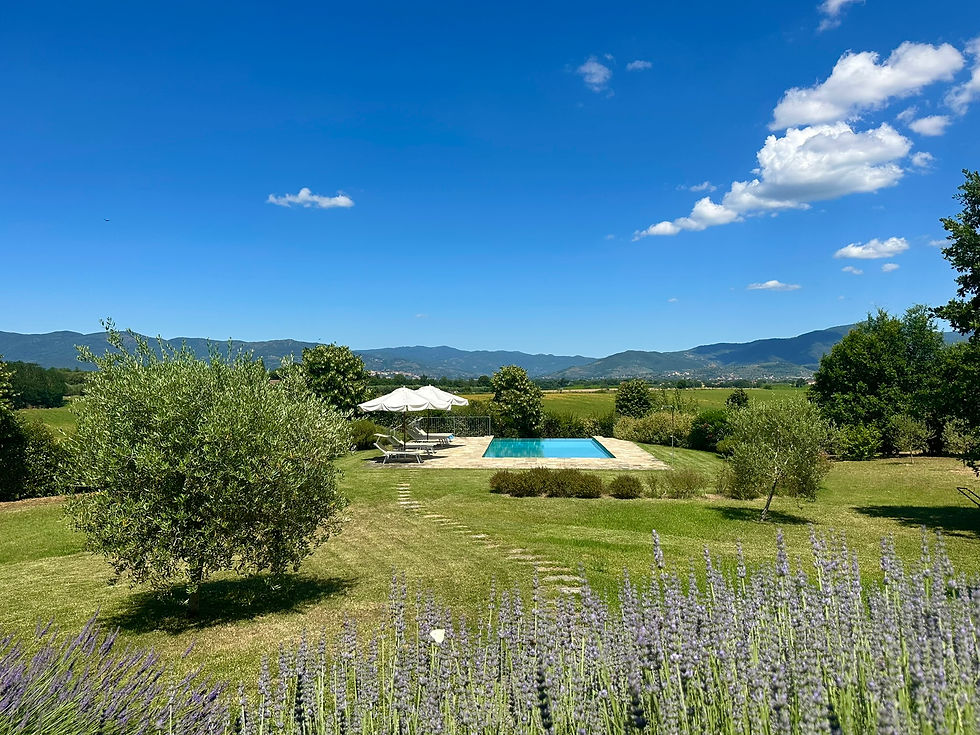
For travellers seeking an authentic base close to the castle, Casa Fiordalisi, a 4 bedroom holiday home rental in nearby Brolio offers a peaceful countryside setting surrounded by olive groves and vineyards - with views of Castello Montecchio Vesponi from its extensive gardens. Its position places visitors within easy reach of both Castiglion Fiorentino and Cortona while retaining the slower pace of rural Tuscany. @casa_fiordalisi or visit www.casafiordalisi.com
In Cortona, Monastero di Cortona occupies a beautifully restored monastery and combines contemporary luxury with extraordinary views across the Val di Chiana.
@monasterodicortonahotelspa
For something more intimate, Villa Borgo San Pietro sits among landscaped gardens just outside Cortona and offers a relaxed boutique atmosphere. @borgosanpietrocortona
Where to Eat
In Castiglion Fiorentino, Da Muzzicone has become a favourite with both locals and visitors. The atmosphere is relaxed and welcoming, while the menu focuses on traditional Tuscan dishes prepared with local ingredients and plenty of regional character - especially renowned for its fabulous Bistecca Fiorentina. @ristorantedamuzzicone
For a memorable meal in Cortona, Osteria del Teatro combines traditional Tuscan cooking with refined presentation in one of the town's most atmospheric settings.
@osteria_del_teatro_cortona
Wine lovers should also make time for a leisurely lunch at Locanda del Molino, housed within a beautifully restored former olive mill in the countryside below Cortona.
@locandadelmolino
Why Visit?
Many Tuscan castles are admired for their architecture.
Montecchio Vesponi is different.
Its appeal lies in the layers of history that continue to emerge.
A medieval fortress built above a vanished lake.
A village hidden within defensive walls.
A connection to Leonardo da Vinci.
A chapter involving one of Europe's most famous mercenary commanders.
And an archaeological story that is still unfolding.
Few places bring together so many different periods of Tuscan history in such a compelling setting.
For visitors willing to venture beyond the region's most famous attractions, Castello di Montecchio Vesponi offers something increasingly rare.
A genuine sense of discovery.
Exploring Tuscany by Rail
Montecchio Vesponi is exactly the kind of hidden destination that independent rail travellers often miss.
Yet thanks to excellent train connections through Arezzo, Castiglion Fiorentino and Cortona, it is surprisingly easy to include as part of a wider Tuscan itinerary without hiring a car.
For more hidden towns, scenic rail routes, practical travel advice and authentic experiences across Tuscany and beyond, see Touring Italy by Train.
Find the guide here:
You can also discover more rail journeys and authentic destinations at:


Comments