
The Palio dei Rioni: Castiglion Fiorentino's Fiercest Tradition
The celebrations had barely begun before the yellow and red flags appeared.
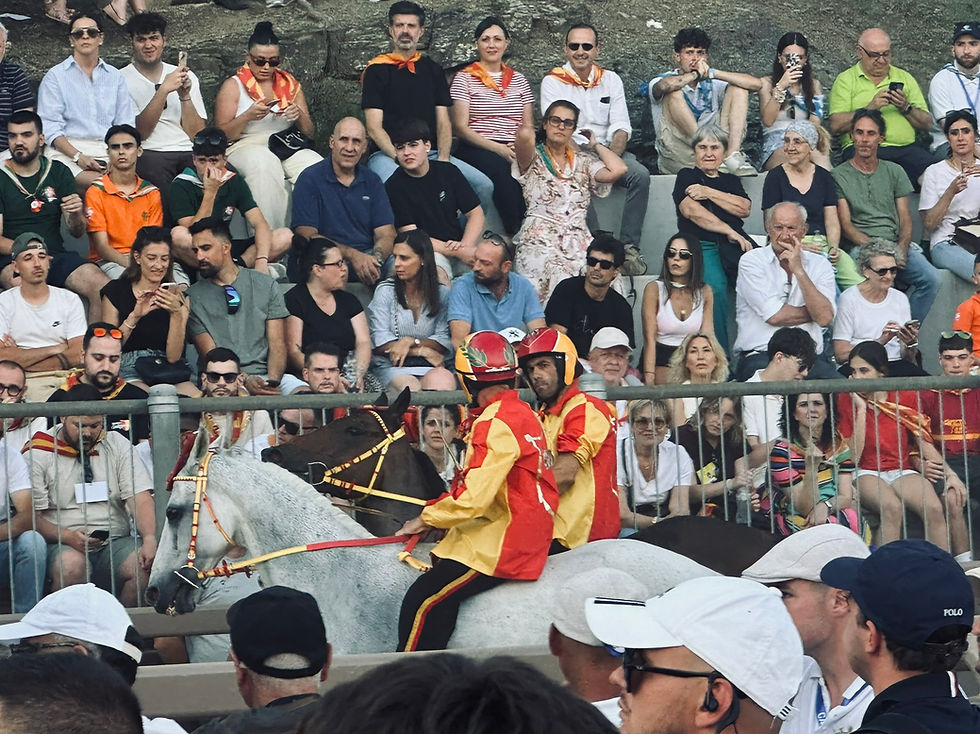
Drums echoed through the streets, church bells rang out across the rooftops, and supporters of Porta Romana celebrated another memorable victory in the 2026 Palio dei Rioni.
For visitors, it may have looked like an exciting horse race.
For the people of Castiglion Fiorentino, it was far more than that.
The Palio is the emotional heart of the town.
Families inherit loyalties from one generation to the next. Children grow up wearing the colours of their district. Volunteers spend months preparing costumes, organising events and supporting their jockeys.
For one evening every June, the entire town becomes a stage where centuries of history, rivalry and civic pride come together.
Unlike Siena's internationally famous Palio, Castiglion Fiorentino remains wonderfully authentic.
This is a celebration created first and foremost for the people who live here.
Visitors are simply lucky enough to be welcomed into it.
Why Visit the Palio?
There are many festivals in Tuscany.
Few feel as genuine.
The Palio dei Rioni has none of the overwhelming crowds found elsewhere, yet it delivers everything visitors hope to experience from a traditional Tuscan festival.
Historic processions.
Medieval costumes.
Church ceremonies.
Narrow streets decorated in district colours.
Then finally, the race itself.
The atmosphere builds throughout the day until almost every resident seems to gather around the Cassero fortress for the evening's climax.
Whether you understand the rules or not almost becomes irrelevant.
The emotion is impossible to miss.
A Tradition Rooted in History
Horse races have formed part of celebrations in Castiglion Fiorentino for centuries.
The modern Palio dei Rioni dates from the 1970s, but its inspiration comes from medieval traditions when neighbourhoods competed during religious festivals and civic celebrations.
Today the race honours Madonna delle Grazie, the town's patron saint.
The entire weekend blends religion, history and local identity in a way that still feels completely natural.
Nothing feels staged.
The medieval setting simply becomes part of the festival itself.
The Three Rioni
The town is divided into three historic districts.
Each has its own colours, traditions and fiercely loyal supporters.
Porta Romana
Colours: Yellow and Red
The current champions.
Porta Romana has enjoyed remarkable success in recent years, building a reputation for meticulous preparation and consistency.
Its supporters celebrate passionately but carry the weight of expectation every year.
Winning has become something they almost expect.
Cassero
Colours: White and Blue
Named after the medieval fortress that dominates the town, Cassero has a proud history and one of the strongest identities within Castiglion Fiorentino.
Its supporters are among the most vocal during race week, filling the upper streets with flags and banners.
Porta Fiorentina
Colours: Green and White
Representing the northern entrance to the town, Porta Fiorentina combines deep local traditions with a determination to upset its rivals.
Every Palio begins with all three believing this will be their year.
Only one leaves celebrating.
Race Day
The festival begins long before the horses appear.
Throughout the afternoon, the streets fill with musicians, costumed residents and spectators.
Historic processions wind through the old town before gathering for religious ceremonies and official presentations.
By early evening, attention shifts towards the racecourse beside the Cassero.
The atmosphere changes.
Conversations become quieter.
Supporters gather behind barriers.
Children climb onto shoulders.
The tension becomes almost tangible.
Then everything happens remarkably quickly.
The riders complete three laps of the track in little more than a minute.
Months of preparation.
Years of rivalry.
Generations of tradition.
All decided in a handful of dramatic moments.

Watching the Palio
One of the joys of Castiglion Fiorentino is how accessible the Palio remains.
Unlike some larger Italian festivals, visitors do not need to book expensive packages months in advance.
Grandstand tickets are normally available on race day, although arriving early is highly recommended as demand increases every year.
Many locals prefer standing around the course, where the atmosphere is arguably even better.
If this is your first visit, spend the afternoon exploring the streets before taking your place for the race.
The procession beforehand is every bit as memorable as the race itself.
A Town Worth Visiting Any Time
Even without the Palio, Castiglion Fiorentino deserves far more attention than it receives.
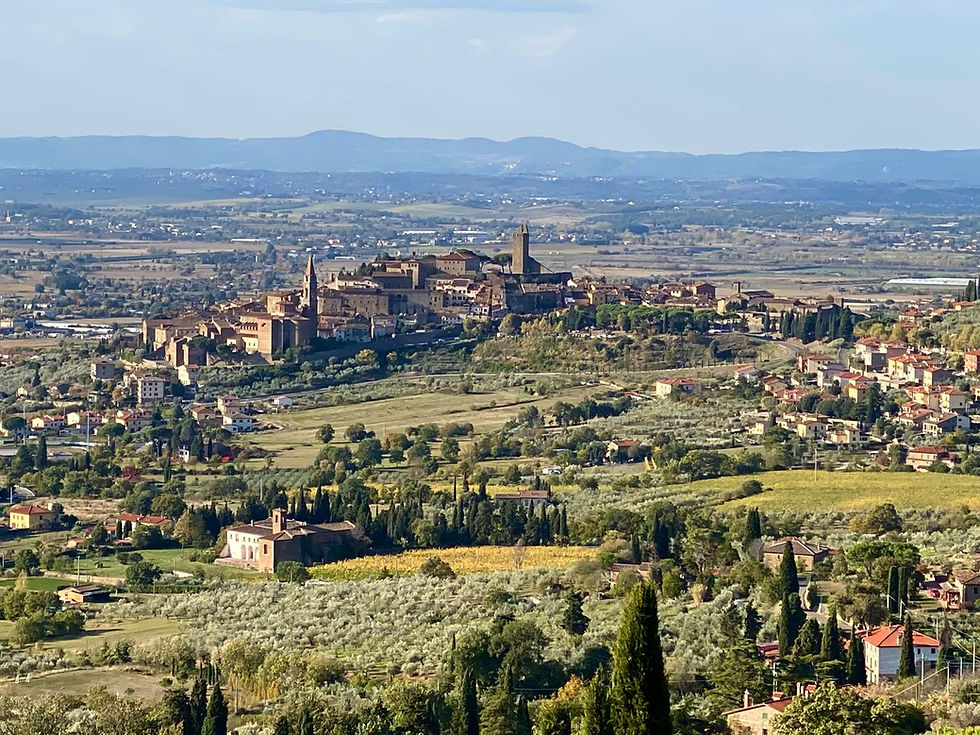
Perched on a hill above the Val di Chiana, it combines medieval streets, Renaissance churches and magnificent views across one of Tuscany's most historic landscapes.
Unlike nearby Cortona, it has remained refreshingly understated.
Life here still revolves around local cafés, weekly markets and evening strolls through the piazzas rather than organised tourism.
That authenticity is one of its greatest strengths.
The Story of Castiglion Fiorentino
People have lived here since Etruscan times.
Later came the Romans.
Then medieval armies fought repeatedly over this strategic hilltop, with Florence, Arezzo and Siena all recognising its importance.
The town's defensive position overlooking the Val di Chiana made it one of Tuscany's key strongholds for centuries.
Walking through the old town today, much of that history remains visible.
The medieval walls.
The Cassero tower.
The narrow streets that still follow their ancient layout.
It feels lived in rather than preserved.
Getting There by Train
One of Castiglion Fiorentino's biggest surprises is how easy it is to reach without a car.
Regional trains connect directly with Florence, Arezzo and Terontola-Cortona, making it an ideal destination for independent travellers.
From Florence, allow around 1 hour 45 minutes.
From Arezzo, the journey takes approximately 20 minutes.
From Rome, changing at Terontola or Arezzo makes the journey straightforward.
The railway station sits just below the historic centre.
Within ten minutes of arriving, you are walking through the medieval streets.
What Else To See
Spend time exploring the Cassero fortress and its archaeological museum.
Visit the Pinacoteca Comunale inside Palazzo Comunale.
Climb through the old streets to Piazza del Municipio.
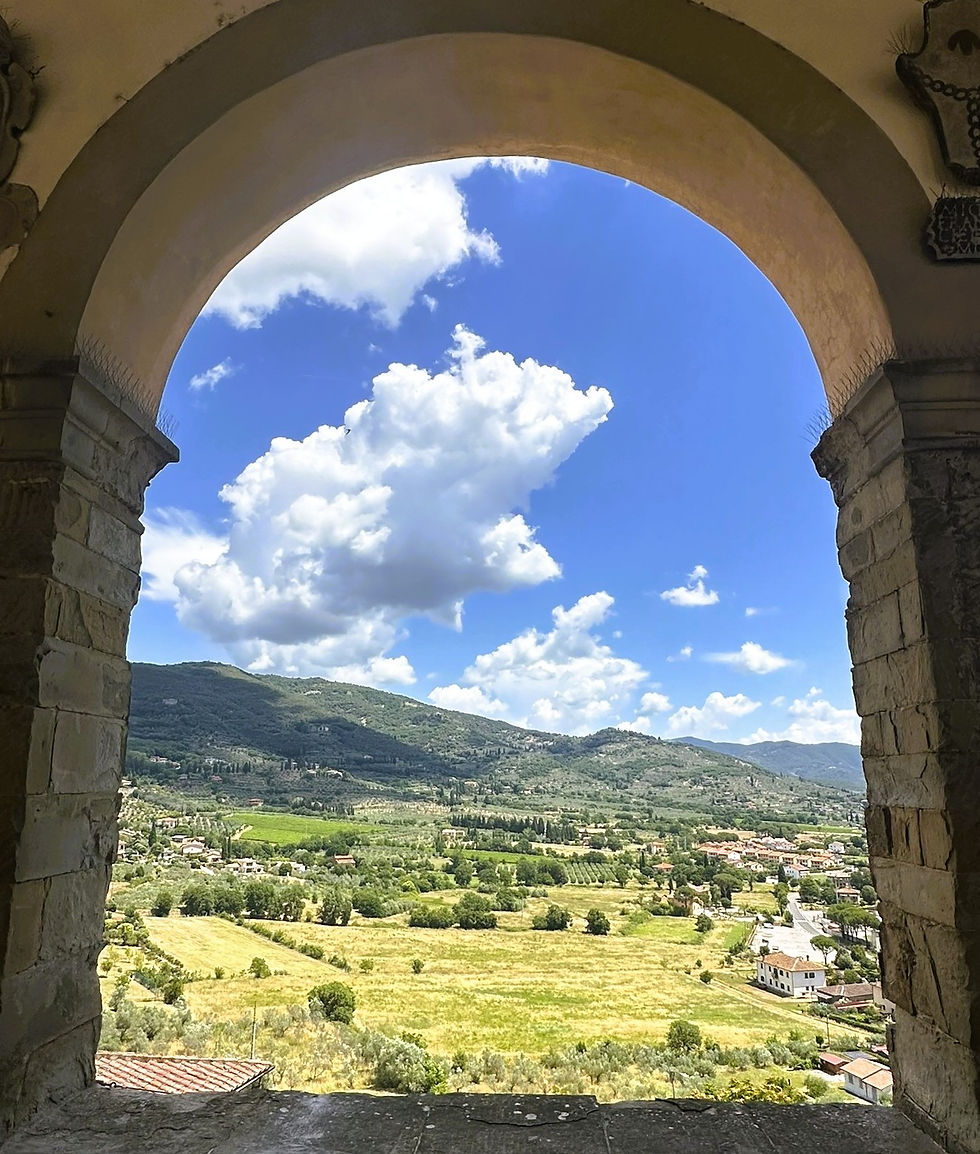
Walk the medieval walls as the evening light settles across the Val di Chiana.
A short drive or local taxi ride also brings you to the beautifully restored Castello di Montecchio Vesponi, one of Tuscany's finest medieval castles, where ongoing archaeological excavations continue to reveal new layers of its remarkable history.
Nearby, Cortona, Lake Trasimeno, Lucignano and Arezzo all make excellent day trips.
Where to Stay
For travellers wanting an authentic Tuscan villa rental, Casa Fiordalisi in nearby Brolio offers beautifully restored accommodation surrounded by vineyards and olive groves, only a few minutes from Castiglion Fiorentino. It is perfectly placed for exploring both the Val di Chiana and eastern Tuscany at a slower pace. @casa_fiordalisi or enquire at www.casafiordalisi.com
Situated in the hills between Cortona and Castiglion Fiorentino, Villa Schiatti dates back to the 19th century and offers very comfortable rooms, a big swimming pool and lovely restaurant serving home cooked Tuscan specialities. @villaschiatti
For something convenient in the heart of town, Hotel Park provides comfortable and affordable accommodation within walking distance of both the railway station and the historic centre, making it particularly convenient for travellers arriving by train. www.hotelparkarezzo.com
For those looking for something more luxurious, Relais La Corte dei Papi, just outside Cortona, combines elegant rooms, spa and restaurant, beautiful gardens and refined Tuscan hospitality in a peaceful countryside setting. @relaiscortedeipapi
Where to Eat
For a truly local experience, Da Muzzicone remains one of Castiglion Fiorentino's best-loved restaurants. Expect generous Tuscan cooking, amazing Bistecca Fiorentina cooked on an open fire, seasonal ingredients and an atmosphere where locals far outnumber visitors.@ristorantemuzzicone
Silla's Bistro is a highly rated and intimate restaurant in the heart of Castiglion, specialising in traditional Tuscan dishes. Run by the wonderfully welcoming Gabriele and Pamela, it has fabulous home-made pasta and an extensive wine list. Ask Gabriele for recommendations; he knows his wine! @sillasbistro
For refined Tuscan cuisine in beautiful surroundings, Ristorante La Loggetta in Cortona enjoys spectacular views across Piazza della Repubblica and serves elegant interpretations of regional classics. @la_loggetta_cortona
Wine lovers should also make time for Le Capezzine, a family-run winery just outside town where tastings offer an excellent introduction to the wines of the Val di Chiana.
@avignonesiofficial
Why the Palio Matters
The Palio dei Rioni is not simply a festival.
It is the living identity of Castiglion Fiorentino.
It connects medieval history with modern community life.
It brings together families, neighbours and generations of residents who continue traditions handed down over centuries.
For visitors, it offers something increasingly rare.
Not a performance created for tourists.
But a genuine celebration that visitors are invited to witness.
And that makes it unforgettable.
Exploring Tuscany by Train
Castiglion Fiorentino is one of many destinations featured in Touring Italy by Train.
The guide includes independent rail itineraries, practical travel advice, hidden towns, scenic journeys and local recommendations designed to help you experience Italy beyond the obvious highlights.
Whether you're exploring Tuscany, Umbria, Sicily or the Italian Lakes, travelling by train makes discovering Italy remarkably easy.
Find the guide here:
You can also discover more authentic destinations and rail journeys at:
Follow along at:
@real_travel_guides


Comments